Join us on a literary world trip!
Add this book to bookshelf
Grey
Write a new comment Default profile 50px
Grey
Subscribe to read the full book or read the first pages for free!
All characters reduced
The Hand - cover

The Hand

Guy de Maupassant

Publisher: Caelwick Press

  • 0
  • 0
  • 0

Summary

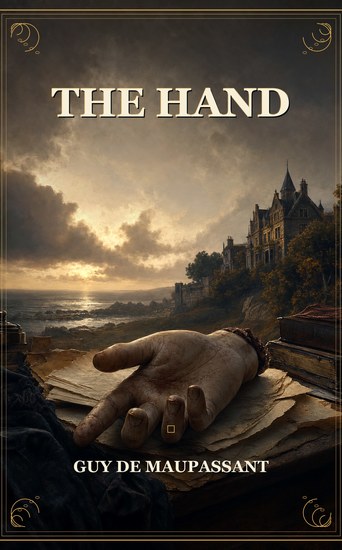
The Hand by Guy de Maupassant is presented in a clean English digital edition with active navigation. The book belongs to classics and preserves the character of the source text for sustained ebook reading. The opening pages establish the work's atmosphere with this first movement: All were crowding around M. Bermutier, the judge, who was giving his opinion about the Saint-Cloud mystery. For a month this in explicable crime had been the talk of Paris. Nobody could make head or tail of it. M. Bermutier, standing with his back to the fireplace, was talking, citing the evidence, discussing the vario. Detected sections include: Chapter 1. This edition is prepared for a fluent reading experience with clear typography and no extraneous promotional material.
Available since: 06/13/2026.
Print length: 7 pages.

Other books that might interest you

  • Carmilla - A chilling Gothic Horror classic of forbidden desire and ancient bloodlust Uncover the hypnotic seductive mystery of the world's first female vampire - cover

    Carmilla - A chilling Gothic...

    Joseph Sheridan Le Fanu

    • 0
    • 0
    • 0
    Before Dracula stalked the night, a beautiful stranger named Carmilla was already drinking the lifeblood of the innocent. 
    Deep in the shadowy, isolated forests of Styria, young Laura lives a peaceful but solitary life with her father in an ancient schloss. Her quiet existence is abruptly shattered by a dramatic carriage accident outside their estate, leaving a mysterious, breathtakingly beautiful girl named Carmilla in their care. As the two young women form an intense, mesmerizing bond, Laura becomes plagued by haunting nightmares, terrifying nocturnal visitations, and a mysterious, draining illness. Meanwhile, an inexplicable and fatal epidemic begins to sweep through the surrounding villages. As the death toll rises and the true, sinister nature of their magnetic guest starts to unfold, Laura is caught in a fatal web of seduction and terror. 
    Why you will love this: This atmospheric Gothic Horror masterpiece laid the very foundation for vampire fiction. Overflowing with dark romance, sapphic undertones, supernatural suspense, and creeping psychological dread, this audiobook perfectly captures the chilling aesthetics of classic occult lore. If you crave haunted castles, ancient curses, and mesmerizing monsters, this is a must-listen. 
    Joseph Sheridan Le Fanu (1814–1873) was a premier Irish writer of the nineteenth century, renowned for his subtle, psychological ghost stories and masterful contributions to the Victorian horror genre. His pioneering work forever changed the landscape of dark fantasy and supernatural fiction.
    Show book
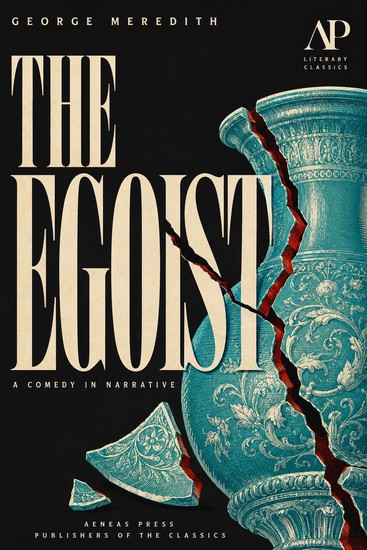
  • The Egoist - A Comedy in Narrative - cover

    The Egoist - A Comedy in Narrative

    George Meredith

    • 0
    • 0
    • 0
    Sir Willoughby Patterne is handsome, rich, generous and admired, and the novel is the slow, exact demonstration of what it is like to be engaged to him. Meredith's style won him more admirers among writers than readers — he worked for years as a publisher's reader — and here the difficulty pays: nobody has ever anatomised male vanity so completely, and Clara Middleton's attempts to get free are as tense as any thriller.
    Show book
  • After Twenty years - From their pens to your ears genius in every story - cover

    After Twenty years - From their...

    O Henry

    • 0
    • 0
    • 0
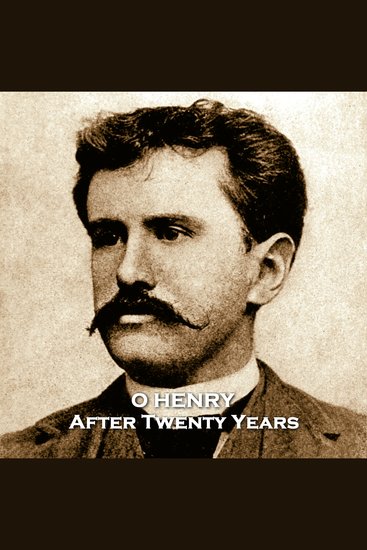
    William Sydney Porter was born on 11th September 1862 in Greensboro, North Carolina. At age 3 his mother died from tuberculosis. From an early age it was clear Porter had a large appetite for reading as he absorbed the world around him. 
    He first attended at a school run by his aunt before enrolling at the Lindsey Street High School and then worked at his uncle’s drugstore and gained a pharmacists’ license in 1881.  
    A persistent cough took him to Texas in the hope that a change of climate would help his symptoms. He took on various types of work, initially from ranch hand and cook and then as varied as pharmacist, draftsman, bank teller and journalist. He also began to write, though for now, purely as a hobby. 
    He was a member of several singing and dramatic groups when he met 17 year old Athol Estes, daughter of a wealthy Austin family. Despite her mother’s objection owing to Athol’s tuberculosis, they began courting and in July 1887, they eloped and soon married. 
    Athol, impressed by his writing, encouraged him to get them published. A job as a draftsman at the Texas General Land Office paid a healthy $100 dollars per month and life was good. 
    But then life turned cruel. His son died a few hours after birth although a daughter, Margaret, came the following year.  His job had to be vacated but another was found at the First National Bank of Austin. The bank operated informally and Porter was careless in keeping the books. He lost that job but began writing for the humourous weekly The Rolling Stone and the Houston Post. Some time later the federal Bank auditors went through his former accounts and he was arrested on charges of embezzlement. 
    Porter fled the day before his trial to Honduras. Holed up for several months he began to write.  Athol had become too ill to travel to meet him and learning that her health was deteriorating he surrendered to the court in February 1897.  Bail was obtained so that he could stay with Athol during her final days.  
    Porter was sentenced to five years at the Ohio Penitentiary in Columbus. His pharmacy qualifications got him the job of night druggist.  His sentence also gave him time to write and publish fourteen short stories. In December 1899 in McClure’s Magazine he published a short story as O Henry.  
    He was released two years early in July 1901, and reunited with Margaret, now 11, in Pittsburgh.  He now began his most prolific period of writing; a short story per week for the New York World, while also publishing works in other magazines.  Eventually over 600 of his short stories were published. 
    Porter was a heavy drinker and in 1908 his health, which had deteriorated for several years, took a dramatic turn for the worse, as did his writing. 
    O Henry died of cirrhosis of the liver complicated by diabetes and an enlarged heart on 5th June 1910.<
    Show book
  • The Raven and Other Assorted Works of Edgar Allen Poe - cover

    The Raven and Other Assorted...

    Edgar Allen Poe

    • 0
    • 0
    • 0
    A conglomeration of the most prolific works of Edgar Allen Poe. A series of the macabre and horrible. The dabbling of poetic symmetry with that of the inevitability of death.
    Show book
  • Pudd'nhead Wilson - cover

    Pudd'nhead Wilson

    Mark Twain

    • 0
    • 0
    • 0
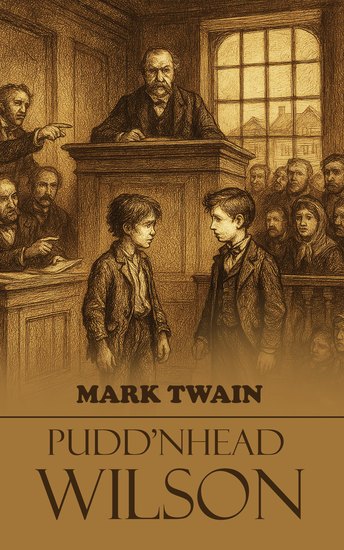
    "Pudd'nhead Wilson" by Mark Twain is a bold, darkly comic novel that blends satire, mystery, and social critique into one of the author's most provocative works. Set in a small Missouri town along the Mississippi River, the story explores identity, race, and morality in pre–Civil War America through a gripping and unconventional narrative.
    
    The novel centers on David "Pudd'nhead" Wilson, a sharp-minded lawyer whose reputation is ruined early in life after a misunderstood remark leads the townspeople to dismiss him as a fool. Living on the margins of society, Wilson spends his time collecting fingerprints—an unusual hobby that later proves crucial to unraveling a shocking crime.
    
    Running parallel to Wilson's story is the powerful and unsettling tale of two boys—one born enslaved and the other born free—who are secretly switched at birth by a desperate mother. As they grow up, the consequences of this deception expose the absurdity and cruelty of racial classifications and social hierarchies. Twain uses this dramatic premise to challenge the idea that race determines character, intelligence, or worth.
    
    Part courtroom drama, part social satire, Pudd'nhead Wilson examines how prejudice, hypocrisy, and rigid social norms distort justice and human relationships. Twain's use of fingerprint evidence—one of the earliest appearances of forensic science in fiction—adds a surprising modern element to the story.
    
    Serious, unsettling, and often ironic, Pudd'nhead Wilson stands apart from Twain's more lighthearted novels, revealing his willingness to confront the moral failures of American society. It is an essential read for lovers of classic literature, social commentary, and thought-provoking fiction that remains strikingly relevant today.
    Show book
  • The Idiots - From their pens to your ears genius in every story - cover

    The Idiots - From their pens to...

    Joseph Conrad

    • 0
    • 0
    • 0
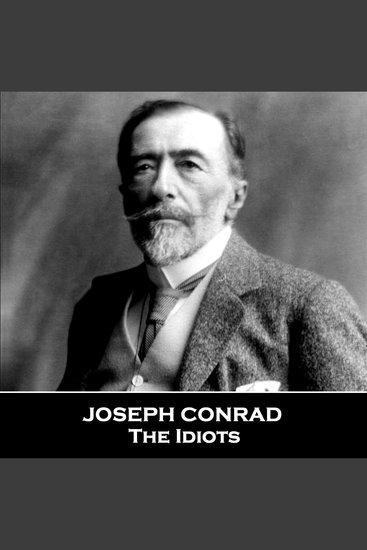
    Joseph Conrad was born on 3rd December 1857 in Berdychiv in the Ukraine, then part of the Russian Empire.  His birthplace had been part of Poland which its neighbours dismembered into their own Empires. 
    Conrad’s early years were spent in constant movement, his father was politically active and frequently in trouble trying to help re-ignite a Polish state which meant arrests and exile and the young Conrad himself suffered from ill-health, spending a year at a retreat in Kyiv recovering.   
    By 11 he was orphaned.  His education was mainly private and although he was a voracious reader, he was a poor academic student.  Now, being raised by an uncle who wanted Conrad to have a worthwhile job, it was hoped that a merchant-marine career might bring out the best of him. 
    At 16 he was sent to Marseille to embark on that adventure.  Conrad himself was determined to be both a sailor and a great writer. 
    Life on board a ship was full of adventures and experiences which included gun-running and close quarter encounters with political conspiracies. 
    By his mid 30’s Conrad had returned to shore permanently to add his prodigious literary talents to full time writing.  Although he wrote with a comprehensive command in English his spoken English was often cited as ‘horrible’.   He was now also a British Citizen.   
    Conrad brought to English Literature both narrative mastery, compelling prose and fully formed characters as well as a deeper examination of the human psyche in a wealth of work.  He wrote many novels, short stories, nonfiction, and memoirs which are rightly regarded today as some of the finest in English literature.      
    Jospeh Conrad died on the 3rd August 1924 at Bishopsbourne, Kent in England.  He was 66.
    Show book