Join us on a literary world trip!
Add this book to bookshelf
Grey
Write a new comment Default profile 50px
Grey
Subscribe to read the full book or read the first pages for free!
All characters reduced
The Philosophy of Marx - cover

The Philosophy of Marx

Giovanni Gentile

Publisher: Antelope Hill Publishing LLC

  • 0
  • 0
  • 0

Summary

Giovanni Gentile is widely acknowledged as the foundational philosopher of Italian Fascism. He worked in academia as well as government, contributing to the formation of the Italian corporate state and education system under Benito Mussolini. Gentile continued writing and contributing to the Italian Fascist state until his assassination by the Italian Communist Party in 1944.
 
In The Philosophy of Marx, Gentile critiques the failures of Marxist philosophy as presented by numerous thinkers including Marx himself. Gentile argues that Marx erred in his conception of historical materialism, which led to flaws in Marxist praxis, and presents his view of a more authentically Hegelian philosophy of dialectics and epistemology. According to Gentile, who promoted what he termed “actual idealism,” the dialectic was not a mystical, external force, but rather an organic element of life, and required a strong, central state, which could coordinate and fulfill otherwise competing and struggling identities and interests.
 
Antelope Hill is proud to present its original translation of Giovanni Gentile’s The Philosophy of Marx originally published in 1899, updated in 1937. This work is fundamental to understanding the politics of the early twentieth century and will remain invaluable to future generations looking to understand the past.
Available since: 11/18/2022.
Other books that might interest you

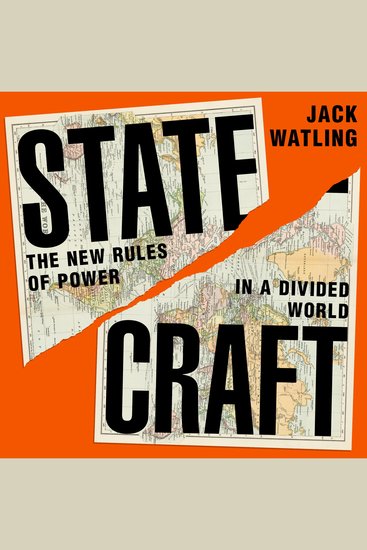
  • Statecraft - The New Rules of Power in a Divided World - cover

    Statecraft - The New Rules of...

    Jack Watling

    • 0
    • 0
    • 0
    From top defence analyst Jack Watling, Statecraft reveals how states collaborate, compete and fight in this era of global turmoil. For readers of Prisoners of Geography or Material WorldWhy did Russia struggle in the early months of its full-scale invasion of Ukraine?Why does Israel ignore international pressure on Gaza?Why does the UK spend billions on aircraft carriers that it struggles to support at sea?How do smaller states shape world events when dwarfed by superpowers?The world today is gripped by conflict. Whether in Ukraine, the Middle East or Taiwan, we are in a period of intense power competition. In Statecraft, Dr Jack Watling takes you behind the scenes to meet the world’s powerbrokers in their wood-panelled offices, and the bunkers from which battles are coordinated.With a career spent on the ground in conflict zones, and advising generals and political leaders, Watling examines the dilemmas that states face to get ahead, no matter their size. From economic alliances and global trade to sea power and military technology, Statecraft provides a powerful new lens to understand geopolitics in a divided world.
    Show book
  • Private Censorship - cover

    Private Censorship

    J.P. Messina

    • 0
    • 0
    • 0
    Concerns about censorship have once again reached a fever pitch across the liberal West. With a few notable exceptions, complaints about censorship in the twenty-first century West are complaints about the behavior of private parties: employers, media conglomerates, social media platforms, and search engines. 


    To better understand the concerns surrounding nonstate interference with speech, Private Censorship offers an account of censorship, as well as an assessment of the ethical and political issues it raises across contexts. J. P. Messina asks and variously answers questions like: what should we think when employees get fired for things they say and how might patterns of such firings create a climate of fear inimical to free inquiry? When is it appropriate for social media firms to deplatform users, and what does it mean for our democracy that those in charge of such decisions are often wealthy Silicon Valley executives? Do search engines act as massive gatekeepers to information in troubling ways, and how might they be constrained, if they do? Along the way, Messina casts a critical eye on many popular proposals for responding to these complaints. Unlike these popular approaches, Private Censorship foregrounds the importance of rights to property, association, and free expression for thinking well about twenty-first century censorship concerns.
    Show book
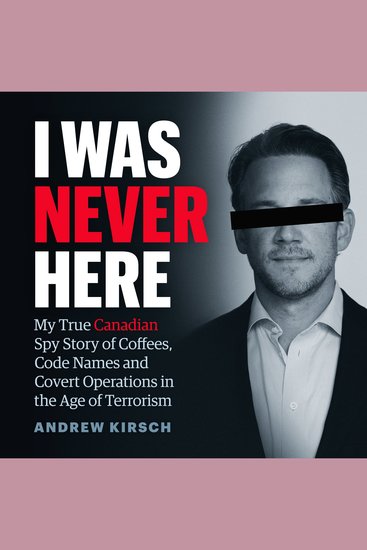
  • I Was Never Here - My True Canadian Spy Story of Coffees Code Names and Covert Operations in the Age of Terrorism - cover

    I Was Never Here - My True...

    Andrew Kirsch

    • 0
    • 0
    • 0
    An ex-spy lifts the lid on life in the secret serviceA Globe and Mail and Toronto Star bestseller!Andrew Kirsch didn’t grow up watching spy movies, or dreaming about being a real-life James Bond. He was hardly aware that Canada even had its own intelligence service—let alone knew what its officers did. But when a terrorist attack occurred near the office of his financial services job, all of a sudden fighting terrorism meant a lot more to him than the markets. Within 18 months he had landed a job with the Canadian Security Intelligence Service (CSIS)—where he spent the next decade of his life.In I Was Never Here, Kirsch (now an in-demand security consultant) spills the secrets of what life as an intelligence officer is really like, and dispels a few myths along the way. With humour, honesty, and candour, Kirsch shares his on-the-ground experience (or as much of it as he’s allowed to) of becoming a member of CSIS: from his vetting and training, to his initial desk job as a policy analyst, to his rise up the ranks to leading covert special operations missions. If you’ve ever wondered whether spies can have real dating lives, how they handle family responsibilities, or how they come up with cover stories or aliases, you’re in luck.From the time he tried to get the code names “Burgundy” and “Anchorman” assigned to human sources (with no luck), to the night a covert operation was almost thwarted by a flyer delivery man, Kirsch takes you behind the scenes with an authentic view of Canada’s spy agency, and the intricate intelligence-sharing apparatus that works day and night to keep us safe. I Was Never Here is also a testament to one man’s drive to serve his country, and the sacrifices, big and small, that he made along the way.
    Show book
  • Citizen of the World: Soon-Young and the UN (Abridged) - Abridged - cover

    Citizen of the World: Soon-Young...

    Soon-Young Yoon

    • 0
    • 0
    • 0
    From North Korean Refugee to the United Nations: A Courageous and Compassionate Memoir Soon-Young Yoon understood from an early age that people's destinies are connected to international events. This book is a collection of her reflections as a women's human rights advocate speaking up to end violence against women and change the world to ensure gender equality, sustainable development, and peace. Yoon has seen the struggle for human rights in all corners of the world, meeting with people in urban slums and the offices of the United Nations. She urges us to look at the world through women's eyes to understand why gender equality and women's empowerment, particularly for the poorest and most vulnerable populations, is essential to our collective good. In Citizen of the World, you'll be inspired by Yoon's stories on Ending violence against women and girls Finding the Earth's balance Claiming the right to social and economic development Portraits of great women leaders Collective voices that are changing the world Challenges working as a feminist anthropologist inside and outside the United Nations Written through the lens of an anthropologist, these essays reflect her belief that one needs to understand a wide range of issues to shape our common future. Students, academics, and activists in the fields of women's studies, international relations, anthropology, and social justice will find Citizen of the World both unique and eye-opening—and filled with hope for a better future for us all.
    Show book
  • Insurrection - Rebellion Civil Rights and the Paradoxical State of Black Citizenship - cover

    Insurrection - Rebellion Civil...

    Hawa Allan

    • 0
    • 0
    • 0
    The little-known and under-studied 1807 Insurrection Act was passed to give the president the ability to deploy federal military forces to fend off lawlessness and rebellion, but it soon became much more than the sum of its parts. Its power is integrally linked to the perceived threat of black American equity in what lawyer and critic Hawa Allan demonstrates is a dangerous paradox. While the Act was initially used to repress rebellion against slavery, during Reconstruction it was invoked by President Grant to quell white-supremacist uprisings in the South. During the civil rights movement, it enabled the protection of black students who attended previously segregated educational institutions. Most recently, the Insurrection Act has been the vehicle for presidents to call upon federal troops to suppress so-called "race riots" like those in Los Angeles in 1992, and for them to threaten to do so in other cases of racial justice activism. 


    Allan's distinctly literary voice underscores her paradigm-shifting reflections on the presence of fear and silence in history and their shadowy impact on the law. Throughout, she draws revealing insight from her own experiences as one of the only black girls in her leafy Long Island suburb, as a black lawyer at a predominantly white firm, and as a thinker about the use and misuse of appeals to law and order.
    Show book
  • NATO After Russia's Invasion of Ukraine - Threat Perceptions and Their Consequences - cover

    NATO After Russia's Invasion of...

    Jason W. Davidson

    • 0
    • 0
    • 0
    A revealing look at differing threat perceptions in six key NATO countries 
     
    When Russia began its full-scale invasion of Ukraine in February 2022, analysts and policymakers highlighted the unifying shock that NATO members experienced. However even before the return of US president Donald Trump, beneath this seeming cohesion lay deep-seated differences in how member states perceive and prioritize security threats. 
     
    NATO after Russia's Invasion of Ukraine analyzes the six most influential members of the alliance: the United States, the United Kingdom, France, Germany, Poland, and Italy. Through extensive interviews with current and former policymakers and a detailed examination of public statements and policies, Jason W. Davidson delivers a unique assessment of how divergent threat perceptions influence the NATO allies' major defense decisions, such as defense spending, and whether the alliance addresses each ally's most important threat and its view of NATO's most important challenges. With the rise in tumultuous geopolitical challenges posed by Russia, China, terrorism, mass refugee flows, and nationalism, this book provides the crucial context needed to navigate NATO's evolving role in international security.
    Show book