Join us on a literary world trip!
Add this book to bookshelf
Grey
Write a new comment Default profile 50px
Grey
Subscribe to read the full book or read the first pages for free!
All characters reduced
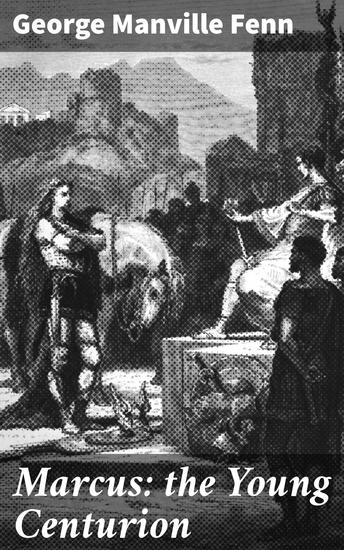
Marcus: the Young Centurion - A Young Centurion's Roman Adventure - cover

Marcus: the Young Centurion - A Young Centurion's Roman Adventure

George Manville Fenn

Publisher: Good Press

  • 0
  • 0
  • 0

Summary

In "Marcus: the Young Centurion," George Manville Fenn crafts a riveting narrative set in the context of ancient Rome, blending historical fiction with adventure. This novel follows the journey of Marcus, a youth trained in the martial traditions of the Roman legions. Fenn's vivid prose is imbued with action and suspense, offering a detailed, atmospheric portrayal of Roman military life and the social structures of the time. The author's attention to historical accuracy ensures that readers are not only entertained but also educated about the realities of a young man's quest for honor and bravery in a tumultuous era. George Manville Fenn, a prolific author of the Victorian era, drew from his deep appreciation for history and adventure in crafting this compelling tale. Having worked as a journalist and editor, Fenn possessed a keen eye for detail and a talent for storytelling. His experiences likely informed his portrayal of Marcus's trials and triumphs, reflecting Fenn's belief in the formative power of youth and perseverance against the backdrop of societal expectations. I highly recommend "Marcus: the Young Centurion" to readers interested in historical narratives that resonate with themes of courage and personal growth. Fenn'Äôs ability to weave an engaging story with authentic historical context makes this work a valuable addition to any literary collection, appealing both to young adults and to those enchanted by the allure of ancient Rome.
Available since: 08/22/2023.
Print length: 196 pages.

Other books that might interest you

  • Descartes John Locke Rousseau Kant Voltaire and Adam Smith - A Comprehensive History of the Enlightenment Thinkers - cover

    Descartes John Locke Rousseau...

    Days of History

    • 0
    • 0
    • 0
    Are you curious about the Enlightenment thinkers and their groundbreaking ideas? 
    Do you want a comprehensive understanding of the philosophical, economic, and social transformations that took place in the 17th and 18th centuries? 
    Then, you need to get your hands on this book! 
    Inside, you'll find:A thorough exploration of the lives and ideas of six of the most influential thinkers of the Enlightenment: Descartes, John Locke, Rousseau, Kant, Voltaire, and Adam SmithAn in-depth analysis of the impact of their ideas on the development of modern Western thought and society as a wholeA critical assessment of the limitations and shortcomings of their ideas, as well as their contributions to the advancement of knowledgeA compelling narrative that brings to life the intellectual and cultural context in which these great thinkers lived and worked 
    This book is not just for scholars of philosophy or history; it is for anyone who wants to understand the ideas that have shaped our world. 
    So if you're ready to dive deep into the intellectual roots of modern Western thought and come away with a comprehensive understanding of the Enlightenment thinkers, get your copy today!
    Show book
  • Quick Fixes - Drugs in America from Prohibition to the 21st Century Binge - cover

    Quick Fixes - Drugs in America...

    Benjamin Y. Fong

    • 0
    • 0
    • 0
    Americans are in the midst of a world-historic drug binge. Opiates, amphetamines, benzodiazepines, marijuana, antidepressants, antipsychotics—across the board, consumption has shot up in the twenty-first century. At the same time, the United States is home to the largest prison system in the world, justified in part by a now zombified "war" on drugs. How did we get here? 


    Quick Fixes is a look at American society through the lens of its pharmacological crutches. Though particularly acute in recent decades, the contradiction between America's passionate love and intense hatred for drugs has been one of its defining characteristics for over a century. 


    Through nine chapters, each devoted to the modern history of a drug or class of drugs, Fong examines Americans' fraught relationship with psychoactive substances. As society changes it produces different forms of stress, isolation, and alienation. These changes, in turn, shape the sorts of drugs society chooses. 


    By laying out the histories, functions, and experiences of our chemical comforts, the hope is to help answer that ever perplexing question: what does it mean to be an American?
    Show book
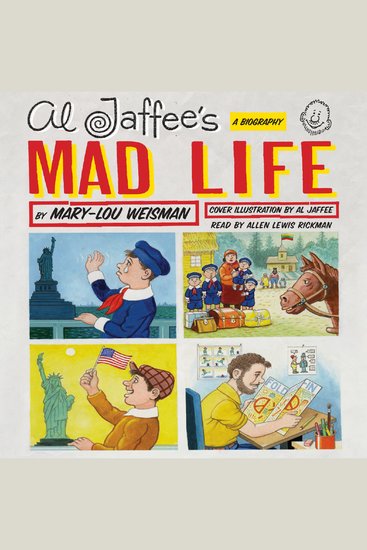
  • Al Jaffee's Mad Life - A Biography - cover

    Al Jaffee's Mad Life - A Biography

    Anonymous

    • 0
    • 0
    • 0
    “One of the great cartoonists of our time.” –New Yorker cartoonist Arnold Roth The remarkable story of one of America’s most prolific and beloved cartoonists, Al Jaffee, with dozens of original color illustrations. Jaffe’s career in cartooning stretches back to 1941—with early humor pieces for Timely Comics, a precursor to Marvel Comics—but the iconic artist remains best known for the brilliant Fold-In cartoons he invented at Bill Gaines’s Mad magazine in 1964. The cerebral and sardonic illustrations have inspired generations of Mad readers—including Stephen Colbert, R. Crumb, Gary Larson and Charles Shultz—to embrace a firm and healthy irreverence towards the status quo. New York Times columnist and bestselling author Mary-Lou Weisman (My Middle-Aged Baby Book) helps Jaffe tell his remarkable story.
    Show book
  • Through the Morgue Door - One Woman’s Story of Survival and Saving Children in German-Occupied Paris - cover

    Through the Morgue Door - One...

    Colette Brull-Ulmann,...

    • 0
    • 0
    • 0
    In 1934, at the age of fourteen, Colette Brull-Ulmann knew that she wanted to become a pediatrician. By 1942, Brull-Ulman and her family had become registered Jews under the ever-increasing statutes against them enacted by Petain's government. Her father had been arrested and interned at the Drancy detention camp and Brull-Ulman had become an intern at the Rothschild Hospital. 


    Under Claire Heyman, a charismatic social worker who was a leader of the hospital's secret escape network, Brull-Ulmann began working tirelessly to rescue Jewish children treated at the Rothschild. Ultimately, Brull-Ulmann was forced to flee the Rothschild in 1943, when she joined her father's resistance network, gathering and delivering information for De Gaulle's secret intelligence agency until the Liberation in 1945. 


    In 1970, Brull-Ulmann finally became a licensed pediatrician. It wasn't until decades later when she finally started to speak publicly—not only about her own work and survival, but about the one child who affected her most deeply. Originally published in French in 2017, Brull-Ulmann's memoir fearlessly illustrates the horrors of Jewish life under the German Occupation and casts light on the heretofore unknown story of the Rothschild Hospital during this period.
    Show book
  • Oddball Thoughts - cover

    Oddball Thoughts

    Donald Silverman

    • 0
    • 0
    • 0
    A collection of random thoughts and observations written between 2019-2024, written by former newspaper delivery boy, boardwalk barker, encyclopedia salesman, street art festival promoter, university executive, and filmmaker Donald Silverman.
    Show book
  • Thomas More and Spain - cover

    Thomas More and Spain

    Autores Varios

    • 0
    • 0
    • 0
    This volume traces Th. More's intellectual and political connections with Spain through eight scholarly contributions. Olivares examines Erasmus's role in linking Arias Montano to More's legacy amid Counter-Reformation censorship. Cabrillana decodes More's Lucian translations to reveal his moral-aesthetic priorities, while Phelippeau juxtaposes 'Utopia' with Venetian governance models resisting Habsburg hegemony. Ureña explores digital humanities' challenges in Morean studies, and Lillo reconstructs Spanish accounts of More's trial through several manuscripts. Fuentes analyzes Mary Tudor's Erasmian translations, and Zunino maps Sevillian networks that cultivated More's posthumous reputation via Herrera's 1592 biography. The volume concludes with the editor's exploration of More and Vives' nuanced just-war theories, challenging some naive pacifist interpretations by contextualizing their pragmatic responses to Ottoman expansion. Bridging literary analysis, archival research, and transnational historiography, these essays illuminate Spain's enduring role in shaping More's critique of power and his Renaissance afterlife.
    Show book