Join us on a literary world trip!
Add this book to bookshelf
Grey
Write a new comment Default profile 50px
Grey
Subscribe to read the full book or read the first pages for free!
All characters reduced
The Greatest British Classics Ever Written - Enriched edition - cover

The Greatest British Classics Ever Written - Enriched edition

Lewis Carroll, Charles Dickens, Oscar Wilde, Robert Louis Stevenson, William Shakespeare, George MacDonald, Bram Stoker, Charlotte Brontë, Emily Brontë, George Grossmith, Weedon Grossmith, Arthur Conan Doyle, Frances Hodgson Burnett, Joseph Conrad, Jane Austen, George Eliot, Laurence Sterne, Thomas Hardy, Jonathan Swift, Daniel Defoe, Henry Fielding, Kenneth Grahame, Wilkie Collins, William Makepeace Thackeray, John Milton, John Keats, James Joyce, Ann Ward Radcliffe, H. G. Wells, W. B. Yeats, J. M. Barrie, G. K. Chesterton, T. S. Eliot, D. H. Lawrence, E. M. Forster, Sir Walter Scott, George Bernard Shaw, Mary Shelley, P. B. Shelley, Elizabeth von Arnim

Publisher: DigiCat

  • 0
  • 0
  • 0

Summary

The anthology "The Greatest British Classics Ever Written" presents an awe-inspiring tapestry of literature that spans the diverse landscape of British literary tradition. This collection harnesses a multitude of literary styles—from the magical realism of Lewis Carroll's imaginary worlds to the brooding gothic tales of Mary Shelley—and imbues them with timeless themes of love, identity, and societal critique. Readers traverse through the evocative pastoral scenes of Thomas Hardy and the darkly suspenseful corridors of Bram Stoker's narratives, alongside the satirical wit of Oscar Wilde, creating a kaleidoscope of enchanting and profound literary experiences. At the helm of this anthology are the luminaries of British literature, whose collective works have shaped and reflected their eras' cultural and social mores. Themes of romanticism and classicism intermingle with modernist tendencies, showcased through the intricate narratives of Jane Austen, the Brontë sisters, and Charles Dickens, among others. The anthology not only encapsulates centuries of evolving literary movements but marries them with contemporary reflections offered by the likes of T. S. Eliot and Virginia Woolf, thus bestowing readers with a holistic exploration of the British literary canon. This compendium serves as an invaluable resource for those eager to explore the breadth of British literature in one volume, offering a unique convergence of historical and contemporary voices. Scholars and enthusiasts alike are encouraged to delve into this collection not just for its educational promise but for the rich dialogue it fosters between the words of its distinguished authors. "The Greatest British Classics Ever Written" invites readers to witness the confluence of perspectives and narratives, enhancing their appreciation for the enduring influence of British literary genius.

In this enriched edition, we have carefully created added value for your reading experience:
- An Introduction draws the threads together, discussing why these diverse authors and texts belong in one collection.
- Historical Context explores the cultural and intellectual currents that shaped these works, offering insight into the shared (or contrasting) eras that influenced each writer.
- A combined Synopsis (Selection) briefly outlines the key plots or arguments of the included pieces, helping readers grasp the anthology's overall scope without giving away essential twists.
- A collective Analysis highlights common themes, stylistic variations, and significant crossovers in tone and technique, tying together writers from different backgrounds.
- Reflection questions encourage readers to compare the different voices and perspectives within the collection, fostering a richer understanding of the overarching conversation.
Available since: 12/16/2023.
Print length: 14033 pages.
Other books that might interest you

  • A Wireless Message - From their pens to your ears genius in every story - cover

    A Wireless Message - From their...

    Ambrose Bierce

    • 0
    • 0
    • 0
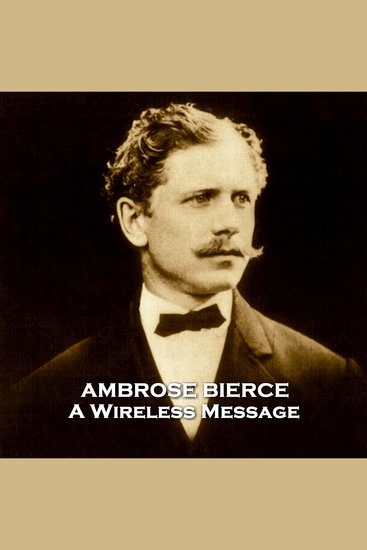
    Ambrose Gwinnett Bierce was born on 24th June 1842 at Horse Cave Creek in Meigs County, Ohio. His parents were poor but they introduced him to literature at an early age, instilling in him a deep appreciation of books, the written word and the elegance of language.  
    Growing up in Koscuisko County, Indiana poverty and religion were defining features of his childhood, and he would later describe his parents as “unwashed savages” and fanatically religious, showing him little affection but always quick to punish. He came to resent religion, and his introduction to literature appears to be their only positive effect. 
    At age 15 Bierce left home to become a printer’s devil, mixing ink and fetching type at The Northern Indian, a small Ohio paper. Falsely accused of theft he returned to his farm and spent time sending out work in the hopes of being published. 
    His Uncle Lucius advised he be sent to the Kentucky Military Institute. A year later he was commissioned as an Officer.  As the Civil War started Bierce enlisted in the 9th Indiana Infantry Regiment.  
    In April 1862 Bierce fought at the Battle of Shiloh, an experience which, though terrifying, became the source of several short stories. Two years later he sustained a serious head wound and was off duty for several months. He was discharged in early 1865.  
    A later expedition to inspect military outposts across the Great Plains took him all the way to San Francisco. He remained there to become involved with publishing and editing and to marry, Mary Ellen on Christmas Day 1871.  They had a child, Day, the following year.  
    In 1872 the family moved to England for 3 years where he wrote for Fun magazine. His son, Leigh, was born, and first book, ‘The Fiend’s Delight’, was published.  
    They returned to San Francisco and to work for a number of papers where he gained admiration for his crime reporting. In 1887 he began a column at the William Randolph Hearst’s San Francisco Examiner.  
    Bierce’s marriage fell apart when he discovered compromising letters to his wife from a secret admirer. The following year, 1889 his son Day committed suicide, depressed by romantic rejection. 
    In 1891 Bierce wrote and published the collection of 26 short stories which included ‘An Occurrence at Owl Creek Bridge’.  Success and further works including poetry followed.  
    Bierce with Hearst’s resources helped uncover a financial plot by a railroad to turn 130 million dollars of loans into a handout. Confronted by the railroad and asked to name his price Bierce answered “my price is $130 million dollars. If, when you are ready to pay, I happen to be out of town, you may hand it over to my friend, the Treasurer of the United States”.  
    He now began his first foray as a fabulist, publishing ‘Fantastic Fables’ in 1899.  But tragedy again struck two years later when his second son Leigh died of pneumonia relating to his alcoholism.  
    He continued to write short stories and poetry and also published ‘The Devil’s Dictionary’.  
    At the age of 71, in 1913 Bierce departed from Washington, D.C., for a tour of the battlefields where he had fought during the civil war. At the city of Chihuahua he wrote his last known communication, a letter to a friend. It’s closing words were “as to me, I leave here tomorrow for an unknown destination,” Ambrose Bierce then vanished without trace.
    Show book
  • Strychinne for Dogs - Gask was an English dentist that emigrated to Australia he would write crime fiction whilst waiting for patients here is an excellent example of his work - cover

    Strychinne for Dogs - Gask was...

    Arthur Gask

    • 0
    • 0
    • 0
    Arthur Cecil Gask was born on 10th July 1869 in Marylebone, London. 
     
    He began his career as an author late in life.  It was only in 1920 when he and his second wife and family emigrated to Adelaide, South Australia to set up a dental practice that writing took its hold. 
     
    Gask paid for the publication of his first work, ‘The Secret of the Sandhills’, which was an immediate success, both commercially and critically.  
     
    Over the next 3 decades Gask wrote over thirty books, usually featuring his detective invention Gilbert Larose, as well as short stories.  Many of his works were translated, serialised and even broadcast on the radio.  HG Wells and Bertrand Russell were avid fans. 
     
    In the last years of his life he was still writing, usually two novels a year. 
     
    Arthur Gask died on 25th June 1951, in Adelaide, Australia.  He was 81 
     
    In this story we meet his most popular character, Detective Gilbert Larose, who, whilst on holiday, is drawn into a case of dogs being poisoned.  But why would anyone do that?
    Show book
  • Irish Problem An - From their pens to your ears genius in every story - cover

    Irish Problem An - From their...

    Somerville & Ross - the writing...

    • 0
    • 0
    • 0
    The bookshelves of British literature are incredible collections that have gathered together centuries of very talented authors.  From these Isles their fame spread and whilst among their number many are now forgotten or neglected their talents endure.  Among them are Somerville & Ross - the writing pseudonym for Edith Somerville & Violet Florence Martin Sidney Benson Thorp.
    Show book
  • Enlargement - From their pens to your ears genius in every story - cover

    Enlargement - From their pens to...

    John Davys Beresford

    • 0
    • 0
    • 0
    John Davys Beresford was born on 17th March 1873.  His life was blighted by infantile paralysis which left him partially disabled. 
    After an education at Oundle school he trained to be an architect.  However, he quickly decided that his life was to be centred on a literary career.  His first offerings were in drama and as a journalist. 
    As well as being a book reviewer for the Manchester Guardian he contributed to New Statesman, The Spectator, Westminster Gazette, and the Theosophist magazine The Aryan Path.   
    His spiritual journey in early adulthood had claimed him as an agnostic, in defiance of his clergyman father.  This view he later abandoned in preference to describing himself as a Theosophist and a pacifist. 
    As well as many novels, many themed with spiritual and philosophical elements.  Beresford was also a gifted short story writer particularly across the science-fiction, horror and ghost genres. 
    All of these elements helped him to obtain a prominent place in Edwardian Literary London. 
    John Davys Beresford died on the 2nd February 1947. He was 73.
    Show book
  • Ligeia - cover

    Ligeia

    Sampi Books, Edgar Allan Poe

    • 0
    • 0
    • 0
    In Edgar Allan Poe's "Ligeia," the narrator recounts his intense love for the intelligent and beautiful Ligeia. After her mysterious death, he remarries, but Ligeia's presence haunts him, leading to a chilling climax that explores themes of love, death, and the supernatural.
    Show book
  • The Return of Sherlock Holmes - cover

    The Return of Sherlock Holmes

    Arthur Conan Doyle

    • 0
    • 0
    • 0
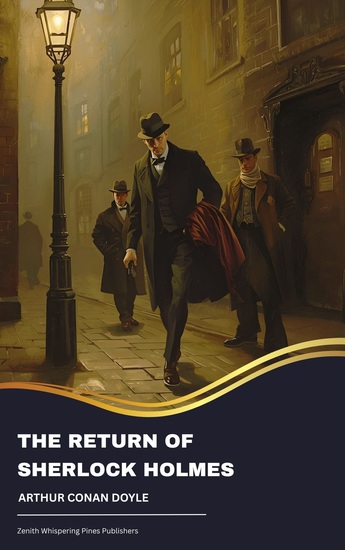
    A dead man returns. A legend rises again. And London's criminals have no idea what's coming.
    After years of silence and presumed death, Sherlock Holmes steps back into Dr. Watson's life—and immediately plunges into a new series of baffling mysteries. From sinister blackmailers and masked attackers to coded messages and impossible alibis, Holmes proves that his razor-sharp mind has lost none of its power.
    
    Readers hail this collection as "a triumphant rebirth of the world's greatest detective," filled with humor, suspense, and dazzling deduction. Each story reinforces why Holmes became a literary icon—and why his return shocked and thrilled the world.
    
    If you love clever twists, atmospheric storytelling, and the thrill of Holmes reclaiming his place in the shadows, this collection is essential.
    
    Rejoin the great detective—start reading now and witness Holmes at his brilliant best.
    Show book