Join us on a literary world trip!
Add this book to bookshelf
Grey
Write a new comment Default profile 50px
Grey
Subscribe to read the full book or read the first pages for free!
All characters reduced
50 Masterpieces you have to read before you die vol: 1 - Timeless Classics by Dostoevsky Austen Hugo Tolstoy and More - cover

50 Masterpieces you have to read before you die vol: 1 - Timeless Classics by Dostoevsky Austen Hugo Tolstoy and More

Joseph Conrad, D. H. Lawrence, George Eliot, Leo Tolstoy, James Joyce, Charles Dickens, Jane Austen, Bram Stoker, Oscar Wilde, Louisa May Alcott, Honoré Balzac, Edgar Rice Burroughs

Publisher: Zenith Golden Quill

  • 0
  • 0
  • 0

Summary

📚 One collection. Fifty essential classics. A literary journey through time.

Discover the stories that shaped the world. 50 Masterpieces You Have to Read Before You Die (Vol. 1) is a curated anthology of the most celebrated and enduring works of literature—spanning romance, tragedy, philosophy, adventure, and social commentary. Whether you're revisiting a beloved classic or exploring it for the first time, this volume brings together the most influential voices in literary history ✒️🌍.

Includes works by:

Fyodor Dostoevsky

Jane Austen

Victor Hugo

Leo Tolstoy

Charles Dickens

Mark Twain

Homer

Mary Shelley
…and many more.

This beautifully formatted edition includes:

Complete, unabridged texts

Annotations and historical insights

Author introductions and thematic notes

"An essential library in a single volume." — Readers' Review Weekly
"A stunning collection of the world's most powerful prose." — Literary Digest

📘 Click Buy Now to start your journey through the greatest books ever written.
Available since: 05/22/2025.
Print length: 12348 pages.


Other books that might interest you

  • A Short History of the World - cover

    A Short History of the World

    H. G. Wells

    • 0
    • 0
    • 0
    Don’t have time to read a whole history textbook or a set of encyclopedias? Check out H.G. Wells’ A Short History of the World for a bite-sized portion of human history. From the origin of our planet, to the great civilizations, to the Great War, follow Wells on this ambitious journey spanning thousands of years. 
     Although H.G. Wells is known as “the father of science fiction,” his interest in biology and politics also compelled him to write about the physical world around him. A Short History of the World offers the chance to connect with a great creative mind on a literal and intellectual level. Discover why Albert Einstein recommended this book for understanding the course of civilization throughout history.
    Show book
  • News and Democratic Citizens in the Mobile Era - cover

    News and Democratic Citizens in...

    Johanna Dunaway, Kathleen Searles

    • 0
    • 0
    • 0
    Though people frequently use mobile technologies for news consumption, evidence from several fields shows that smaller screens and slower connection speeds pose major limitations for meaningful reading. In News and Democratic Citizens in the Mobile Era, Johanna Dunaway and Kathleen Searles demonstrate the effects of mobile devices on news attention, engagement, and recall, and identify a key cognitive mechanism underlying these effects: cognitive effort. They advance a theory that is both old and new: the costs of information-seeking curb participatory behaviors unless the benefits outweigh them. For news consumers in the mobile era, for example, mobile devices increase the time, economic, and cognitive costs associated with information-seeking. Only for a small few do the benefits of attending to the news on mobile devices outweigh the costs. 


    Dunaway and Searles argue that attention, engagement, and recall suffer when people consume news on mobile devices. They then investigate the implications of these effects for the news industry and for an informed democratic citizenry. Drawing on both laboratory and real-world studies, Dunaway and Searles bring the psychophysiology of news consumption to bear on the question of what we could lose in an information environment characterized by a dramatic shift in reliance on mobile devices.
    Show book
  • A Rare Recording of 1920's American Vaudeville - cover

    A Rare Recording of 1920's...

    Steve Porter, Ernest Hare,...

    • 0
    • 0
    • 0
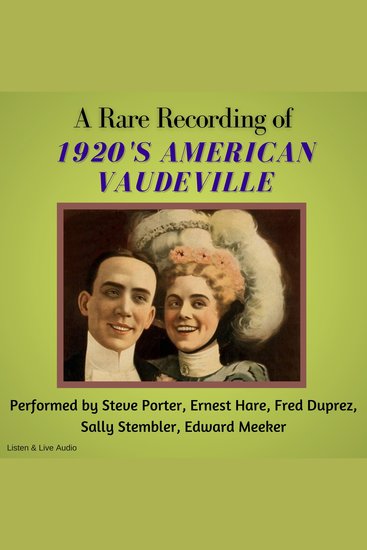
    Variety entertainment dominated the popular recording industry's acoustic era (pre -1925), from its beginnings in the 1890s, when records were made on wax cylinders, right up to the beginning of the jazz age in the mid-1920s. From slapstick vaudeville routines and ethnic dialect skits to romantic ballads and dramatic recitations, sound recordings brought variety entertainment into the homes of millions of Americans. The following are three recordings from the era.  
     
    The Arkansas Traveler, performed by Steve Porter and Ernest Hare, recorded in 1922. A classic "rube" sketch, The Arkansas Traveler was probably the best-selling example of the popular genre "descriptive scene," a humorous dramatic sketch that often included sound effects and music.  
     
    Desperate Desmond, written and performed by Fred Duprez, recorded in 1915. Duprez was a vaudeville comedian famous for his comic monologues. An Edison record catalog, circa 1927, had this to say about the Desperate Desmond bit: "Duprez invented all this himself and has given it before many audiences. It is really very cleverly worked out; some of the incidental music fits the characters with a burlesque fashion, and some of it, apparently to Duprez's intense disgust, is wildly inappropriate. To quote a popular advertisement If you can't laugh at this, see a doctor."  
     
    Laughing Record (Henry's Music Lesson), performed by Sally Stembler and Edward Meeker, recorded 1923. This comic sketch was so popular nearly every early record company sold a recording of it. This is the Edison Company's version. Known as the "laughing girl," Sally Stembler was recalled in Jim Walsh's seminal column, "Favorite Pioneer Recording Artist," in Hobbies Magazine (September, 1973): "Miss Stembler was a vaudeville comedienne who for a generation or more entertained audiences with laughing specialties."
    Show book
  • Dreyfus Affair and the Leo Frank Trial The: The History of the Most Notorious Antisemitic Cases in France and America - cover

    Dreyfus Affair and the Leo Frank...

    Editors Charles River

    • 0
    • 0
    • 0
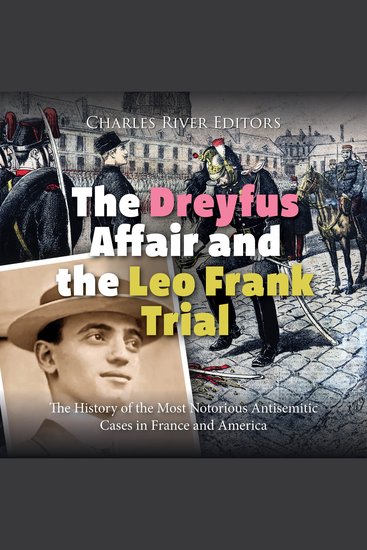
    In September 1890, among a pile of torn-up documents delivered by Mme. Bastian was found a note handwritten in French which, when pieced together, proved to be a list of French military secrets handed over to the Germans by an unknown French officer of the General Staff. This discovery, which proved the existence of a traitor in the department, triggered a ferment in the corridors of the Conseil Supérieur de la Guerre, and the hunt was on for the culprit. By a process of elimination, officers of the military intelligence were able to narrow down a list of probable traitors, among whom was a young Jewish staff officer, Captain Alfred Dreyfus, who was immediately earmarked as the chief suspect.  
    	These are the essential facts of the “Dreyfus Affair,” as it came to be known, an episode that in many respects defined French anti-Semitism in the late 19th century. A case was built with the central objective of protecting the integrity of French military establishment, and in the process, the relatively muted anti-Semitism in France (at least compared to other European nations) was transformed into an era of virulent and violent Jew-hatred that characterized and sullied the final decade of the 19th century in France. Even today, as many of the affair’s nuances and facets have faded from memory, its political importance and anti-Semitic elements continue to be well-known and quite relevant today.  
    In 1913, Mary Phagan, a young Georgia factory girl and the daughter of tenant farmers, was raped and killed, and suspicion fell upon Leo Frank, the Jewish-American factory manager, who was subsequently arrested, tried, and convicted of her murder based on the thinnest of circumstantial evidence. The entire case against Frank rested on the testimony of the factory janitor, Jim Conley, despite the fact Conley had been arrested almost immediately after Frank when he was spotted washing what appeared to be blood off his clothes. 
    Show book
  • Cleansing the Mind of the Accumulation of Time - Ojai 1980 - Dialogue 2 - cover

    Cleansing the Mind of the...

    Jiddu Krishnamurti

    • 0
    • 0
    • 0
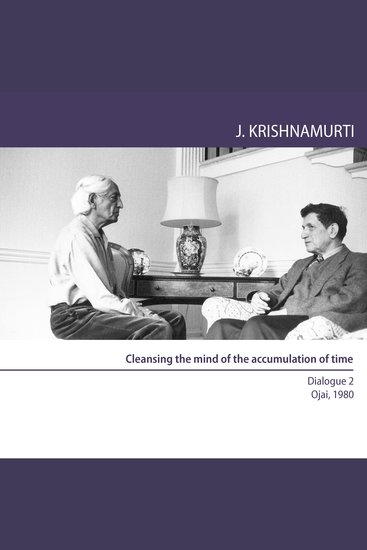
    Cleansing the mind of the accumulation of time - 2 April 1980  
    • Time is the enemy of man. 
    • Is there a beginning which is not enmeshed in time? 
    • We said nothingness is everything and so it is total energy. It is undiluted pure, uncorrupted energy. Is there something beyond that? 
    • Has man ever been free from the ‘I’? 
    • That emptiness can only exist when there is death of the particular.
    Show book
  • Avoidant Help Workbook - Healing the Distance with Easy and Practical Everyday Exercises for Dismissive Avoidant Attachment Style - cover

    Avoidant Help Workbook - Healing...

    Alex Kingsman

    • 0
    • 0
    • 0
    Do you desire genuine connections and fulfilling relationships?Are you find yourself unintentionally sabotaging potential partnerships?Do you feel stuck and uncertain about how to start opening up? 
    Find out more in this workbook, written specifically for individuals with a dismissive avoidant attachment style! 
    Attachment style researcher Alex Kingsman provides a complete list of exercises that help readers overcome the challenges of being avoidant. As an avoidant himself, Kingsman understands the difficulties and self-blame many that avoidants experience on a day-to-day basis. 
    This workbook, born from years of research, offers a new approach that will lead you towards nurturing fulfilling relationships, without losing your sense of self. 
    While most attachment books available out there tend to blame and discard the experience of avoidant individuals, the author understands the underlying fears while, challenging many misconceptions as:Are you really afraid of losing your independence? Or do you simply fear you might lose yourself into a new relationship?Do you really resist commitment? Or do you simply not want to be manipulated into doing something? 
    This workbook presents a new outlook on how to dismantle emotional barriers while remaining authentic. Discover exercises tailored for avoidants, designed by someone who has walked the same path as you. Shed the fear of intimacy and self-sabotage in your relationships, as Kingsman offers a clear roadmap for change. 
    In the following workbook, you will learn how to:Truly understand your emotional needsDiscover the benefits of being avoidant (yes, there are some!)Let down your emotional walls and embrace changeStop idealising your ex
    Show book