


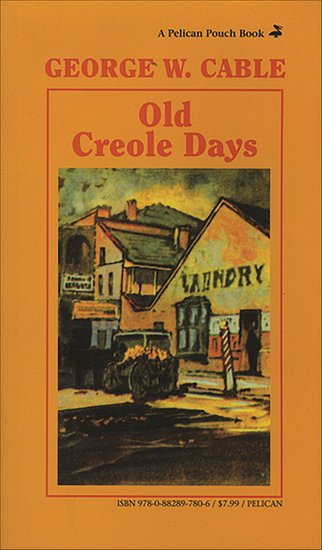
Old Creole Days
George Cable
Publisher: Pelican Publishing
Summary
These stories reflect the Creole way of life during the transitory post-Civil War period.
Available since: 03/20/2023.
Print length: 218 pages.

Publisher: Pelican Publishing
These stories reflect the Creole way of life during the transitory post-Civil War period.
The Book of Deuteronomy is the fifth book of the Torah, and the fifth book of the Christian Old Testament. Chapters 1-30 of the book consist of three sermons or speeches delivered to the Israelites by Moses on the Plains of Moab, shortly before they enter the Promised Land. The first sermon recounts the forty years of wilderness wanderings which had led to that moment, and ends with an exhortation to observe the law. The second sermon reminds the Israelites of the need to follow Yahweh and the laws (or teachings) he has given them, on which their possession of the land depends. The third sermon offers the comfort that, even should the nation of Israel prove unfaithful and so lose the land, with repentance all can be restored. The final four chapters (31-34) contain the Song of Moses, the Blessing of Moses, and the narratives recounting the passing of the mantle of leadership from Moses to Joshua and, finally, the death of Moses on Mount Nebo.Show book
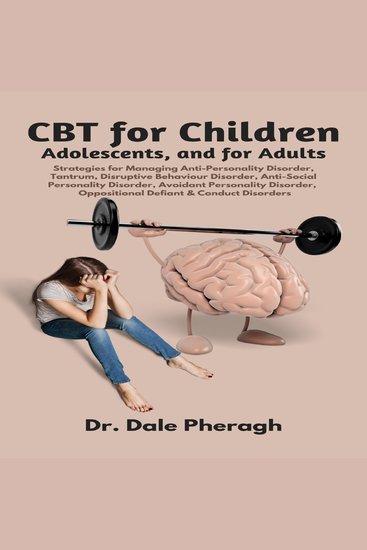
The CBT guide for Children and Adolescents gives you the resources to help the children in your life handle their daily obstacles with ease.Inside this workbook you'll find hundreds of worksheets, exercises, and activities to help treat: ? Ideal Solution for Anti-Personality Disorder? Tantrum, ? Disruptive Behaviour Disorder, ? Anti-Social Personality Disorder, ? Avoidant Personality Disorder, ? Oppositional Defiant Disorder & Conduct Disorders? Conduct Disorders Written by a doctor with decades of experience working with kids, teens, adults and these practical and easy-to-use therapy tools are vital to teaching people how to cope with and overcome their deepest struggles. Step-by-step, you'll see how the best strategies from cognitive behavioral therapy are adapted for children.Conduct disorder, sometimes diagnosed in child years, that is seen as antisocial actions which violate the privileges of others and age-appropriate sociable standards and guidelines. Antisocial behaviors can include irresponsibility, delinquent acts (such as truancy or operating away), breaking the rights of others (such as robbery), and physical hostility toward pets or others (such as assault or rape). These behaviors sometimes happen collectively; however, one or several might occur with no other(s).Conduct Disorder is a significant behavioral and emotional disorder that may appear in children and teenagers. A kid with this disorder may screen the design of disruptive and violent behavior and also have problems following guidelines.It isn't uncommon for children and teenagers to have behavior-related problems sometime throughout their development. However, the behavior is known as to be always a Conduct Disorder when it's long-lasting, so when it violates the privileges of others, it will go against accepted norms of behavior and disrupt the child's or families’ everyday living.Show book

Mourt's Relation was written between November 1620 and November 1621, and it gives a detailed descriptionof what happened from the landing of the Mayflower Pilgrims on Cape Cod in Provincetown Harbor through their exploring and eventual settling of Plymouth Colony. It was written primarily by Edward Winslow, although William Bradford appears to have written most of the first section. The book describes their relations with the surrounding Native Americans, up to what is commonly called the first Thanksgiving and the arrival of the ship Fortune in November 1621.Show book
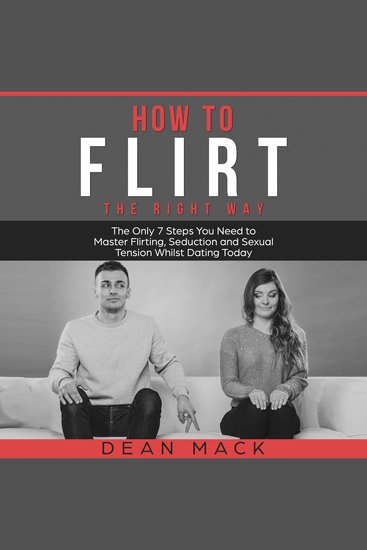
Improve Your Social Skills and Success in Flirting by Following These 7 Easy Steps!
Do you feel uncomfortably awkward when left alone with a person of the opposite sex? Do you fail to send a message to the other person that you find them attractive and genuinely interesting, or fail to show your interesting side and get them to know you as well?
If your answer to any of these questions was yes, then "How to Flirt: The Right Way, The Only 7 Steps You Need to Master Flirting, Attraction, Seduction and Dating Today" is definitely the guide you're looking for!
The book gives you clear guidelines, tips and tricks, and, most importantly, real-life examples on how to behave and deal with certain situations, all with the goal of giving you the knowledge that you can immediately implement in order to effectively flirt.
Here's What You'll Learn:The mindset that you need to have before even trying to flirtHow to make use of physical and eye contact, but not overdo itHow to communicate, compliment and be funnyWhat is the mindset that you need to evoke in the person you're flirting withHow to put all these aspects into action and practical use
No matter, your age, sex or demographics, this book will be the perfect guide to fully understanding how to communicate, flirt and date better than ever before.Once you get the hang of it, you'll be sharing the knowledge you gained form this book with others, just don't forget that it wasn't always that easy!
Order Now!
Show book

Are you having trouble fostering healthy relationships?
Are you stressed, feeling drained and exhausted from giving too much in your relationships?
Do you know who you are? What you need? What you like? Or do you feel that you need to be validated and approved by a partner (or any other person) to feel good about yourself?
Codependency is notoriously difficult to combat because there is no precise definition of the disorder. The signs and symptoms also differ for everyone. It is often mistaken for narcissism or other personality disorders that do not reflect the true situation.
People who suffer from this disorder tend to mask what they really feel. At other times, they are not even aware of what they are doing. This only serves to cloud the overall picture by delaying positive interventions, which, sometimes will never come.
I RECOMMEND THAT YOU READ THIS BOOK IF:
• You are not aware of how you truly feel.
• You have difficulty identifying your feelings.
• You have difficulty expressing your feelings.
• You tend to minimize, modify or even deny the reality of what you feel.
• You tend to worry and/or fear how others may respond to how you feel.
• You give power over your feelings to others.
Act now before it's too late
If a codependent denies his destructive behavior, he can pass it on to his children. If the child does not realise the behavioural model of the parents, and its negative impact, it will generate the same patterns as an adult. An endless cycle can be established.
Commit to breaking this cycle and regain control of your life.
Show book
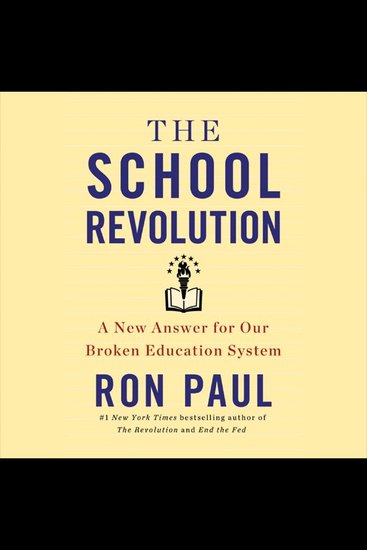
Twelve-term Texas Congressman, Presidential candidate, and #1 New York Times bestselling author Ron Paul returns with a highly provocative treatise about how we need to fundamentally change the way we think about America's broken education system in order to fix it. Whether or not you have children, you know that education is vital to the prosperity and future of our society. Yet our current system simply doesn't work. Parents feel increasingly powerless, and nearly half of Americans give our schools a grade of "C". Now, in his new book, Ron Paul attacks the problem head-on and provides a focused solution that centers on strong support for home schooling and the application of free market principles to the American education system. Examining the history of education in this country, Dr. Paul identifies where we've gone wrong, what we can do about it, and how we can change the way we think about education in order to provide a brighter future for Americans.Show book





