Join us on a literary world trip!
Add this book to bookshelf
Grey
Write a new comment Default profile 50px
Grey
Subscribe to read the full book or read the first pages for free!
All characters reduced
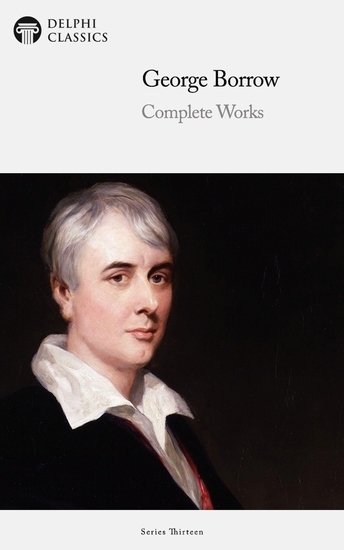
Delphi Complete Works of George Borrow Illustrated - cover

Delphi Complete Works of George Borrow Illustrated

George Borrow

Publisher: Delphi Publishing Ltd

  • 0
  • 0
  • 0

Summary

Now regarded as one of the most imaginative prose writers of the nineteenth century, George Borrow was an English traveler, linguist and translator. His many adventures, including contact with the Romani, provided the inspiration for his travel book masterpiece ‘Lavengro’ and its sequel ‘The Romany Rye’ (1857). While working in Spain for a Bible society, Borrow found his literary homeland, providing materials for ‘The Zincali’ and for his brilliantly picturesque travel book ‘The Bible in Spain’, which was a tremendous success. This eBook presents Borrow’s complete works, with numerous illustrations, rare texts, informative introductions and the usual Delphi bonus material. (Version 1)
 
* Beautifully illustrated with images relating to Borrow’s life and works* Concise introductions to the major texts* All the travel books, with individual contents tables* Images of how the books were first published, giving your eReader a taste of the original texts* Excellent formatting of the texts* Rare translations* Includes Borrow’s letters – spend hours exploring the author’s correspondence* Features four biographies, including Shorter’s seminal study – discover Borrow’s intriguing life* Ordering of texts into chronological order and genres
 
CONTENTS:
 
The Travel BooksThe Zincali (1841)The Bible in Spain (1843)Lavengro (1851)The Romany Rye (1857)Wild Wales (1862)A Supplementary Chapter to the Bible in Spain (1913)
 
The TranslationsFaustus by Friedrich Maximilian Klinger (1825)Romantic Ballads (1826)Targum (1835)The Talisman (1835)The Gypsy Luke (1837)The Sleeping Bard by Ellis Wynne (1860)The Turkish Jester by Nasreddin Hoca (1884)The Death of Balder by Johannes Ewald (1889)Miscellaneous Ballads
 
Non-FictionThe Welsh and Their Literature (1861)Romano Lavo-lil (1874)
 
The LettersThe Letters of George Borrow to the British and Foreign Bible Society (1911)Letters to his Mother, Ann Borrow and Other Correspondents (1913)Letters to His Wife Mary Borrow (1913)
 
The BiographiesGeorge Borrow (1900) by Alfred Egmont HakeGeorge Borrow, the Man and His Work (1908) by R. A. J. WallingGeorge Borrow (1911) by Walter Theodore Watts-DuntonGeorge Borrow and His Circle (1913) by Clement King Shorter
Available since: 04/21/2023.
Print length: 1140 pages.

Other books that might interest you

  • A Legend of Old Egypt - From their pens to your ears genius in every story - cover

    A Legend of Old Egypt - From...

    Boleslaw Prus

    • 0
    • 0
    • 0
    Aleksander Głowacki who wrote under the nom de plume Boleslaw Prus was born on 20th August 1847 at Hrubieszów in the Kingdom of Poland, at that time, controlled by the Russian Empire. 
    At three his mother died and then at nine his father.  Female relatives helped raise him but at 15 he joined the Polish uprising against the might of Imperial Russia.  Wounded on the battlefield, arrested and imprisoned, he was later released into the care of a relative and resumed secondary school and then Warsaw University but poverty forced him to leave after two years.  At some point he developed agoraphobia which often caused problems. 
    In 1869, he enrolled in the Forestry Department at Puławy but was soon sacked and so he began a system of self-education that led to work as a newspaper columnist on a wide-ranging series of topics that eventually became the ‘Weekly Chronicles’ and spanned 40 years. 
    With his finances now stabilized he married and then adopted his late brother-in-law’s son.  
    It seems he had doubts as to the scale of his talents and early on adopted the name ‘Boleslaw Prus’ for both his journalistic and literary offerings. 
    His work as a short-story writer met with much acclaim. He wrote several dozen of them, originally published in newspapers and ranging in length from micro-story to novella. His keen observation of everyday life and sense of humor are evident in them.  
    During his career he also wrote novels. After ‘Pharoah’, in 1895, he embarked on a four-month journey taking in Berlin, Dresden, Nuremberg, Rapperswil in Switzerland, where he stayed for two months, and his final destination, Paris.  Here his agoraphobia was so bad he couldn’t cross the Seine.  
    However, his writing continued and in 1911 his novel ‘Changes’, though uncompleted, began to be serialised.  It was never finished. 
    Boleslaw Prus died on 19th May 1912, at his Warsaw apartment.  He was 64.  A National Hero, thousands attended both his funeral service and interment.
    Show book
  • Bedtime Stories For Adults - Perfect classic literature to listen to before bed - cover

    Bedtime Stories For Adults -...

    Oscar Wilde

    • 0
    • 0
    • 0
    As a child being read to was one of the greatest joys imaginable.  A loved one would start a tale whilst you were all cosy warm in bed with the lights nodding off.  Anything could happen but sleep would come and dreams would start and all was good with the world.  Adults too long for reassurance, for comfort, for calm.  Sometimes they may get that.  But with classic authors such as Oscar Wilde, O Henry, Saki, Rabindranath Tagore and many others they may not.  Expect the unexpected. 
     
    1 - Bedtime Stories for Adults  - An Introduction 
    2 - Kabuliwallah by Rabindranath Tagore 
    3 - Springtime a la Carte by O Henry 
    4 - Kew Gardens by Virginia Woolf 
    5 - Speed by Sinclair Lewis 
    6 - Tobermory by Saki 
    7 - The Ransom of Red Chief by O Henry 
    8 - The Selfish Giant by Oscar Wilde 
    9 - The Burglar's Christmas by Willa Cather 
    10 - Transients in Arcadia by O Henry 
    11 - An Angel in Disguise by T S Arthur 
    12 - The Skylight Room by O Henry 
    13 - The Magic Shop by H G Wells 
    14 - The Gift of the Magi by O Henry 
    15 - The Happy Prince by Oscar Wilde 
    16 - The Great Good Place by Henry James
    Show book
  • A Christmas Carol - cover

    A Christmas Carol

    Charles Dickens

    • 0
    • 0
    • 0
    Sink into the classic tale of Victorian Christmas and the redemption of London’s most memorable miser, as we follow Scrooge through his encounters with the spirits of Christmas. 
    Taken from the reading text that Dickens used when giving his own performances of this classic Christmas tale, this shortened version of the original book is ideal for getting into the Christmas spirit.
    Show book
  • Cavalleria Rusticana - From their pens to your ears genius in every story - cover

    Cavalleria Rusticana - From...

    Giovanni Verga

    • 0
    • 0
    • 0
    The bookshelves of European literature are incredible collections that have gathered together centuries of very talented authors.  From this continent their fame spread and whilst among their number many are now forgotten or neglected their talents endure.  Among them is Giovanni Verga.
    Show book
  • Animal Farm - cover

    Animal Farm

    George Orwell

    • 0
    • 0
    • 0
    Animal Farm is an allegorical novella by George Orwell, first published in England on 17 August 1945. The book tells the story of a group of farm animals who rebel against their human farmer, hoping to create a society where the animals can be equal, free, and happy. Ultimately, however, the rebellion is betrayed, and the farm ends up in a state as bad as it was before, under the dictatorship of a pig named Napoleon. 
    According to Orwell, the fable reflects events leading up to the Russian Revolution of 1917 and then on into the Stalinist era of the Soviet Union. Orwell, a democratic socialist, was a critic of Joseph Stalin and hostile to Moscow-directed Stalinism, an attitude that was critically shaped by his experiences during the Spanish Civil War. The Soviet Union had become a brutal dictatorship built upon a cult of personality and enforced by a reign of terror. In a letter to Yvonne Davet, Orwell described Animal Farm as a satirical tale against Stalin ("un conte satirique contre Staline"), and in his essay "Why I Write" (1946), wrote that Animal Farm was the first book in which he tried, with full consciousness of what he was doing, "to fuse political purpose and artistic purpose into one whole". 
    The original title was Animal Farm: A Fairy Story, but U.S. publishers dropped the subtitle when it was published in 1946, and only one of the translations during Orwell's lifetime kept it. Other titular variations include subtitles like "A Satire" and "A Contemporary Satire". Orwell suggested the title Union des républiques socialistes animales for the French translation, which abbreviates to URSA, the Latin word for "bear", a symbol of Russia. It also played on the French name of the Soviet Union, Union des républiques socialistes soviétiques. 
    Show book
  • Strange Case of Dr Jekyll and Mr Hyde - cover

    Strange Case of Dr Jekyll and Mr...

    Robert Louis Stevenson

    • 0
    • 0
    • 0
    Robert Louis Stevenson's classic tale of duality, first published in 1886, Strange Case of Dr. Jekyll and Mr. Hyde is the first work to be produced by Arkbound Classics.
    Show book