Join us on a literary world trip!
Add this book to bookshelf
Grey
Write a new comment Default profile 50px
Grey
Subscribe to read the full book or read the first pages for free!
All characters reduced
Of Time and the River - cover

Of Time and the River

Thomas Wolf

Publisher: The Ebook Emporium

  • 0
  • 0
  • 0

Summary

"A man's hunger for the world—the fury of youth, the mystery of time, and the pulse of a nation."

In Of Time and the River, Thomas Wolfe paints a portrait of the artist as a young man on a grand scale. We follow Eugene Gant from the halls of Harvard University to the bustling streets of New York City and across the oceans to Europe. Driven by an insatiable hunger for knowledge, experience, and love, Eugene grapples with the weight of his family's past and the overwhelming promise of the future. Wolfe's prose is legendary—vibrant, torrential, and deeply poetic—capturing the "buried life" of humanity and the sprawling, contradictory beauty of early 20th-century America.

The "Hunger" of Youth: Eugene Gant is one of literature's most relatable seekers. His journey is defined by a frantic desire to read every book, meet every person, and see every sight. Wolfe perfectly captures that specific time in life when the world feels both impossibly large and urgently within reach.

A Symphony of Time: As the title suggests, the novel is obsessed with the flow of time—both the relentless "river" of history and the private, internal time of memory. Wolfe explores how we are shaped by the ghosts of our ancestors and the fleeting moments that define our identity.

Why It Is a Masterpiece: Of Time and the River is more than a story; it is an experience. It is a book for anyone who has ever felt "homesick for a place they've never been." Wolfe's ability to find the epic in the everyday makes this one of the most powerful and enduring works of American Modernism.

Lose yourself in the river of time. Purchase "Of Time and the River" today.
Available since: 01/16/2026.
Print length: 826 pages.

Other books that might interest you

  • The Mystery of the Blue Train - cover

    The Mystery of the Blue Train

    Agatha Christie

    • 0
    • 0
    • 0
    In Agatha Christie's six installment of the Hercules Poirot series, our titular detective will once again showcase his brilliant investigative skills as he untangles the mystery of the blue train.A luxury train is headed to Nice with several well-to-do passengers on board. Most are living, breathing people with their own mysterious motivations, but the train will also deliver one silent victim. Somewhere along the route, Ruth Keeting was robbed and murdered, and it's up to Poirot to find her killer. Is it Ruth's estranged husband? Her French lover? Or someone else altogether . . . In this classic murder mystery filled with twists and turns, Poirot will stage a chilling reenactment of the fatal journey in order to expose hidden truths and bring the true culprit to justice.
    Show book
  • All Gold Canyon - cover

    All Gold Canyon

    Jack London

    • 0
    • 0
    • 0
    Set in the beauty of the Sierra Nevada mountains, "All Gold Canyon" is at once a depiction of the quotidian realities of a hard-working gold miner's life, a meditation on the fragility of nature in the face of man's ambition, and a thrilling, no-holds-barred tale of Wild West violence.
    Show book
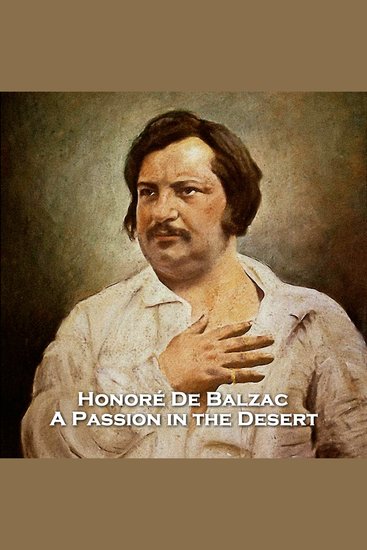
  • A Passion in the Desert - From their pens to your ears genius in every story - cover

    A Passion in the Desert - From...

    Honoré de Balzac

    • 0
    • 0
    • 0
    Honoré de Balzac was born on the 20th May, 1799 in the French city of Tours into an upper middle class family.  
    At birth Balzac was wet-nursed and often then schooled away from home by parents who seemed remote.  So difficult was life that at 15 he attempted suicide. The family’s intention was for him to have a career in law but Balzac preferred literature.  An avid reader, he began writing but his early attempts showed little promise.  
    He thereafter settled in Paris and began to publish anonymously across political, philosophical, and historical novels. 
    In 1825, Balzac purchased a printing house.  He was soon bankrupt and forced to return to writing in order to reduce his debts.  But his literary fortunes had changed, and his writing was now to achieve considerable success.  He was accepted among the city’s literary élites and its salons and would play an important role in establishing the copyright law in France.  
    Balzac often worked on more than one project at a time and in his magnus opus ‘The Human Comedy’ all types of texts were collected to offer a rare narrative of different classes and social stereotypes of society.  For many Balzac is considered the father of French realism, yet his works also cover philosophical and psychological questions.  His writing was a fundamental source of inspiration for many distinguished and later writers such as Flaubert, Zola and Proust.  
    Balzac also tried his hand at magazine publication with ‘La Chronique de Paris’ and ‘La Revue Parisienne.’  Although he was partnered with others such as Victor Hugo, it was another complete financial failure.  
    As a committed Catholic, Balzac’s stories also dealt with themes of mysticism, esotericism and spirituality, as well as universality and humanism.  
    In politics, he was a staunch defender of the French Crown but unlike his contemporaries he was not an implacable enemy of the republicans.  He often presented disagreements between royalists and republicans as a tolerable difference in political opinion.  
    Despite many relationships Balzac married only towards the end of his life and it was in 1833 that he met the Polish Countess Hanska, who only became his wife 17 years later after an extensive relationship by correspondence and, by then, his health was ruinously bad.  
    Honoré de Balzac died on 18th August 1850 in Paris.  He was 51.
    Show book
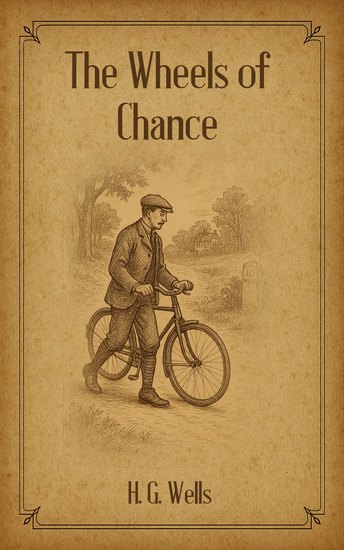
  • The Wheels of Chance - cover

    The Wheels of Chance

    H. G. Wells

    • 0
    • 0
    • 0
    The Wheels of Chance is a delightful and gently humorous novel by H. G. Wells that captures the spirit of adventure, romance, and self-discovery in everyday life. First published in 1896, the book departs from Wells's famous scientific romances to offer a warm, human-scale story set against the backdrop of late Victorian England.
    
    The novel follows Mr. Hoopdriver, a timid and socially awkward draper's assistant who embarks on a bicycling holiday in hopes of escaping the monotony of his constrained existence. Along the road, he encounters Jessie Milton, a young woman fleeing an unhappy situation of her own. Their chance meeting sets in motion a journey filled with mishaps, misunderstandings, and moments of unexpected courage.
    
    As the two travelers navigate both the English countryside and their own personal limitations, Wells explores themes of class, freedom, social convention, and the quiet heroism of ordinary people. With warmth and irony, the novel celebrates the liberating possibilities of travel and the transformative power of stepping beyond one's prescribed role.
    
    Charming, insightful, and subtly satirical, The Wheels of Chance remains a timeless exploration of individuality and chance encounters. It stands as one of Wells's most accessible and endearing novels, offering readers humor, romance, and a compassionate view of human aspiration.
    Show book
  • The Story of a Bad Boy - A New England Boyhood at Rivermouth - cover

    The Story of a Bad Boy - A New...

    Thomas Bailey Aldrich

    • 0
    • 0
    • 0
    A New England boyhood in the 1840s: a boy sent from New Orleans to his grandfather's town, and the pranks, the fights, the theatricals and the drowning that make a year. Aldrich called his hero a bad boy to mean an ordinary one, and said plainly that he was writing his own childhood. The book came out seven years before "Tom Sawyer" and Twain knew it well; the schoolroom, the burning stagecoach and the cannon are all here first.
    Show book
  • Bel Ami - The Illustrated Gift Edition - cover

    Bel Ami - The Illustrated Gift...

    Guy de Maupassant

    • 0
    • 0
    • 0
    A penniless cavalry veteran with a good moustache is given a job on a Paris newspaper and discovers that every rung above him — press, salon, ministry — can be reached through a woman. Maupassant follows Georges Duroy up all of them without once raising his voice or offering a judgement. Paintings of boulevards, newsrooms and gaslit salons. Gilded Library decoration of newspaper sheets, a champagne coupe and a lady's glove.
    Show book