Join us on a literary world trip!
Add this book to bookshelf
Grey
Write a new comment Default profile 50px
Grey
Subscribe to read the full book or read the first pages for free!
All characters reduced
The Shewing-up of Blanco Posnet - cover

The Shewing-up of Blanco Posnet

George Bernard Shaw

Publisher: Avia Artis

  • 0
  • 0
  • 0

Summary

“The Shewing-up of Blanco Posnet” is a play by George Bernard Shaw, an Irish playwright who became the leading dramatist of his generation, and in 1925 was awarded the Nobel Prize in Literature.

Shaw claimed that "this little play is really a religious tract in dramatic form", the plot being less important than the debate about morality and divinity that occurs between the characters. He was using the folksy language and quirky insights of his principal character to explore his version of the Nietzschean concept that modern morality must move "beyond good and evil". Shaw took the view that God is a process of continual self-overcoming: "if I could conceive a god as deliberately creating something less than himself, I should class him as a cad. If he were simply satisfied with himself, I should class him as a lazy coxcomb. My god must continually strive to surpass himself." When he heard that Leo Tolstoy had shown an interest in the ideas expressed in the play, he wrote a letter to him explaining his views further.
Available since: 01/07/2022.
Other books that might interest you

  • How To Write Evocative Poetry - A Guidebook For Unlocking Creativity Expressing Truth & Captivating Imagination - cover

    How To Write Evocative Poetry -...

    Zachary Phillips

    • 0
    • 0
    • 0
    Journey into the captivating world of poetic expression with renowned author and poet, Zachary Phillips. Whether you are an aspiring poet or a seasoned writer looking to elevate your craft, this enlightening guide is your key to unlocking the power of words and creating evocative, soul-stirring poetry. 
    Within these pages, Zachary Phillips masterfully weaves together the art of language, imagery, and emotion, presenting a comprehensive toolkit designed to ignite your creativity and help you transcend the ordinary. From crafting vivid metaphors to exploring the depths of your emotions, each section delves into the intricate process of capturing the essence of life through carefully chosen words. 
    Drawing inspiration from the natural world, personal experiences, and universal themes, Zachary Phillips provides invaluable advice on how to tap into your innermost thoughts and translate them into evocative verse. Through thought-provoking exercises and examples, you'll learn to evoke sensations, spark memories, and transport your readers to uncharted emotional landscapes. 
    But this book is more than just a practical guide—it is an invitation to discover your unique voice and unleash your poetic potential. With Zachary Phillips as your trusted guide, you'll gain the confidence to experiment with different poetic forms, play with unconventional techniques, and embrace the vulnerability of self-expression. 
    ‘How to Write Evocative Poetry’ is a transformative journey that will inspire you to breathe life into your words, infuse your poetry with depth and resonance, and leave an indelible mark on the hearts and minds of your readers. Let your imagination soar as you embark on a poetic odyssey that will forever change the way you view and create art.
    Show book
  • A Rhyme A Dozen ― Christmas Day - 12 Poets 12 Poems 1 Topic - cover

    A Rhyme A Dozen ― Christmas Day...

    Samuel Taylor Coleridge, Sara...

    • 0
    • 0
    • 0
    ‘A dime a dozen’ as known in America, is perhaps equal to the English ‘cheap as chips’ but whatever the lingua franca of your choice in this series we hereby submit ‘A Rhyme a Dozen’ as 12 poems on many given subjects that are a well-rounded gathering, maybe even an essential guide, from the knowing pens of classic poets and their beautifully spoken verse to the comfort of your ears. 
    1 - A Rhyme a Dozen - 12 Poets, 12 Poems, 1 Topic.  Christmas Day - An Introduction  
    2 - Wondrous Sight For Men and Angels by Ann Griffiths 
    3 - Angels From the Realms of Glory by James Montgomery 
    4 - A Christmas Carol by Aubrey De Vere 
    5 - A Christmas Carol by G K Chesterton 
    6 - Christmas Carol by Sara Teasdale 
    7 - A Carol. I by Mildmay Fane, Earl of Westmorland 
    8 - A Christmas Carol by Samual Taylor Coleridge 
    9 - Carol by Ben Jonson 
    10 - In The Bleak Midwinter by Christina Georgina Rossetti 
    11 - Go, Tell It on the Mountain by John Wesley Work Jr 
    12 - The Darkling Thrush by Thomas Hardy 
    13 - We Three Kings of Orient Are by John Henry Hopkins Jnr
    Show book
  • Here We Go Again - cover

    Here We Go Again

    Ronald Franklin Saia

    • 0
    • 0
    • 0
    Here We Go Again evolved from Heartland Inspirations, Kentucky Wonder and Inspirations Anew for You, continuing my being inspired by life and the desire to lift up others. Everyone needs an occasional lift from life's challenges which tests our coping ability. I believe Here We Go Again will provide that moment for you. 
    Ronald Franklin Saia was born a grandson to a Italian from Sutera, Sicily. Growing up in rural Kansas gave Ronald a deep feeling in his soul for the outdoors. He hunted, trapped, rode his buckskin mare old Beauty, slept under the stars and cooked supper over an open camp fire. He is a real American patriot. While Ronald worked his way through college, he lived at home with his precious mother, Mary, and father, Victor. What a blessing it was for God to have chosen them for this parents. 
    For a time, he worked in Venezuela where he met his wife, Barb. He has traveled in South/Central America and Europe. Ronald's inspirations/poetry are straight from his heart and represent a true appreciation for creation and God's works along with life's experiences and personal observations.
    Show book
  • Tractatus Philosophico-Poeticus - cover

    Tractatus Philosophico-Poeticus

    Signe Gjessing

    • 0
    • 0
    • 0
    An exquisite, lyrical reimagining of Wittgenstein's philosophical work of 1922, from a rising star on par with Inger Christensen
    Ludwig Wittgenstein's Tractatus Logico-Philosophicus, often noted as the most important philosophical work of the 20th century, had a broad goal: to identify the relationship between language and reality, and to define the limits of science.
    Following on from Wittgenstein 100 years later, Signe Gjessing updates and reimagines the Tractatus, marrying poetry with philosophy to test the boundaries of reality. Stunning, knowing, and revitalising, and glinting with stars, silk, and ecstasy, this is poetry which exacts the logical consequence of philosophy, while locating beauty and significance in the nonsense of the world.
    Show book
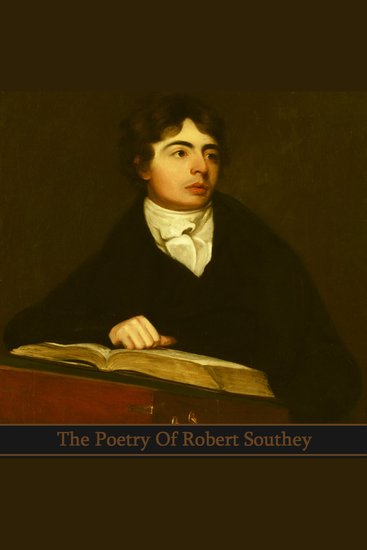
  • The Poetry of Robert Southey - Poems from the Bristol born Oxford graduate and Poet Laureate - cover

    The Poetry of Robert Southey -...

    Robert Southey

    • 0
    • 0
    • 0
    Robert Southey was born on the 12th of August 1774 in Bristol. A poet of the Romantic school and one of the "Lake Poets". 
    Although his fame has been eclipsed by that of his friends William Wordsworth and Samuel Taylor Coleridge, Southey's verse was highly influential and he wrote movingly against the horrors and injustice of the slave trade.  Among his other classics are Inchcape Rock as well as a number of plays including Wat Tyler. 
    He was great friends with Coleridge, indeed in 1795, in a plan they soon abandoned, they thought to found a utopian commune-like society, called Pantisocracy, in the wilds of Pennsylvania. 
    However, that same year, the two friends married sisters Sarah and Edith Fricker. Southey's marriage was successful but Coleridge's was not. In 1810 he abandoned his wife and three children to Southey's care in the Lake District.  Although his income was small and those dependent upon him growing in number he continued to write and burnish his reputation with a wider public. 
    In 1813 on the refusal of Walter Scott he was offered by George II the post of Poet Laureate, a post Southey accepted and kept till his death 30 years later. 
    Southey was also a prolific letter writer, literary scholar, essay writer, historian and biographer. His biographies included those of John Bunyan, John Wesley, William Cowper, Oliver Cromwell and Horatio Nelson. 
    He was a renowned scholar of Portuguese and Spanish literature and history, and translated works from those two languages into English and wrote a History of Brazil (part of his planned but un-completed History of Portugal) and a History of the Peninsular War. 
    Perhaps his most enduring contribution is the children's classic The Story of the Three Bears, the original Goldilocks story, first published in Southey's prose collection The Doctor. 
    In 1838, Edith died and Southey married Caroline Anne Bowles, also a poet, on 4 June 1839. 
    Robert Southey died on the 21st of March, 1843 and is buried in Crosthwaite Church in Keswick. 
    This volume comes to you from Portable Poetry, a specialized imprint from Deadtree Publishing.  Our range is large and growing and covers single poets, themes, and many compilations.
    Show book
  • mahogany - cover

    mahogany

    Eric Lewis

    • 0
    • 0
    • 0
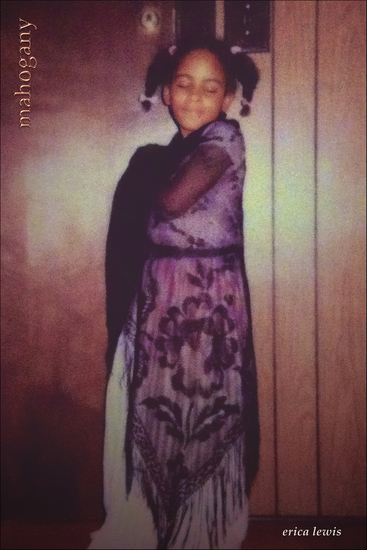
    mahogany takes its name from the dark wood prized for its durability, workability, and elegant look, and from the Diana Ross movie, whose theme song asks if what lies ahead is what you really want. This book is the third in a trilogy, and like the first two books it is steeped in pop music. Each poem here takes its title from a line of a Diana Ross and The Supremes song, as well as songs from Diana Ross' solo career. Short lines flow down the page like postmodern psalms, connecting dailyness to timelessness, merging the historical and the beloved through reverence for family, music, and the life we actually live. mahogany is a lament for the passing of time and unimaginable loss, and at the same time it models the daily search for joy, and the deep shine that can arise from the darkest times.[sample poem]i'm like a woman who once knew splendor*sometimes i feel like the pink pantherall naked and pinklost in the morass ofdo the best you can todayand nigga heal thy selfour end of winterspirits breaklike old tibetan snowi rememberyou was conflictedand i found myself alonehere on my ancient hurtthe disquieting humof living historydear god, pleaseput my head above my heartwe can only be togetherif the stories are toldplain facesame instrumentjust a couple of coke bottlesfull of gasolinelike god and rainis a waste of timemy mother used to clean housesas a childsome days i can barelyget out of bedin my mindshe's like diana rossscrubbing the white lady's stairsin lady sings the bluesexcept prettierand with green eyesi've just been livingoff of cough dropsand water and angerjust sitting in the whole foodsparking lot eating pineapplei am literallythe definition of "hot mess"pain changes everythingsomebody comeand pick upmy limp bodyoff the groundi am dyinga slow ohio deathwe miss you starmanit's our first sunrise of the burn* "dark side of the world"erica lewis
    Show book