Join us on a literary world trip!
Add this book to bookshelf
Grey
Write a new comment Default profile 50px
Grey
Subscribe to read the full book or read the first pages for free!
All characters reduced
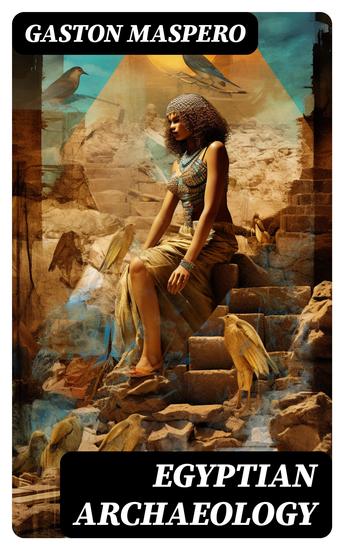
Egyptian Archaeology - Illustrated Guide to the Study of Egyptology - cover

Egyptian Archaeology - Illustrated Guide to the Study of Egyptology

Gaston Maspero

Translator Amelia B. Edwards

Publisher: DigiCat

  • 0
  • 0
  • 0

Summary

In "Egyptian Archaeology," Gaston Maspero, a pioneering figure in the field, presents a comprehensive exploration of ancient Egypt's archaeological heritage. This work is characterized by its meticulous scholarship and evocative prose, seamlessly blending detailed descriptions of significant archaeological sites with insights into the cultural, religious, and social fabric of ancient Egyptian civilization. Maspero delves into the methods of excavation, the importance of preservation, and the effective interpretation of artifacts, situating his analysis within the broader context of 19th-century archaeology, a time of fervent discovery and growing interest in ancient civilizations. Gaston Maspero (1846-1916) was a French Egyptologist whose vivid scholarship and deep passion for ancient Egypt propelled him to the forefront of this discipline. His experiences as curator of the Egyptian Antiquities at the Louvre, combined with extensive fieldwork in Egypt, informed his understanding of the relationship between artifacts and their historical significance. Maspero's expertise was instrumental in advancing methodologies for archaeological excavation and preservation, allowing him to advocate for a more scientific approach to understanding Egypt's glorious past. "Egyptian Archaeology" is highly recommended for readers interested in the intricacies of ancient cultures and their legacies. Maspero's engaging narrative and enlightening perspectives offer not only an educational examination of Egypt's archaeological treasures but also serve as a timeless call to appreciate and protect our shared human history.
Available since: 12/16/2023.
Print length: 182 pages.

Other books that might interest you

  • Dogwhistles and Figleaves - How Manipulative Language Spreads Racism and Falsehood - cover

    Dogwhistles and Figleaves - How...

    Jennifer Mather Saul

    • 0
    • 0
    • 0
    It is widely accepted that political discourse in recent years has become more openly racist and more accepting of wildly implausible conspiracy theories. Dogwhistles and Figleaves explores ways in which such changes—both of which defied previously settled norms of political speech—have been brought about. Jennifer Saul shows that two linguistic devices, dogwhistles and figleaves, have played a crucial role. Some dogwhistles (such as "88", used by Nazis online to mean "Heil Hitler") serve to disguise messages that would otherwise be rejected as unacceptable, allowing them to be transmitted surreptitiously. Other dogwhistles (like the 1988 "Willie Horton" ad) work by influencing people in ways that they are not aware of, and which they would likely reject were they aware. Figleaves (such as "just asking questions") take messages that could easily be recognized as unacceptable, and provide just enough cover that people become more willing to accept them. Saul argues that these devices are important for the spread of racist discourse. She also shows how they contribute to the transmission of norm-violating discourse more generally, focusing on the case of wildly implausible conspiracist speech. This book is the first full-length exploration of dogwhistles and figleaves. It offers an illuminating and disturbing view of the workings of contemporary political discourse.
    Show book
  • Urban Disaster Management - Preparing for and Responding to Crises - cover

    Urban Disaster Management -...

    Lyric Vale

    • 0
    • 0
    • 0
    Urban disasters have become an increasingly pressing concern as the world continues to urbanize at an unprecedented rate. Cities, once seen as bastions of opportunity and progress, are now at the forefront of vulnerability to both natural and human-made catastrophes. The rapid growth of urban populations, coupled with poorly planned infrastructure and environmental challenges, has created a precarious landscape where the impact of disasters can be catastrophic. 
    One of the primary drivers of urban disaster risk is the sheer scale of urbanization. By 2050, it is estimated that nearly 70% of the world’s population will reside in urban areas. This rapid urban migration often leads to the expansion of informal settlements, where millions live in overcrowded conditions with inadequate access to basic services such as clean water, sanitation, and healthcare. These areas, typically located in hazard-prone zones like floodplains and unstable hillsides, are particularly vulnerable to disasters. When disasters strike, the lack of preparedness and resilience in these communities amplifies the loss of life and property. 
    Climate change further exacerbates the threat of urban disasters. Rising global temperatures are intensifying the frequency and severity of natural hazards, such as hurricanes, floods, heatwaves, and wildfires. Coastal cities, home to millions, face increasing risks from sea level rise and storm surges, threatening vital infrastructure and displacing large populations. Additionally, the interconnected nature of urban systems means that the failure of one critical system, such as electricity or transportation, can cascade into widespread disruptions, leaving cities paralyzed in the wake of a disaster.
    Show book
  • Bridging the Gap - Breaking Barriers and Building Pathways to Transportation Careers - cover

    Bridging the Gap - Breaking...

    Esther Franklin

    • 0
    • 1
    • 0
    The transportation industry is booming—and it needs people who are ready to build, lead, and innovate. In Bridging the Gap, Esther Franklin offers a roadmap to some of the most in-demand career paths. Whether you’re looking to start fresh or pivot into a new field, this book provides the insight, strategies, and inspiration to help you turn opportunity into action.
    Show book
  • Tao Te Ching - cover

    Tao Te Ching

    Laozi Laozi

    • 0
    • 0
    • 0
    "The Tao that can be told is not the eternal Tao."
    
    In a world of constant striving and noise, the Tao Te Ching offers a radical alternative: the path of the "Way." Laozi's cryptic yet beautiful verses explore the paradoxes of existence, teaching that true power comes from yielding, and true wisdom comes from silence. This is not just a book of philosophy; it is a practical guide to reclaiming your natural state of being. By understanding the flow of the universe, one can navigate life's challenges with effortless grace and profound peace.
    
    The Concept of Wu Wei (Effortless Action): The central tenet of the text is Wu Wei, often translated as "non-action" or "effortless doing." Laozi argues that like water—which is the softest substance yet can wear away the hardest stone—we are most effective when we stop forcing our will upon the world and instead align ourselves with the natural flow of the "Tao."
    
    The Three Treasures: Laozi identifies three core virtues for a meaningful life: Compassion, Frugality, and Humility. The Tao Te Ching suggests that by stripping away the complications of ego and desire, we return to the "Uncarved Block"—our original, pure, and potent nature.
    
    A Guide for Leadership and Life: Unlike many political treatises, the Tao Te Ching advocates for a leader who governs with a light touch, trusting in the people and the natural order. Its wisdom is equally applicable to the CEO, the artist, or the seeker, providing a timeless sanctuary for anyone looking to simplify their life and find their center.
    
    Return to the source. Purchase the "Tao Te Ching" today and find your way.
    Show book
  • Empower Your Skills for ASE A5 - "Supercharge your ASE A5 exam prep with dynamic audio lessons tailored for your success!" - cover

    Empower Your Skills for ASE A5 -...

    Cyrus Lockridge

    • 0
    • 0
    • 0
    Unlock Your Potential: Discover Powerful Evaluation Strategies Today! 
    Are you aiming to elevate your career and reinforce your knowledge by successfully passing the evaluation for 2024-2025? 
    In search of an all-inclusive guide that encompasses everything you need to excel in this assessment? 
    Your quest has come to an end! 
    This guide is your ultimate resource for enhancing your understanding, applying your skills, and engaging in practical exercises. With this, you are prepared for success. 
    Updated for the 2024-2025 Evaluation Structure. 
    Key Features of This Comprehensive Guide: 
    - In-depth insights about the Evaluation for 2024-2025 Certification 
    - Comprehensive exploration of the assessment process 
    - Effective strategies for preparation and tackling exam challenges 
    Our guide stands out with its thorough coverage, which is crucial for your success. The concepts are not just brushed over; they are explored with meticulous attention. 
    Please note that this guide is an independent resource and is not affiliated with any official evaluation entity. It is designed solely for your benefit. 
    Structured with clarity and straightforward language, our Evaluation Guide for 2024-2025 ensures seamless transitions between topics. Bid farewell to complex jargon and welcome clear, accurate, and technically sound content. 
    So, why delay? Click the BUY NOW button, secure your guide, and embark on your journey towards success in the 2024-2025 evaluation!
    Show book
  • The Emperors of Rome - A Biographical Dictionary - cover

    The Emperors of Rome - A...

    Rogan Fish

    • 0
    • 0
    • 0
    The Founding Emperors of Rome laid the groundwork for the Roman Empire, marking a shift from the Roman Republic to imperial rule. Augustus, Tiberius, and Caligula stand as the pivotal figures in this transformation, each shaping the empire in distinct ways. 
    Augustus, born Gaius Octavius, was the first emperor and one of the most successful leaders in Roman history. His reign, from 27 BCE to 14 CE, ushered in the Pax Romana, a period of relative peace and prosperity. Augustus was not only a military genius but also a skilled politician who effectively consolidated power. By presenting himself as the restorer of the Roman Republic, he maintained a delicate balance between autocratic rule and the preservation of traditional republican institutions. Augustus implemented numerous reforms, including the establishment of a professional standing army and a system of taxation that stabilized the empire’s finances. His legacy is marked by the expansion of Roman territory and the establishment of Rome as the center of the ancient world. 
    Following Augustus, his stepson Tiberius became emperor in 14 CE. Tiberius' reign is often seen as a contrast to Augustus. While Augustus sought to maintain the image of republican values, Tiberius became increasingly reclusive and suspicious, particularly in the later years of his reign. His reign was marked by significant military achievements, including the consolidation of Rome’s frontiers in Germania and the Balkans, but his reign was also tainted by political purges and a growing atmosphere of distrust. Tiberius left the throne to his adopted son Caligula, but the political instability and paranoia of his reign would have lasting consequences on the empire.
    Show book