Join us on a literary world trip!
Add this book to bookshelf
Grey
Write a new comment Default profile 50px
Grey
Subscribe to read the full book or read the first pages for free!
All characters reduced
The Story of the Cotton Plant - cover

The Story of the Cotton Plant

Frederick Wilkinson

Publisher: DigiCat

  • 0
  • 0
  • 0

Summary

In "The Story of the Cotton Plant," Frederick Wilkinson intricately weaves an exploration of one of the world's most significant agricultural commodities. The book combines scientific inquiry with historical narrative, offering readers a rich tapestry of cotton's journey from cultivation to global impact. Wilkinson employs a descriptive literary style, vividly illustrating the life cycle of the cotton plant and its socio-economic implications across different cultures and eras, thus situating the narrative within the broader context of agricultural and industrial revolutions. Wilkinson, a noted historian and agronomist, draws from his extensive research in botany and agricultural history. His academic background and personal experiences in cotton-producing regions provide him with unique insights into the complexities of cotton cultivation and trade. Moreover, his passion for environmental sustainability and historical ecological studies influences his critical examination of cotton's impact on society and the environment, compelling readers to confront the consequences of agricultural practices. This book is an essential read for anyone interested in agricultural history, sustainability, or the socio-economic impacts of natural resources. Wilkinson's engaging prose not only educates but also provokes thought about the future of agriculture in a rapidly changing world.
Available since: 08/01/2022.
Print length: 130 pages.

Other books that might interest you

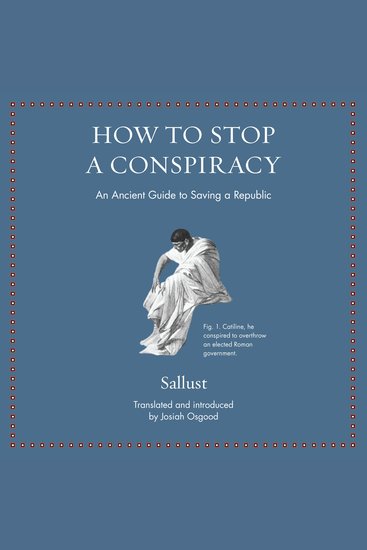
  • How to Stop a Conspiracy - An Ancient Guide to Saving a Republic - cover

    How to Stop a Conspiracy - An...

    Sallust, Josiah Osgood

    • 0
    • 0
    • 0
    In 63 BC, frustrated by his failure to be elected leader of the Roman Republic, the aristocrat Catiline tried to topple its elected government. Backed by corrupt elites and poor, alienated Romans, he fled Rome while his associates plotted to burn the city and murder its leading politicians. The attempted coup culminated with the unmasking of the conspirators in the Senate, a stormy debate that led to their execution, and the defeat of Catiline and his legions in battle. In How to Stop a Conspiracy, Josiah Osgood presents a brisk, modern new translation of the definitive account of these events, Sallust's The War with Catiline. 


    In a taut, jaw-dropping narrative, Sallust combines juicy details about Catiline and his louche associates with highly quotable moral judgments and a wrenching description of the widespread social misery they exploited. Along the way, we get unforgettable portraits of the bitter and haunted Catiline, who was sympathetic to the plight of Romans yet willing to destroy Rome; his archenemy Cicero, who thwarts the conspiracy; and Julius Caesar, who defends the conspirators and is accused of being one of them. Complete with an introduction that discusses how The War with Catiline has shaped and continues to shape our understanding of how republics live and die, this volume makes Sallust's gripping history more accessible than ever before.
    Show book
  • Antiracist - From Personal Awareness to Collective Action: Transforming Our World with Antiracism - cover

    Antiracist - From Personal...

    May Francis

    • 0
    • 0
    • 0
    In this powerful and thought-provoking book, author May Francis delves into the complex and deeply entrenched issue of racism, exploring its history and how it continues to manifest in society today. Through personal anecdotes, historical analysis, and a call to action, May Francis urges readers to confront their own biases and actively work towards creating a more equitable and just world. 
     The book begins by examining the roots of racism, tracing its origins back to the transatlantic slave trade and the systemic oppression that has been perpetuated for centuries. May Francis then discusses the various forms of racism that exist today, including institutional racism, microaggressions, and colorism, and how these systems of discrimination continue to impact marginalized communities. 
     But "Antiracism: From Personal Awareness to Collective Action" is not just a book about the problems of racism. It is a call to action, urging readers to take responsibility for their own role in perpetuating or challenging systems of oppression. May Francis provides practical steps for individuals to become antiracist, including learning about and supporting marginalized communities, speaking out against injustice, and advocating for change. 
     This book is a must-read for anyone seeking to understand and dismantle racism in all its forms. It is a powerful call to action for everyone to work towards a more just and equitable society.
    Show book
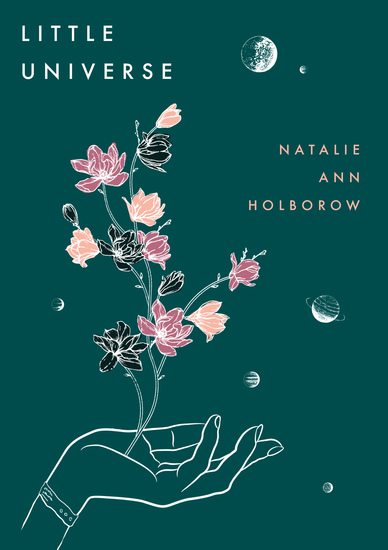
  • Little Universe - cover

    Little Universe

    Natalie Ann Holborow

    • 0
    • 0
    • 0
    The poems in Natalie Ann Holborow's third collection, Little Universe, are an exploration of tumultuous human emotions and nature's ever-present rhythms.
    
    Lives bustle within a busy hospital's walls, humming against the Gower landscape that stretches beyond its windows. The tiny worlds of a wide cast unfold as they deal with their own emergencies, losses, recoveries, hopes and histories.
    
    Medical students stride along the corridors in rubber shoes, scars running the lengths of their lives. A janitor is crying in the Gents, watching the flowers at the hospital entrance shrug themselves back into earth. The biblical Lilith offers knowledge from one woman to the other. And somewhere in the distance, a bunker dissolves into gold upon Pennard's shoulder, dusk folding to sleep on Rhossili.
    
    The characters in this book are all bound by the undying pulse of existence – yet their stories serve as a reminder that despite these stark contrasts, life persists.
    Show book
  • The Human Condition - Exploring the Intricacies of Human Nature (4 in 1) - cover

    The Human Condition - Exploring...

    John Harpoon

    • 0
    • 0
    • 0
    This book contains the following four titles: 
    - The Cereal Killer: The invention of breakfast cereal marked a turning point in modern eating habits, blending health-conscious innovation with industrial progress. During the late 19th century, many Americans consumed heavy, meat-based breakfasts, which were criticized by health reformers for contributing to widespread digestive issues and lethargy. It was against this backdrop that breakfast cereal was born—a light, convenient, and nutritious alternative that would revolutionize morning meals. 
    - The Millennial Methuselah: The story of the woman destined for a millennium begins in an unassuming town, far removed from the glare of the modern world. Born in an era where tradition met the dawn of technological innovation, her arrival into the world was marked by a profound sense of wonder. Family and friends often recalled the unusual calmness that surrounded her birth, as if the universe had whispered its secrets into her soul. 
    - Perplexing Passings: Unsolved mysteries hold a unique and enduring fascination, inviting us into a world where questions linger and definitive answers seem perpetually out of reach. These enigmas, spanning unexplained deaths, puzzling disappearances, and baffling phenomena, captivate our imagination by defying the order and logic we strive to impose on life. Each unresolved case becomes more than a story; it transforms into a puzzle that teases the intellect and stirs the emotions. 
    - The Unreachable Riches: Throughout history, the allure of hidden treasure has captured the human imagination like few other pursuits. Tales of vast riches buried beneath shifting sands, concealed within uncharted jungles, or locked away in remote mountain fortresses have been passed down through generations.
    Show book
  • Cleopatra’s Needles - The Lost Obelisks of Egypt - cover

    Cleopatra’s Needles - The Lost...

    PhD Bob Brier

    • 0
    • 0
    • 0
    In the half-century between 1831 and 1881 three massive obelisks left Egypt for new lands. Prior to these journeys, the last large obelisk moved was the Vatican obelisk in 1586—one of the great engineering achievements of the Renaissance. Roman emperors moved more than a dozen, but left no records of how they did it. The nineteenth-century engineers entrusted with transporting the obelisks across oceans had to invent new methods, far from certain that they would work. As the three obelisks, bound for Paris, London, and New York, sailed towards their new homes, the world held its breath. Newspapers reported the obelisks' daily progress, complete with illustrations of the heroic deeds of the engineers and crews struggling under nearly impossible conditions. When the obelisks arrived safely in their new homes, bands played Cleopatra's Needle Waltz and silver obelisk pencils dangled from fashionable ladies' necks. 


    This turbulent era, caught up in obelisk mania, is recreated by Bob Brier in all its glory. Amid tales of engineering dexterity and naval endurance, the individuals involved in transporting the obelisks and receiving them in their future homes are brought to life through their letters, diaries, and newspaper articles. This book will fascinate all those interested in Egypt, its iconic monuments, and the history of great endeavor.
    Show book
  • Badass Living - cover

    Badass Living

    Victor Waid

    • 0
    • 0
    • 0
    Feeling stuck in life? BADASS LIVING is your no-nonsense guide to rediscovering your energy, redefining your goals, and reigniting your passion for living. Step onto the path to personal transformation and take back control of your journey.
    Show book