Join us on a literary world trip!
Add this book to bookshelf
Grey
Write a new comment Default profile 50px
Grey
Subscribe to read the full book or read the first pages for free!
All characters reduced
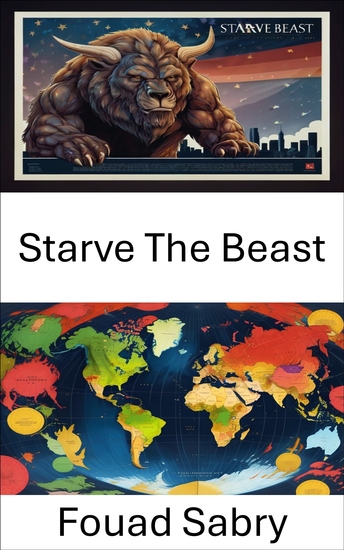
Starve The Beast - Understanding the Dynamics of Governmental Power and Reform - cover

Starve The Beast - Understanding the Dynamics of Governmental Power and Reform

Fouad Sabry

Publisher: One Billion Knowledgeable

  • 0
  • 0
  • 0

Summary

Unlock key insights into fiscal conservatism and government budgeting in Starve The Beast, an essential volume in the Political Science series by Fouad Sabry. This book explains the complexities of reducing government size and spending from both historical and modern perspectives.
 
Chapters Overviews:
 
1: Starve The Beast: Understand how limiting government resources curbs its size and influence.
 
2: Reaganomics: Explore Reagan's policies, emphasizing tax cuts and reduced spending.
 
3: Supply-side Economics: Learn how lower taxes drive growth and its role in fiscal conservatism.
 
4: Grover Norquist: Discover Norquist’s influence on tax reform and smaller government.
 
5: Government Budget Balance: Understand methods and consequences of maintaining budget balance.
 
6: Balanced Budget Amendment: Examine the proposal to limit federal spending by law.
 
7: U.S. Federal Budget: Gain insight into U.S. budget structure and its impact on governance.
 
8: Fiscal Conservatism: Understand fiscal conservatism's core principles of lower spending and taxes.
 
9: Deficit Reduction: Examine U.S. efforts to reduce the federal deficit, past and present.
 
10: Budget Sequestration: Learn about automatic spending cuts and their effects on policy.
 
11: Deficit Spending: Explore how spending exceeding revenue impacts national debt.
 
12: Tax Equity Act of 1982: Investigate this law’s role in tax reform and fiscal responsibility.
 
13: PAYGO: Understand how PAYGO ensures new spending is balanced by cuts or revenue.
 
14: Fiscal Illusion: Examine how government spending costs are often hidden from the public.
 
15: U.S. Public Debt History: Trace the history of U.S. debt and its ongoing challenges.
 
16: National Commission on Fiscal Responsibility: Review this commission's recommendations for long-term fiscal solutions.
 
17: 2012 U.S. Federal Budget: Analyze the key decisions in the 2012 budget and their effects.
 
18: Federal Expenditures: Examine how federal funds are allocated and their societal impact.
 
19: The Path to Prosperity: Explore this plan aimed at reducing government spending and reforming policy.
 
20: Political Debates on the Federal Budget: Discover the various political arguments surrounding budgetary policies.
 
21: U.S. Fiscal Cliff: Understand the fiscal cliff and its potential economic consequences.
 
Starve The Beast offers invaluable insights for anyone interested in fiscal policy, providing comprehensive analysis and expert commentary. Perfect for students and professionals alike, this book is a must-have addition to your collection.
Available since: 10/06/2024.
Print length: 324 pages.
Other books that might interest you

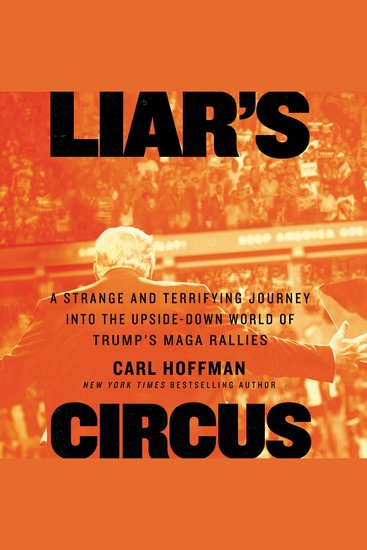
  • Liar's Circus - A Strange and Terrifying Journey into the Upside-Down World of Trump’s MAGA Rallies - cover

    Liar's Circus - A Strange and...

    Anonymous

    • 0
    • 0
    • 0
    ""A brilliant, riveting, funny, terrifying journey into the beating heart of Trumpland."" —Liza Mundy, author of Code Girls 
    In this daring work of immersive journalism, based on hundreds of hours of reporting, Carl Hoffman journeys deep inside Donald Trump’s rallies, seeking to understand the strange and powerful tribe that forms the president’s base.  
    Hoffman, who has written about the most dangerous and remote corners of the world, pierced this alternate society, welcomed in and initiated into its rites and upside-down beliefs, and finally ushered to its inner sanctum. Equally freewheeling and profound, Liar’s Circus tracks the MAGA faithful across five thousand miles of the American heartland during a crucial arc of the Trump presidency stretching from the impeachment saga to the dawn of the coronavirus pandemic that ended the rallies as we know it. 
    Trump’s rallies are a singular and defining force in American history—a kind of Rosetta stone to understanding the Age of Trump. Yet while much remarked upon, they are, in fact, little examined, with the focus almost always on Trump’s latest outrageous statement. But who are the tens of thousands of people who fill these arenas? What do they see in Trump? And what curious alchemy—between president and adoring crowd—happens there that might explain Trump’s rise and powerful hold over both his base and the GOP? 
    To those on the left, the rallies are a Black Mass of American politics at which Trump plays high priest, recklessly summoning the darkest forces within the nation. To the MAGA faithful, the rallies are a form of pilgrimage, a joyous ceremony that like all rituals binds people together and makes them feel a part of something bigger than themselves. Both sides would acknowledge that this traveling roadshow is the pressurized, combustible core of Trump’s political power, a meeting of the faithful where Trump is unshackled and his rhetoric reaches its most extreme, with downstream consequences for the rest of the nation. 
    To date, no reporter has sought to understand the rallies as a sociological phenomenon examined from the bottom up. Hoffman has done just this. He has stood in line for more than 170 hours with Trump's most ardent superfans and joined them at the very front row; he has traveled from Minnesota to Texas, Louisiana, Mississippi, and New Hampshire immersing himself in their culture.   
    Liar’s Circus is a revelatory portrait of Trump’s America, from one of our most intrepid journalists. 
    Show book
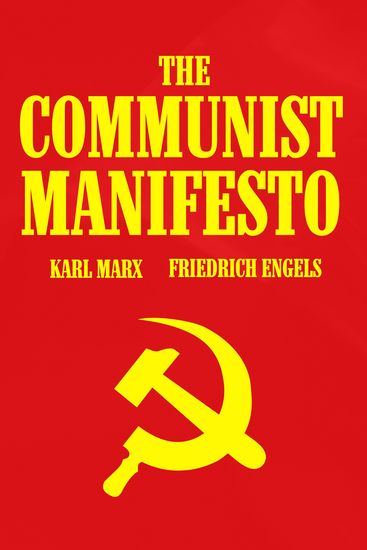
  • The Communist Manifesto - cover

    The Communist Manifesto

    Karl Marx, Friedrich Engels

    • 0
    • 0
    • 0
    "Workers of the world, unite! You have nothing to lose but your chains!"
    
    A Call to Revolution
    
    First published in 1848, Karl Marx and Friedrich Engels' Communist Manifesto is considered a foundational work of political theory.
    
    This political work remains pertinent today since it questions capitalism and urges the working class to overthrow the capitalist system and impose communism, a society without classes.
    
    This manifesto—with echoes of Russian history—remains essential to comprehending the forces influencing the world we live in today.
    
    "The history of all hitherto existing society is the history of class struggles"
    This manifesto, deeply rooted in Marxism and relevant to the Russian Revolution and the Cold War, is an essential read for those interested in politics and history books alike.
    
    This communist manifesto book is a faithful reprint, preserving its original power and relevance. It's an essential piece of history that resonates in today's world, making it a perfect addition to any collection of political books or a thoughtful gift for anyone passionate about communism and Russian history.
    
    Order now to own a classic that still moves a global ideology today.
    
    Title Details
    
    - Original 1848 Text
    - Historical Context
    - Political Philosophy
    Show book
  • Bootstrapped - Liberating Ourselves from the American Dream - cover

    Bootstrapped - Liberating...

    Alissa Quart

    • 0
    • 0
    • 0
    An unsparing, incisive, yet ultimately hopeful look at how we can shed the American obsession with self-reliance that has made us less healthy, less secure, and less fulfilled  
    The promise that you can “pull yourself up by your bootstraps” is central to the story of the American Dream. It’s the belief that if you work hard and rely on your own resources, you will eventually succeed. However, time and again we have seen how this foundational myth, with its emphasis on individual determination, brittle self-sufficiency, and personal accomplishment, does not help us. Instead, as income inequality rises around us, we are left with shame and self-blame for our condition. 
    Acclaimed journalist Alissa Quart argues that at the heart of our suffering is a do-it-yourself ethos, the misplaced belief in our own independence and the conviction that we must rely on ourselves alone. Looking at a range of delusions and half solutions—from “grit” to the false Horatio Alger story to the rise of GoFundMe—Quart reveals how we have been steered away from robust social programs that would address the root causes of our problems. Meanwhile, the responsibility for survival has been shifted onto the backs of ordinary people, burdening generations with debt instead of providing the social safety net we so desperately need. 
    Insightful, sharply argued, and characterized by Quart’s lively writing and deep reporting, and for fans of Evicted and Nickel and Dimed, Bootstrapped is a powerful examination of what ails us at a societal level and a plan for how we can free ourselves from these self-defeating narratives. 
    Supplemental enhancement PDF accompanies the audiobook.
    Show book
  • The Scheme - How the Right Wing Used Dark Money to Capture the Supreme Court - cover

    The Scheme - How the Right Wing...

    Jennifer Meller, Senator Sheldon...

    • 0
    • 0
    • 0
    Following his book Captured on corporate capture of regulatory and government agencies, and his years of experience as a prosecutor, Senator Sheldon Whitehouse here turns his attention to the right-wing scheme to capture the courts, and how it influenced the Trump administration's appointment of over 230 "business-friendly" judges, including the last three justices of the United States Supreme Court. 


    Whitehouse traces the motive to control the court system back to Lewis Powell's notorious memo, which gave a road map for corporate influence to target the judiciary, and chronicles a hidden-money campaign using an armada of front groups and helped by the infamous Citizens United Supreme Court decision. The scheme utilized the Federalist Society as an appointments turnstile, spent secret millions to support the nominees, orchestrated an "amicus brief" signaling apparatus, and propped up front-group litigants to "fast-lane" strategic test cases to the friendly justices. 


    Whitehouse finds the same small handful of right-wing billionaires and corporations running operations that he likens to "covert ops," ultimately enticing the Senate to break rules, norms, and precedents to confirm wildly inappropriate nominees who would advance the anti-government agenda of a small number of corporate oligarchs.
    Show book
  • Fascism - What It Is and How to Fight It - cover

    Fascism - What It Is and How to...

    Leon Trotsky

    • 0
    • 0
    • 0
    Fascism: What It Is and How to Fight It, written by Leon Trotsky in 1933, is a critical analysis of the rise of fascist movements in Europe, particularly focusing on Nazi Germany under Adolf Hitler. Trotsky argues that fascism is not a sudden, irrational outburst of violence but rather the result of deep structural crises in capitalist society, which the ruling class seeks to resolve through authoritarian means. He explains that fascism arises when the traditional political establishment is unable to suppress revolutionary movements from below (such as workers' uprisings or socialist revolutions) and when the capitalist system is threatened by economic collapse. 
    Trotsky highlights that fascism is a tool of the bourgeoisie, aimed at preserving the existing social order through terror, militarism, and the suppression of democratic freedoms. However, it is not simply a reactionary force; it has its own set of internal contradictions, as fascists simultaneously defend capitalist interests while attacking the political establishment and the working class. 
    Trotsky warns of the dangers of fascism's rise and stresses the importance of building a united front of the working class and the Left to prevent its spread. He critiques both Stalinism and social democracy for their failures to adequately respond to the fascist threat, emphasizing the need for a revolutionary approach to combat the fascist menace.
    Show book
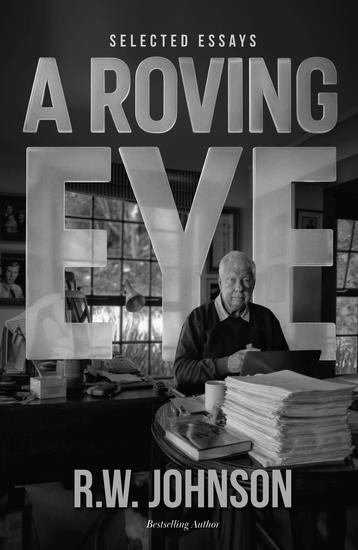
  • A Roving Eye - Selected Essays - cover

    A Roving Eye - Selected Essays

    R.W. Johnson

    • 0
    • 0
    • 0
    R.W. Johnson's articles and essays travel far beyond Southern Africa, reaching readers across continents. Their appeal lies not only in their acuity but also in his exceptional range of subjects – political, historical and cultural. As a former Oxford don and a leading international commentator, Johnson remains unmatched as an interpreter of national and world events.
    Whether he's writing about politics in South Africa, Europe or the United States, the new space race, the leading personalities of our time, or even soccer, his views are always sharp, clear, deeply informed and original.
    These essays belong unmistakably to the tradition of George Orwell. Orwell aspired to make political writing an art form, but his finest essays – even those on seemingly trivial subjects such as boys' comics – revealed both a penetrating intelligence and remarkable breadth. Johnson's writing is similar in spirit: like Orwell's, his essays can be read consecutively or dipped into at random, each one offering something striking and original.
    The result is A Roving Eye, a book that is not just distinctive but truly unique, marked by depth, range, humanity and a rare sophistication.
    R.W. Johnson, author of 17 books and innumerable articles, attended schools in the UK and South Africa, did his first degree at the University of Natal and was then a Rhodes Scholar at Oxford. For 26 years he was a Fellow and Tutor at Magdalen College, Oxford and he remains a Fellow of the College. An expert in French, British, American and South African politics, his books have ranged over all these interests and for many years he also wrote for The (London) Times, Sunday Times, the London Review of Books, Le Monde Diplomatique and other titles in the international media. Johnson's writings have been widely praised and have often excited controversy. He is a master of the essay form and his essays have had a wide circulation. He is married to the Russian scholar, Irina Filatova, and they live in Cape Town.
    Show book