Join us on a literary world trip!
Add this book to bookshelf
Grey
Write a new comment Default profile 50px
Grey
Subscribe to read the full book or read the first pages for free!
All characters reduced
Protest Vote - How Dissent Shapes Democracies - cover

Protest Vote - How Dissent Shapes Democracies

Fouad Sabry

Publisher: One Billion Knowledgeable

  • 0
  • 0
  • 0

Summary

Protest Vote from the Political Science series uncovers the complex reasons behind electoral dissent. This essential guide explores why voters use ballots to express dissatisfaction, sparking change within democratic systems. It offers valuable insights for professionals, students, and anyone curious about the deeper layers of electoral dynamics.
 
Chapters Overviews:
 
1: Protest Vote – Understand the power of protest voting to push electoral reform.
 
2: Approval Voting – Learn how approval voting can reshape electoral outcomes.
 
3: Electoral Fusion – Discover how minor parties influence major elections.
 
4: Disapproval Voting – Explore disapproval voting and its impact on voters.
 
5: Third Party (U.S. Politics) – Analyze the influence of third-party candidates.
 
6: Write-in Candidate – Assess how write-in candidates challenge norms.
 
7: Vote Splitting – Investigate how vote splitting affects election results.
 
8: Abstention – Examine why some voters choose abstention.
 
9: Spoilt Vote – Study the reasons and effects of spoiled ballots.
 
10: Election Boycott – Explore election boycotts as a protest method.
 
11: Voting – Reflect on the act of voting and its significance.
 
12: Voter Turnout – Investigate voter turnout trends and their causes.
 
13: None of the Above – Evaluate the impact of "none of the above" votes.
 
14: Elections in Chile – Explore Chile's unique electoral landscape.
 
15: Uncontested Election – Assess uncontested elections and their impact.
 
16: Refused Ballot – Investigate the reasons behind refusing ballots.
 
17: Straight-Ticket Voting – Discover straight-ticket voting's partisan influence.
 
18: Political Apathy – Discuss causes of voter apathy in democracies.
 
19: Internet Party of Ukraine – Examine the digital party’s role in Ukraine.
 
20: Oklahoma Primary Electoral System – Analyze Oklahoma's unique primary system.
 
21: Combined Approval Voting – Explore combined approval voting and its effects.
 
Unlock the transformative power of protest voting and explore how it shapes political discourse and reform. Protest Vote delivers crucial insights for understanding democratic dissent and its profound effects on modern politics.
Available since: 10/16/2024.
Print length: 237 pages.
Other books that might interest you

  • The Siege of Stalingrad - The Turning Point in the War on the Eastern Front - cover

    The Siege of Stalingrad - The...

    Sage Winters

    • 0
    • 0
    • 0
    The Battle of Stalingrad stands as one of the most defining events of the 20th century, a turning point that shifted the trajectory of World War II. Situated along the banks of the Volga River, Stalingrad was not only a city of industrial and strategic importance but also a symbolic prize for both Adolf Hitler and Joseph Stalin. The ferocity and scale of the battle transformed it into a microcosm of the broader conflict between Nazi Germany and the Soviet Union.  
      
    When Germany launched Operation Barbarossa in June 1941, the Wehrmacht seemed unstoppable as it swept across the Soviet Union. Hitler’s ambitions of seizing Soviet territories were fueled by his vision of Lebensraum and the destruction of Bolshevism. By the summer of 1942, German forces were pressing deeper into the southern front, aiming to capture the oil fields of the Caucasus and secure Stalingrad as a vital stepping stone. For Hitler, Stalingrad held immense propaganda value, carrying the name of his adversary, Stalin. Its fall would signify not just a military triumph but a psychological blow to the Soviet people.  
      
    For the Soviet Union, the defense of Stalingrad became a matter of national survival and pride. Stalin’s orders to defend the city at all costs rallied both soldiers and civilians. The infamous directive “Not a step back!” underscored the desperation and determination of the Soviet war effort. As the battle unfolded, Stalingrad was transformed into a hellish landscape of rubble, where every building and street became a battlefield. 
    Show book
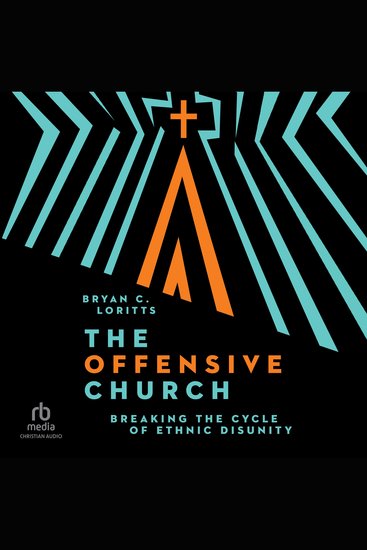
  • The Offensive Church - Breaking the Cycle of Ethnic Disunity - cover

    The Offensive Church - Breaking...

    Bryan C. Loritts

    • 0
    • 0
    • 0
    Crises around race have put the church in a defensive posture, always reacting to racial conflicts in society. But Jesus wants more. He wants Christians to play offense by discipling people into a new humanity, where we push beyond mere diversity and into a biblical vision for ethnic unity. 


    Bryan Loritts calls Christians to proactively and intentionally live out the embodied reality of a people at one with one another. We play offense by practicing a robust gospel, preparing reliable leadership, and providing relational environments so that the church becomes the aroma of Christ to our culture and gains ground against the demonic foothold of racism in all its forms.
    Show book
  • Literature Masterclass: Your Guide To Analyze Fairytales - cover

    Literature Masterclass: Your...

    Niina Niskanen

    • 0
    • 0
    • 0
    Storytelling and fairytales have always been an important part of preserving oral culture and traditions. Fairytale is usually a short story that takes place in a magical setting, with human characters and other beings and they face different kinds of obstacles. Fairytales have worked as moral guides, entertainment, and also as inspirational stories during hard times. In this book, we will go through seven different fairytales. These are Cinderella, Snow White, Rapunzel, Puss in Boots, Hansel and Gretel, Mulan and Red Riding Hood. We will also go through different character archetypes such as the villain and the hero. Different fairytale narratives like A Damsel in Distress and From Rags to Riches. 
    Archetypical characters in fairy tales fall into a certain category by their visual appearance, characteristics, personality traits, and their mission. We will find common archetypes in fairy tales, myths, and folklore. In the world of fairy tales, archetypes are universal and similar archetypes appear in different cultures and fairy tales told in different parts of the world. Classical archetypes in Fairy tales are damsels in distress- types of princesses like Cinderella and Snow White. Evil Stepmother in the stories such as Hansel and Gretel and Sleeping Beauty. A wise old mage whose job is to help the protagonist in their journeys such as Dumbledore in Harry Potter and Merlin the wise guide of King Arthur.
    Show book
  • aka bpNichol - A Preliminary Biography - cover

    aka bpNichol - A Preliminary...

    Frank Davey

    • 0
    • 1
    • 0
    Reflecting on the career of a prominent poet, this biography focuses on Canadian wordsmith Barrie Nichol — more commonly known by his pen name, bpNichol — who was a practicing lay psychoanalyst and vice president of one the largest and long-lasting North American communes for more than a decade. Recognizing his international influence as both a visual and sound poet, Nichol's literary achievements are reviewed, including The Martyrology, a renowned, seven-volume poem, four novels, two musical comedies, six children's books, hundreds of hand-drawn visual poems, and even 10 episodes of Jim Henson's hit television series Fraggle Rock. Penned by one of Nichol's numerous literary collaborators, this account reveals the close connections among the writer's various activities, particularly how the autobiographical inquiries and Freudian dream theory linked with the young poet's biographical self-awareness. The book demonstrates how the Subject's main psychoanalytic client was his own writing, following Nichol as he explored its slips, accidental puns, and unintended meanings and implications for the communal future of the human species, both in high literature and comical prime time television.
    Show book
  • Food Allergy Advocacy - Parenting and the Politics of Care - cover

    Food Allergy Advocacy -...

    Danya Glabau

    • 0
    • 0
    • 0
    A detailed exploration of parents' fight for a safe environment for their kids, interrogating how race, class, and gender shape health advocacy 


    The success of food allergy activism in highlighting the dangers of foodborne allergens shows how illness communities can effectively advocate for the needs of their members. In Food Allergy Advocacy, Danya Glabau follows parents and activists as they fight for allergen-free environments, accurate labeling, the fair application of disability law, and access to life-saving medications for food-allergic children in the United States. At the same time, she shows how this activism also reproduces the culturally dominant politics of personhood and responsibility, based on an idealized version of the American family, centered around white, middle-class, and heteronormative motherhood. 


    By holding up the threat of food allergens to the white nuclear family to galvanize political and scientific action, Glabau shows, the movement excludes many, including Black women and disabled adults, whose families and health have too often been marginalized from public health and social safety net programs. Further, its strategies are founded on the assumption that market-based solutions will address issues of social exclusion and equal access to healthcare.
    Show book
  • Parallel Parenting - The Only Way to Co-parent with a Narcissist - Managing a Counter Parent Setting Boundaries and Protecting Your Child From Parental Alienation - cover

    Parallel Parenting - The Only...

    Wendy Carter

    • 0
    • 0
    • 0
    Are you tired of being the villain in your own life story? 
    Worried about how this constant conflict might be affecting your kids? 
    Do you feel like a pawn in a chess game with no end in sight? 
    Fed up with the endless power struggles with your ex? 
    Believe me, I get it. 
    It's a tough gig being a co-parent, especially when every interaction feels like walking into a war zone. You're here because you need a way out of this high-stress situation, and guess what? You're in the right place. 
    But first a warning: 
    This isn't some magic potion that instantly resolves all co-parenting conflicts. If you're searching for an overnight panacea without doing any groundwork, then this might not be for you. This book requires honesty with oneself, a willingness to commit time and effort, and the desire for lasting change. But if you're ready to roll up your sleeves and invest in a peaceful co-parenting future, this book can be your roadmap. 
    Does any of these situations sounds familiar? 
    - Your kid's soccer game becomes a tension-filled standoff with your ex. 
    - Drop-offs and pick-ups turn into battlegrounds rather than pleasant exchanges. 
    - Boundaries you set are constantly disrespected or ignored. 
    - Conversations about your kids devolve into accusations and arguments. 
    - Your children often become pawns in power plays. 
    - Decisions about schooling, healthcare, or simple routines become epic sagas. 
    - You're left feeling stressed, anxious, or upset after every interaction with your ex. 
    - You fear for your child's emotional wellbeing amidst all the conflict. 
    So, are you ready to trade high-drama for high-harmony? 
    Are you prepared to redefine your co-parenting journey? Ready to put your kids first in the healthiest way possible? Then it's time to take the next step.
    Show book