
Join us on a literary world trip!
Add this book to bookshelf
Grey
Write a new comment Default profile 50px
Grey
Subscribe to read the full book or read the first pages for free!
All characters reduced
Parallel Voting - Analyzing Dual Ballots and Electoral Outcomes - cover

Parallel Voting - Analyzing Dual Ballots and Electoral Outcomes

Fouad Sabry

Publisher: One Billion Knowledgeable

  • 0
  • 0
  • 0

Summary

Unlock the complexities of modern electoral systems with "Parallel Voting," a comprehensive exploration of the hybrid electoral method that blends majoritarian and proportional representation. In today's evolving political landscape, understanding how different electoral systems affect outcomes and party dynamics is essential. This book offers a gateway to mastering these concepts in political science.
 
Chapters Overview:
 
1-Parallel Voting-Learn how majoritarian and proportional systems merge in this hybrid method.
 
2-Plurality Voting-Explore the mechanisms of plurality voting and its influence on political stability.
 
3-Proportional Representation-Understand how proportional representation ensures fairer political outcomes.
 
4-Party-List Proportional Representation-Discover how the party-list system impacts voter satisfaction.
 
5-Additional Member System-Examine the benefits of integrating this system into existing frameworks.
 
6-Mixed-Member Proportional Representation-Understand the balance between majoritarian and proportional systems.
 
7-First-Past-the-Post Voting-Uncover how simplicity impacts fairness and party dominance.
 
8-Electoral Reform in New Zealand-Learn from New Zealand's transition to a mixed-member proportional system.
 
9-Party-List System-See how this system enhances proportional representation.
 
10-Electoral System of Scotland-Understand how Scotland’s electoral system shapes regional politics.
 
11-Electoral Reform-Analyze the effects of reforms on political representation.
 
12-Semi-Proportional Representation-Review how this method balances electoral outcomes.
 
13-Electoral System-Examine the effects of different electoral systems on political dynamics.
 
14-Majoritarian Representation-Discover the influence of majority rule on political relations.
 
15-Scorporo-Investigate this lesser-known system and its unique applications.
 
16-Dual-Member Proportional Representation-Learn about this hybrid approach to electoral fairness.
 
17-Mixed Electoral System-Explore blended systems for optimized political representation.
 
18-Rural–Urban Proportional Representation-Discover how this system addresses geographic disparities.
 
19-Mixed Single Vote-See how this system balances majoritarian and proportional aspects.
 
20-Mixed-Member Majoritarian Representation-Understand this system’s blend of majoritarian and proportional elements.
 
21-Next Italian General Election-Explore changes to Italy’s electoral landscape.
 
"Parallel Voting" not only expands your knowledge but also offers a deeper understanding of modern democracies' shaping mechanisms. This book is an essential resource for professionals, students, and political science enthusiasts eager to comprehend electoral systems and their practical applications. Boost your expertise and remain ahead in the field of political science.
Available since: 09/07/2024.
Print length: 265 pages.
Other books that might interest you

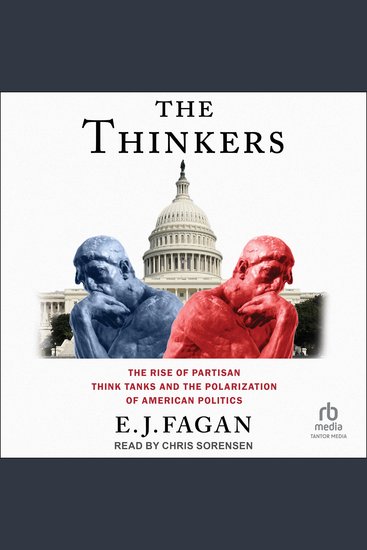
  • The Thinkers - The Rise of Partisan Think Tanks and the Polarization of American Politics - cover

    The Thinkers - The Rise of...

    E.J. Fagan

    • 0
    • 0
    • 0
    Increasingly, political parties have adopted not only different policies, but different sets of facts. As E. J. Fagan argues, partisan think tanks have helped create these alternate realities in their capacity as de facto formal party organizations. Through the analyses generated by aligned think tanks, political elites on both the left and right frequently offer radically different assessments of a policy's consequences. 


    In The Thinkers, Fagan tells the story of how partisan think tanks displaced non-partisan experts to become the closest policy advisors to the Republican and Democratic Parties. He explores their history, how they influence policymakers, and how their influence impacts the polarization of American politics. More broadly, Fagan shows that the rise of partisan think tanks tracks closely with the increase in political polarization since the 1970s. Because they are funded and staffed by strong ideologues, partisan think tanks seek to move their party's preferences to the left or right of center. When they are successful, parties take more extreme positions than if they had only drawn information from non-partisan sources, which increases polarization. A powerful account of the impact of partisan think tanks on American democracy, The Thinkers will reshape our understanding of the fundamental drivers of the US's polarized political system.
    Show book
  • Reagan-Mondale Debate 1 - cover

    Reagan-Mondale Debate 1

    Ronald Reagan, Walter Mondale

    • 0
    • 0
    • 0
    The first of two debates between President Ronald Reagan and former Vice President Walter F. Mondale was held in Louisville, Kentucky on October 7, 1984. Barbara Walters was the debate moderator. James Weigart, Diane Sawyer, and Fred Barnes were the three panelists who asked questions. 
    This first debate was on the economy and domestic issues. Questions focused on the following topics: the nation’s economy, leadership qualities, religion, political issues, abortion, federal taxation, social welfare programs, the presidential campaign, and closing statements. Reagan won a landslide victory in 1984 winning every state except Minnesota and the District of Columbia. 
    Note: 43 seconds of the audio (part of Barbara Walter’s introduction) was garbled. The section from 57 seconds to 1 minute 40 seconds was omitted. This omitted section can be seen and heard in the text and video versions at the Ronald Reagan Presidential Library. Search online for “Ronald Reagan major speeches” to see both a text version and a video version of this debate.  
    Audio recording courtesy of the Ronald Reagan Presidential Library. 
    aspenleafmedia.com
    Show book
  • Technologies of Human Rights Representation - cover

    Technologies of Human Rights...

    James Dawes, Alexandra S. Moore

    • 0
    • 0
    • 0
    The speed of technological development, from cell phones to artificial intelligence, opens up exciting new opportunities for promoting human flourishing. It also raises grave risks, threatening not only personal privacy and dignity but also our collective survival. Technologies of Human Rights Representation brings together three fields of research critical to securing our future: changing technologies, human rights, and representation. For each of these fields, this book asks key questions: How can we open the black box of technological advances so that we can more fully understand their effects upon our lives? What can we do to make sure that these effects align with the values of human rights? And how does the way we talk about technology and rights—from military reports and corporate marketing to human rights reports and poetry—amplify or diminish our capacity both to understand and to control what happens next? Contributors from anthropology, communications, criminology, global studies, law, literary and cultural studies, and women and gender studies bring diverse methodological approaches to these crucial questions.
    Show book
  • The Rise of Fragmentation - A New Economic Security Era? - cover

    The Rise of Fragmentation - A...

    Alessandro Gili, Filippo Fasulo

    • 0
    • 0
    • 0
    Multiple crises have shaken the foundations of the global economy, and the resulting instability has yet to recover. Instead, it has led to increasing fragmentation along political and ideological lines. The current geoeconomic order is increasingly defined by the use of advanced trade defense and economic security tools, such as tariffs, trade barriers, sanctions, and export restrictions, which have become more sophisticated. Major economies are adapting to this new reality by shaping their own definitions of economic security, particularly to safeguard critical and high-tech sectors. The EU, the US, and China are each calibrating their economic security strategies, seeking a balance between openness and protection that maximizes their respective advantages. However, in this shifting international landscape, new actors are emerging with the potential to influence the global balance of power.
    What type of "new globalization" is emerging? Could economic security tools become the new normal in the global economy? What are the key economic security strategies adopted by the world's leading economies?
    Show book
  • Dark Web of Deceit: Unmasking Lies and Hidden Threats - Master Dark Web of Deceit: Captivating audio insights expose concealed threats and deceit - cover

    Dark Web of Deceit: Unmasking...

    Elias Thornwood

    • 0
    • 0
    • 0
    Dark Web of Deceit: Unmasking Lies and Hidden Threats 
    ⭐⭐ Simplified Audio Guide & Explanations Included ⭐⭐ 
    Are you ready to deepen your understanding of the dark web and uncover its hidden dangers? 
    Looking for a comprehensive guide that provides all the essential knowledge to navigate and expose the threats lurking in the shadows of the Dark Web? 
    Your search ends here! 
    This audiobook serves as your definitive companion for expanding your knowledge, applying your skills, and engaging in practical exercises. With this, you're geared for success. 
    Updated to reflect the latest insights and developments in dark web analysis. 
    Key features of this enriched guide: 
    - Profound insights into the dark web and its hidden threats 
    - Detailed explanations of how to expose lies and deceit within the dark web 
    - Effective strategies for preparing and tackling dark web investigations 
    Our guide distinguishes itself through comprehensive coverage, which is essential for uncovering dark web threats. Concepts aren't merely skimmed; they are delved into with precision. 
    Designed with a clear structure and easy-to-understand language, our Dark Web Guide ensures smooth transitions between topics. Say goodbye to dense jargon and welcome clear, precise, and technically accurate content. 
    So, why wait? Click the BUY NOW button, secure your guide, and begin your journey to unmasking the lies and hidden threats of the dark web! 
    Get ready to dive deep into the Dark Web of Deceit: Unmasking Lies and Hidden Threats and empower yourself with the knowledge to expose the concealed dangers that lie beneath.
    Show book
  • The Secret Life of John le Carre - cover

    The Secret Life of John le Carre

    Adam Sisman

    • 0
    • 0
    • 0
    The extraordinary secret life of a great novelist, which his biographer could not publish while le Carré was alive.  
     
    Secrecy came naturally to John le Carré, and there were some secrets that he fought fiercely to keep. Adam Sisman's definitive biography, published in 2015, provided a revealing portrait of this fascinating man; yet some aspects of his subject remained hidden. 
    Nowhere was this more so than in his private life. Apparently content in his marriage, the novelist conducted a string of love affairs over five decades. To these relationships he brought much of the tradecraft that he had learned as a spy - cover stories, cut-outs and dead letter boxes. These clandestine operations brought an element of danger to his life, but they also meant deceiving those closest to him. Small wonder that betrayal became a running theme in his work. 
    In trying to manage his biography, the novelist engaged in a succession of skirmishes with his biographer. While he could control what Sisman wrote about him in his lifetime, he accepted that the truth would eventually become known. Following his death in 2020, what had been withheld can now be revealed. 
    The Secret Life of John le Carré reveals a hitherto-hidden perspective on the life and work of the spy-turned-author and a fascinating meditation on the complex relationship between biographer and subject. “Now that he is dead,” Sisman writes, “we can know him better.”
    Show book