Join us on a literary world trip!
Add this book to bookshelf
Grey
Write a new comment Default profile 50px
Grey
Subscribe to read the full book or read the first pages for free!
All characters reduced
Cardinal Voting - Revolutionizing Electoral Choice and Representation - cover

Cardinal Voting - Revolutionizing Electoral Choice and Representation

Fouad Sabry

Publisher: One Billion Knowledgeable

  • 0
  • 0
  • 0

Summary

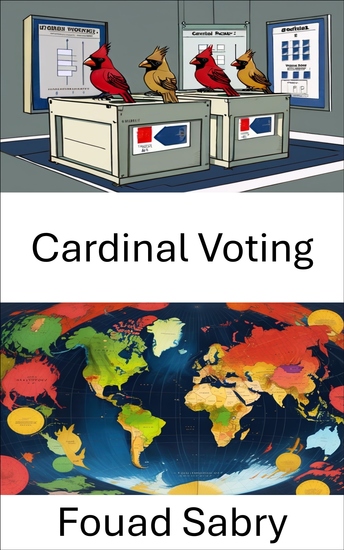
Unlock the power of voting systems with "Cardinal Voting," part of the "Political Science" series. This book delves into cardinal voting—a revolutionary method where voters rate candidates, offering a new perspective on electoral fairness and decision-making.
 
1-Cardinal Voting-Learn the basics of cardinal voting, where voters use a numerical scale to express preferences, providing a richer view than traditional methods.
 
2-Approval Voting-Understand approval voting, where voters simply approve or disapprove of candidates, and its connection to cardinal voting for better accuracy.
 
3-Score Voting-Explore score voting, where candidates are rated, and its impact on elections compared to other systems.
 
4-Condorcet Paradox-Discover the Condorcet paradox and its effects on cardinal voting by highlighting voting system complexities.
 
5-Arrow's Impossibility Theorem-Analyze Arrow's theorem and its implications for designing effective cardinal voting systems.
 
6-Independence of Irrelevant Alternatives-Examine this key criterion affecting fairness in voting systems and its relevance to cardinal voting.
 
7-Gibbard–Satterthwaite Theorem-Understand this theorem’s insights into strategic voting and its limitations within cardinal voting.
 
8-Bucklin Voting-Learn about Bucklin voting, blending ranked and cardinal voting elements, and its decision-making impact.
 
9-Majority Criterion-Review the majority criterion’s role in ensuring cardinal voting reflects true majority preferences.
 
10-Positional Voting-Compare positional and cardinal voting systems, and see how each affects electoral outcomes.
 
11-Strategic Voting-Investigate strategic voting and its impact on the integrity of cardinal voting systems.
 
12-Allan Gibbard-Explore Allan Gibbard’s contributions to voting theory and their influence on cardinal voting.
 
13-Social Choice and Individual Values-Examine the link between social choice theory and individual preferences in cardinal voting.
 
14-Later-no-harm Criterion-Understand how this criterion preserves voter preferences in cardinal voting systems.
 
15-Majority Judgment-Consider majority judgment as an alternative to cardinal voting and its potential benefits.
 
16-Ranked Voting-Compare ranked voting with cardinal voting to evaluate the strengths and weaknesses of each.
 
17-Comparison of Electoral Systems-Get a detailed comparison of electoral systems and the unique benefits of cardinal voting.
 
18-Gibbard's Theorem-Revisit Gibbard’s theorem and its effect on strategic behavior in cardinal voting.
 
19-Combined Approval Voting-Explore combined approval voting and its integration with cardinal voting principles.
 
20-Highest Median Voting Rules-Understand highest median voting rules and their role in cardinal voting.
 
21-Usual Judgment-Learn about usual judgment and its impact on electoral outcomes alongside cardinal voting.
 
"Cardinal Voting" offers deep insights into electoral systems, bridging theory with practical application. Elevate your understanding of voting systems today.
Available since: 09/04/2024.
Print length: 284 pages.
Other books that might interest you

  • White Lies - Nine Ways to Expose and Resist the Racial Systems That Divide Us - cover

    White Lies - Nine Ways to Expose...

    Daniel Hill

    • 0
    • 0
    • 0
    What can you do to be a force for racial justice? 
    Many White Christians are eager to fight against racism and for racial justice. But what steps can they take to make good, lasting change? How can they get involved without unintentionally doing more harm than good? 
    In this practical and illuminating guide drawn from more than twenty years of cross-cultural work and learning from some of the greatest leaders of color, pastor and racial justice advocate Daniel Hill provides nine practices rooted in Scripture that will position you to be an active supporter of inclusion, equality, and racial justice. With stories, studies, and examples from his own journey, Hill will show you:How to get free of the impact of White supremacy individually and recognize that it works systemicallyHow to talk about race in an intelligent and respectful way How to recognize which strategies are helpful and which are harmfulWhat you can do to make a difference every day, after protests and major events 
    We cannot experience wholistic justice without confronting and dismantling White supremacy. But as we follow Jesus--the one who is supreme over all things--into overturning false power systems, we will become better advocates of the liberating and unconditional love that God extends to us all.
    Show book
  • Espionage - A Concise History - cover

    Espionage - A Concise History

    Kristie Macrakis

    • 0
    • 0
    • 0
    A concise introduction to the history and methods of espionage, illustrated by spy stories from antiquity to today's high-tech world. 


    Espionage is one of the most secret of human activities. It is also, as the popularity of spy stories suggests, one of the most intriguing. This book pulls the veil back on the real world of espionage, revealing how spying actually works. In a refreshingly clear, concise manner, Kristie Macrakis guides listeners through the shadowy world of espionage, from the language and practice of spycraft to its role in international politics, its bureaucratic underpinnings, and its transformation in light of modern technology. Espionage is a mirror of society and human foibles with the added cloak of secrecy and deception. Accordingly, Espionage traces spying all the way back to antiquity, while also moving beyond traditional accounts of military and diplomatic intelligence to shine a light on industrial espionage and the new techno-spy. As thorough—and thoroughly enjoyable—as it is compact, the book is an ideal introduction to the history and anatomy of espionage.
    Show book
  • Political Uncertainty - A Comparative Exploration - cover

    Political Uncertainty - A...

    Gergana Dimova

    • 0
    • 0
    • 0
    Overall, this book furnishes important insights into uncertainty in political life and how the discipline of political science is coming to terms with it.
    Show book
  • On Settler Colonialism - Ideology Violence and Justice - cover

    On Settler Colonialism -...

    Adam Kirsch

    • 0
    • 0
    • 0
    A prominent public intellectual tackles one of the most crucial political ideas of our moment. 


    Since Hamas's attack on Israel last October 7, the term "settler colonialism" has become central to public debate in the United States. A concept new to most Americans, but already established and influential in academic circles, settler colonialism is shaping the way many people think about the history of the United States, Israel and Palestine, and a host of political issues. 


    This short book is the first to examine settler colonialism critically for a general audience. By critiquing the most important writers, texts, and ideas in the field, Adam Kirsch shows how the concept emerged in the context of North American and Australian history and how it is being applied to Israel. He examines the sources of its appeal, which, he argues, are spiritual as much as political; how it works to delegitimize nations; and why it has the potential to turn indignation at past injustices into a source of new injustices today. A compact and accessible introduction, rich with historical detail, the book will speak to listeners interested in the Middle East, American history, and today's most urgent cultural-political debates.
    Show book
  • Free Speech - What Everyone Needs to Know® - cover

    Free Speech - What Everyone...

    Nadine Strossen

    • 0
    • 0
    • 0
    This concise but comprehensive book lays out specific answers to myriad topical questions about free speech law, and also general explanations of how and why the law distinguishes between protected and punishable speech. 


    The book focuses on modern First Amendment law, explaining the historic factors that propelled its evolution in a more speech-protective direction—in particular, the Civil Rights Movement. It highlights the many cases, involving multiple issues, in which robust speech-protective principles aided advocates of racial justice and other human rights causes. The book also shows how these holdings reflect universal, timeless values, which have been incorporated in many other legal systems, and have inspired countless thinkers and activists alike. 


    Without oversimplifying the complexities of free speech law, the book's lively question-and-answer format summarizes this law in an understandable, interesting, and memorable fashion. It addresses the issues in a logical sequence, presenting facts and eloquent language from landmark Supreme Court opinions. It will be illuminating to a wide range of listeners, from those who know nothing about free speech law, to those who have studied it but seek a well-organized summary of major doctrinal rules, as well as insights into their background, rationales, and interconnections.
    Show book
  • All Measures Short of War - The Contest for the Twenty-First Century and the Future of American Power - cover

    All Measures Short of War - The...

    Thomas J. Wright

    • 0
    • 0
    • 0
    The two decades after the Cold War saw unprecedented cooperation between the major powers as the world converged on a model of liberal international order. Now, great power competition is back, and the liberal order is in jeopardy. 
    Russia and China are increasingly revisionist in their regions. The Middle East appears to be unraveling. And many Americans question why the United States ought to lead. What will great power competition look like in the decades ahead? Will the liberal world order survive? What impact will geopolitics have on globalization? And, what strategy should the United States pursue to succeed in an increasingly competitive world. 
     In this book, Thomas Wright explains how major powers will compete fiercely even as they try to avoid war with each other. Wright outlines a new American strategy—responsible competition—to navigate these challenges and strengthen the liberal order.
    Show book