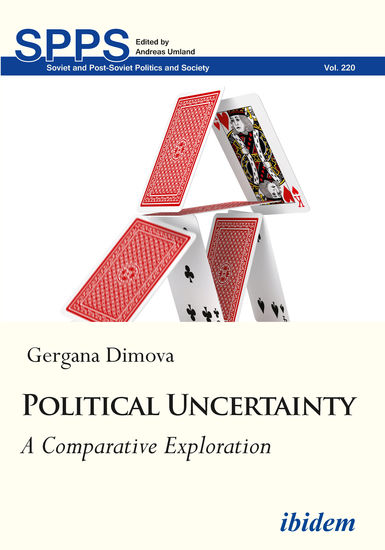
Political Uncertainty - A Comparative Exploration
Gergana Dimova
Verlag: ibidem
Beschreibung
Overall, this book furnishes important insights into uncertainty in political life and how the discipline of political science is coming to terms with it.
Verlag: ibidem
Overall, this book furnishes important insights into uncertainty in political life and how the discipline of political science is coming to terms with it.
John Rawls, one of the most influential philosophers of the 20th century, fundamentally reshaped the field of political philosophy with his groundbreaking work, A Theory of Justice (1971). His vision of "justice as fairness" offered a robust framework for understanding social cooperation and the principles that should govern a just society. By blending elements of social contract theory with contemporary concerns about inequality and human rights, Rawls addressed timeless questions about the nature of justice and the moral obligations of institutions. Born on February 21, 1921, in Baltimore, Maryland, Rawls’ early life was marked by tragedy and intellectual rigor. He lost two brothers to illness at a young age, experiences that profoundly influenced his outlook on morality and the fragility of human life. Rawls attended Princeton University, where he earned his undergraduate degree in philosophy, and later completed his doctorate at Harvard University after serving in the U.S. Army during World War II. These formative years shaped his commitment to exploring ethical frameworks that could withstand the complexities of a modern, pluralistic world. Rawls’ magnum opus, A Theory of Justice, introduced several key concepts that would come to define his philosophy. Central to his work was the idea of the "original position," a hypothetical scenario in which individuals design the principles of justice behind a "veil of ignorance." This veil prevents individuals from knowing their social status, wealth, abilities, or personal biases, compelling them to choose rules that are fair and impartial. The result is a system that prioritizes equal basic liberties for all, coupled with the difference principle, which allows social and economic inequalities only if they benefit the least advantaged members of society.Zum Buch
How a broken criminal justice system has fueled the crisis of American democracy, and how we can address both problems together.Criminal Justice in Divided America shows how police, courts, and prisons helped to break American democracy and how better approaches to public safety and criminal accountability can help to repair it. Engaging critically with concerns from both the left and the right, Sklansky lays out a clear and deeply researched agenda for reforming police departments, prosecutors' offices, criminal trials, and punishment. Sklansky seeks pragmatic solutions that take account of political realities: the lofty ideal of empowering "the people" or "the community" can mean little when members of the public or the community disagree. While efforts to "defund" the police have exacerbated political conflicts without addressing the underlying problem of how and when force should be used to protect public safety, reforms aimed at improving police accountability, restraining prosecutorial power, and expanding the role of juries can bring together warring parties who share a concern for justice.Ultimately, Sklansky argues, reform must be rooted in a strong commitment to pluralism―bridging political divides rather than worsening them, strengthening democracy, and securing the broad support that enables durable change.Zum Buch
Mankind can rule itself without the force of top-down authority, and freedom is more than just choosing how to meet the needs and demands of capital. Inequality is structural and intentional, not inevitable and necessary. It does not have to be this way. In solidarity, we are better. Think for yourself, and question authority. This is the essence of anarchism, which has a bad name and reputation because it attacks the necessity of centralised power and authority. The media archetype is Tyler Durden, filled with violence and nihilism – yet anarchism is the most positive of political philosophies, one that Jesus and Buddha both preached, stating that empathy and a rejection of authority were key to human flourishing. Neither would disagree with most early anarchists. Proudhon, whose “property is robbery” is perhaps the most well-known anarchist slogan, lays out the conceptual foundation for key anarchist ideas. He argues that usury (charging interest) is a fundamental harm to society, that there is enough for everyone if we simply take other values to be higher than capital gain, that mutualism is inevitable, and that all governments and ideologies make the same mistake, in trying to change society from the top. Positive change must arise from the great masses of humanity, not from their rulers. Bakunin's speeches are about solidarity arising from the masses, and the ground for a global reconfiguration. Louis Lingg was convicted to death with six others, for being one of the ‘Chicago Anarchists’. They were executed to make a political point, based on corrupted evidence and perjury. His statement is one of contempt for the powers that be, and his belief that mankind should be free and should fight until it is. We end with Kropotkin, who firmly believed in decentralized society. He believed that the greatest strength of mankind lies in the masses, not their rulers, and exhorts us to “Act for Yourselves”.Zum Buch
In 1987, E. L. Doctorow celebrated the Constitution's bicentennial by reading it. "It is five thousand words long but reads like fifty thousand," he said. Distinguished legal scholar Garrett Epps disagrees. It's about 7,500 words. And Doctorow "missed a good deal of high rhetoric, many literary tropes, and even a trace of, if not wit, at least irony," he writes. In American Epic, Epps takes us through a complete reading of the Constitution to achieve an appreciation of its power and a holistic understanding of what it says. In this book he seeks not to provide a definitive interpretation, but to listen to the language and ponder its meaning. He draws on four modes of reading: scriptural, legal, lyric, and epic. The Constitution's first three words, for example, sound spiritual—but Epps finds them to be more aspirational than prayer-like. He turns the Second Amendment into a poem to illuminate its ambiguity. He notices oddities and omissions. The Constitution lays out rules for presidential appointment of officers, for example, but not removal. Should the Senate approve each firing? Can it withdraw its "advice and consent" and force a resignation? And he challenges himself, as seen in his surprising discussion of the Defense of Marriage Act (DOMA) in light of Article 4, which orders states to give "full faith and credit" to the acts of other states.Zum Buch
The Roman Senate, one of the most enduring institutions in ancient history, traces its origins to the very foundation of Rome. Emerging during the early monarchy period, the Senate originally functioned as an advisory body to the king. According to Roman tradition, the Senate was established by Romulus, the legendary founder of Rome, who appointed one hundred of the most distinguished men, known as "patres," to serve as the initial senators. These men and their descendants formed the aristocratic class, later known as the patricians. The formation of the Senate marked the beginning of a political structure that would shape Roman governance for centuries. The early Senate's primary role was to offer counsel to the king on matters of state. While its authority was limited under the monarchy, the Senate's influence grew as it represented the city’s elite and carried the weight of collective wisdom. Senators held their positions for life, symbolizing stability and continuity within the Roman state. The Senate's name itself, derived from the Latin word "senex" (meaning old man), emphasized the value placed on experience and elder leadership. During this period, the Senate did not possess legislative or executive power but acted as a stabilizing force, guiding the monarch through complex political and military decisions. The transition from monarchy to republic in the late 6th century BCE marked a significant turning point for the Senate’s role. After the fall of the last Roman king, Tarquin the Proud, the Senate became more central to governance. The expulsion of the monarchy led to the establishment of the Roman Republic, where power was distributed more broadly among elected magistrates. The Senate, now composed mainly of patricians, gained considerable influence as a body that advised the newly formed consuls.Zum Buch
The Hell Bomb by Pulitzer Prize–winning journalist William L. Laurence is a sobering, meticulously detailed account of the dawn of the hydrogen bomb era. Written in the early 1950s, this scientific and political examination offers a front-row perspective on one of the most terrifying technological advancements in human history. Drawing on firsthand experiences from his time at Los Alamos and exclusive interviews with leading figures such as Hans A. Bethe, Laurence unpacks the terrifying potential of thermonuclear fusion and its unparalleled destructive power. More than just a scientific treatise, The Hell Bomb wrestles with the ethical dilemmas and geopolitical consequences of nuclear armament in a rapidly changing post–World War II world. Laurence urges the public to confront the moral weight of such weapons and consider the path humanity must choose as it stands on the brink of unimaginable devastation. Narrated with gravity and insight by Nathan Edwards, this audiobook remains a critical historical document and a powerful warning from the nuclear age's front lines.Zum Buch