Join us on a literary world trip!
Add this book to bookshelf
Grey
Write a new comment Default profile 50px
Grey
Subscribe to read the full book or read the first pages for free!
All characters reduced
An Outcast; Or Virtue and Faith - cover

An Outcast; Or Virtue and Faith

F. Colburn Adams

Publisher: DigiCat

  • 0
  • 0
  • 0

Summary

In "An Outcast; Or, Virtue and Faith," F. Colburn Adams crafts a poignant narrative exploring themes of isolation, morality, and the endurance of the human spirit. Set against a backdrop of 19th-century American society, the novel employs a vivid literary style rich in emotional depth and introspective characterizations. Adams intricately weaves the protagonist's internal struggles with societal expectations, presenting a compelling critique of social norms and the quest for personal redemption, inviting readers to examine the dichotomy between virtue and faith as guiding principles amidst adversity. F. Colburn Adams, an influential figure in American literature, draws from his own experiences with marginalization and societal scrutiny. His diverse background, including his work as an editor and journalist, informs the insightful perspectives found within his writings. Adams's deep understanding of human relationships and ethical dilemmas molds this heartfelt narrative, allowing readers to connect intimately with the characters' journeys and moral quandaries. This novel is a must-read for those interested in the complexities of the human condition and the societal constraints that can lead individuals to feel like outcasts. Adams's masterful storytelling not only captivates but also challenges readers to reflect on their own values and beliefs in an ever-changing world.
Available since: 09/15/2022.
Print length: 301 pages.

Other books that might interest you

  • No Thoroughfare - cover

    No Thoroughfare

    Charles Dickens, Wilkie Collins

    • 0
    • 0
    • 0
    Walter Wilding has lived his life secure in the knowledge that he was the son of his mother. But a chance encounter shocks him to his deathbed, leaving his friend and Executor George Vendale charged with the finding of the real Walter Wilding, Meanwhile George pitches woo to Margerite Obenreizer, but has to deal with her dastardly guardian and uncle.  
    The story twists and turns from the wine cellars of England, Soho and then the Alps of Switzerland, where George discovers that Mr Obenreizer is right about one thing to the last... "So little is the world, that one cannot keep away from persons." 
    Originally written as a stage play by Wilkie Collins and Charles Dickens, it was later turned into a collaborative novel by the two. 
    Narrated by Michael Ward.
    Show book
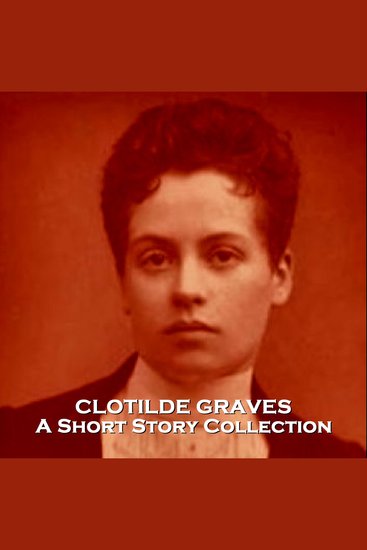
  • Clotilde Graves - A Short Story Collection - Brilliant Irish author that wrote under a male pen name to help get published - cover

    Clotilde Graves - A Short Story...

    Clotilde Graves

    • 0
    • 0
    • 0
    Clotilde Augusta Inez Mary Graves was born on the 3rd June 1863 at Buttevant Castle, Co. Cork, to parents with military backgrounds. 
     
    At age nine, the family moved to Southsea in England for yet another military posting.  Her father’s postings gave her valuable experiences that would be put to good use in later years in some of her literary works. 
     
    She was educated at a Catholic convent in Lourdes before returning to London in 1884 to study art in Bloomsbury.  She worked part-time at the British Museum and the Royal Female School of Art and generated further income by drawing little pen-and-ink grotesques for the comic papers.  
     
    A few years later a chance meeting found her writing extra lyrics for a pantomime version of Puss in Boots.  She followed up with several financially successful plays, both in London and New York, and gained a measure of notoriety in one with the comparison of marriage and prostitution.   
     
    Despite her dramatic success she published her first novel in 1911 under the pseudonym of Richard Dehan which she continued to use for later works.  As well as novels and plays she published collections of short stories which glow with talent and invention. 
     
    She was an unusual figure in London society, wearing her hair short, taking on a masculine manner and cut of clothing, and smoking cigarettes in public when such traits were considered eccentric at best.  Add to this her admired collection of Chinese and Japanese trophies, her enthusiasm for fly-fishing and her riding of a tricycle and you have a perfect image of this fascinating writer. 
     
    Clotilde Graves died at the convent of Our Lady of Lourdes at Hatch End in Middlesex, on the 3rd December 1932.  She was 69. 
     
    1 - Clotilde Graves - A Short Story Collection - An Introduction 
    2 - Under The Electrics by Clotilde Graves writing as Richard Dehan 
    3 - The Lost Room by Clotilde Graves writing as Richard Dehan 
    4 - A Spirit Elopement by Clotilde Graves 
    5 - In The Fourth Dimension by Clotilde Graves writing as Richard Dehan 
    6 - A Nocturne by Clotilde Graves writing as by Richard Dehan
    Show book
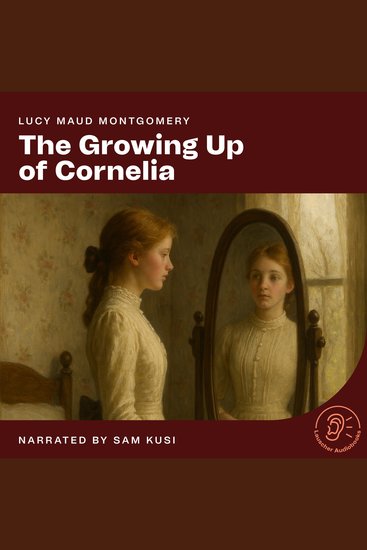
  • The Growing up of Cornelia - cover

    The Growing up of Cornelia

    Lucy Maud Montgomery

    • 0
    • 0
    • 0
    Lucy Maud Montgomery (November 30, 1874 – April 24, 1942), published as L. M. Montgomery, was a Canadian author best known for a series of novels beginning in 1908 with Anne of Green Gables. The book was an immediate success. The title character, orphan Anne Shirley, made Montgomery famous in her lifetime and gave her an international following.
    The Growing Up of Cornelia: Aunt Jemima gave me this diary for a Christmas present. It's just the sort of gift a person named Jemima would be likely to make. I can't imagine why Aunt Jemima thought I should like a diary. Probably she didn't think about it at all. I suppose it happened to be the first thing she saw when she started out to do her Christmas duty by me, and so she bought it. I'm sure I'm the last girl in the world to keep a diary.
    Show book
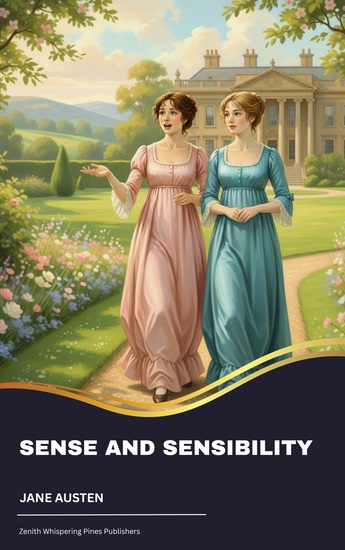
  • Sense and Sensibility - cover

    Sense and Sensibility

    Jane Austen

    • 0
    • 0
    • 0
    Two sisters. Two ways of loving. One journey toward happiness.
    Elinor Dashwood lives by sense—quiet strength, patience, and restraint—while her sister Marianne follows sensibility, guided by passion and emotion. As both face romance, heartbreak, and society's rigid expectations, they must learn when to guard the heart and when to trust it. Austen's gentle wit and insight turn their trials into a moving story of growth and love.
    
    Celebrated as "Austen's first published novel and one of her most tender," this classic blends romance, humor, and emotional wisdom. Its exploration of balance between reason and feeling remains as relevant today as it was two centuries ago.
    
    If you love heartfelt romance, rich characters, and timeless reflections on love and maturity, this novel will enchant you.
    
    Open the book—and discover why love needs both sense and sensibility.
    Show book
  • At Christmas Time - From their pens to your ears genius in every story - cover

    At Christmas Time - From their...

    Anton Chekhov

    • 0
    • 0
    • 0
    Anton Pavlovich Chekhov was born on 29th January 1860 in Taganrog, on the south coast of Russia.  
    His family life was difficult; his father was strict and over-bearing but his mother was a passionate story-teller, a subject Chekhov warmed to. As he later said; ‘our talents we got from our father, but our soul from our mother’.  
    At school Chekhov was distinctly average. At 16 his father mis-managed his finances and was declared bankrupt. His family fled to Moscow. Chekhov remained and eked out a living by various means, including writing and selling short sketches to newspapers, to finish his schooling. That completed and with a scholarship to Moscow University obtained he rejoined his family. 
    He was able to help support them by selling satirical sketches and vignettes of Russian lifestyles and gradually obtained further commissions. In 1884, he qualified as a physician and, although it earned him little, he often treated the poor for free, he was fond of saying ‘Medicine is my lawful wife, and literature is my mistress.’ 
    His own health was now an issue as he began to cough up blood, a symptom of tuberculosis.  Despite this his writing success enabled him to move the family into more comfortable accommodation.  
    Chekhov wrote over 500 short stories which included many, many classics including ‘The Kiss’ and ‘The Lady with a Dog’.  His collection ‘At Dusk’ won him the coveted Pushkin Prize when was only 26.  
    He was also a major playwright beginning with the huge success of ‘Ivanov’ in 1887.   
    In 1892 Chekhov bought a country estate north of Moscow. Here his medical skills and money helped the peasants tackle outbreaks of cholera and bouts of famine. He also built three schools, a fire station and a clinic.  It left him with less time for writing but the interactions with real people gained him detailed knowledge about the peasantry and their living conditions for his stories.  
    His most famous work, ‘The Seagull’ was received disastrously at its premiere in St Petersburg. It was later restaged in Moscow to highlight its psychological aspects and was a huge success. It led to ‘Uncle Vanya’, ‘The Three Sisters’ and ‘The Cherry Orchard’.  
    Chekhov suffered a major lung hemorrhage in 1897 while visiting Moscow. A formal diagnosis confirmed tuberculosis and the doctors ordered changes to his lifestyle.  
    Despite a dread of weddings the elusive literary bachelor quietly married the actress Olga Knipper, whom he had met at rehearsals for ‘The Seagull’, on 25th May 1901. 
    By May 1904 with his tuberculosis worsening and death imminent he set off for the German town of Badenweiler writing cheerful, witty letters to his family and assuring them his health was improving.  
    On 15th July 1904 Anton Chekhov died at Badenweiler.  He was 44.
    Show book
  • The Count of Montecristo - cover

    The Count of Montecristo

    Alexandre Dumas

    • 0
    • 0
    • 0
    "The Count of Monte Cristo" is a historical adventure novel by Alexandre Dumas, published in serialized form in 1844–46. The story follows Edmond Dantès, a young man who is wrongfully imprisoned in the Château d'If. After many years, he escapes with the help of another prisoner, acquires a fortune hidden on the island of Monte Cristo, and returns to France under the guise of the Count of Monte Cristo to seek vengeance against those who betrayed him. The novel explores themes of justice, revenge, and the human condition.
    Show book