

Join us on a literary world trip!
Add this book to bookshelf
Grey
Write a new comment Default profile 50px
Grey
Subscribe to read the full book or read the first pages for free!
All characters reduced
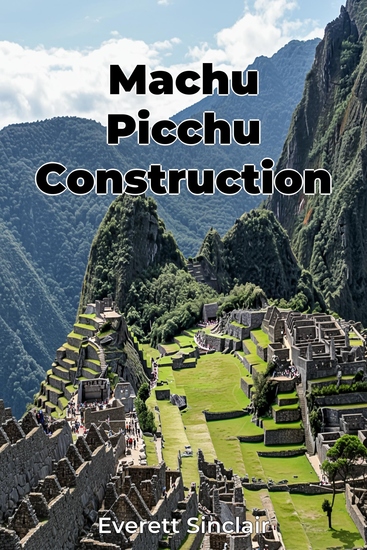
Machu Picchu Construction - cover

Machu Picchu Construction

Everett Sinclair

Translator A AI

Publisher: Publifye

  • 0
  • 0
  • 0

Summary

Machu Picchu Construction explores how the Inca civilization, renowned for Inca stonework, built the iconic citadel of Machu Picchu in the Andes Mountains without the use of iron tools or the wheel. The book examines the sophisticated engineering, architectural design, and the Inca's societal organization that made this feat possible. Readers gain insights into the intricate stone-cutting techniques, the profound understanding of the environment, and the logistical solutions employed to sustain this complex settlement. One intriguing aspect is how the Inca aligned certain structures with astronomical events, revealing their deep connection to the cosmos. The book systematically unveils the construction process, beginning with the historical and geographical context, and then moves into stone quarrying and fitting techniques. It also explores the potential uses of Machu Picchu, considering its agricultural terraces and residential areas, drawing on archaeological evidence. This methodical approach, combined with archaeological surveys, geological studies, and ethnohistorical documents, offers a fresh perspective on the Inca's capabilities in ancient construction techniques and their mastery of sustainable design. The book culminates by discussing the long-term maintenance strategies used by the Inca, providing a comprehensive understanding of this architectural marvel.
Available since: 03/04/2025.
Print length: 58 pages.

Other books that might interest you

  • My Soul Look Back in Wonder - Memories from a Life of Study Struggle and Doin Battle in the Language Wars - cover

    My Soul Look Back in Wonder -...

    Geneva Napoleon Smitherman

    • 0
    • 0
    • 0
    This is the story of Dr. Geneva Smitherman, aka "Dr. G," the pioneering linguist often referred to as the "Queen of Black Language." In a series of narrative essays, Dr. G writes eloquently and powerfully about the role of language in social transformation and the academic, intellectual, linguistic, and societal debates that shaped her groundbreaking work as a Black Studies O.G. and a Womanist scholar-activist of African American Language. 


    These eleven essays narrate the development of Dr. G's race, gender, class, and linguistic consciousness as a member of the Black Power Generation of the 1960s and 70s. In My Soul Look Back In Wonder, Dr. G links the personal to the professional and the political, situating the struggles, and successes, of a Black woman in the Academy within the historical experiences and development of her people. 


    As Dr. G enters her eighth decade, in this Black Lives Matter historical moment, she seeks to share the meaning and purpose of a life of study and struggle and its significance for all those who seek racial and social justice today.
    Show book
  • A Small Stubborn Town - Life death and defiance in Ukraine – As heard on BBC Radio 4 - cover

    A Small Stubborn Town - Life...

    Andrew Harding

    • 0
    • 0
    • 0
    A Telegraph Book of the Year, soon to be a BBC Radio 4 dramatisation.'Extraordinary.' Philippe Sands'We are touched by the courage and dignity of Andrew Harding's characters - qualities that the author must surely possess in equal measure.' - Andrey Kurkov'A  story of extraordinary heroism by ordinary people. - James Meek'This gripping account is the Russian invasion of Ukraine in microcosm.' - Lindsey HilsumIt's March 2022 and Russian tanks are roaring across the vast, snow-dusted fields of Ukraine. Their destination: Voznesensk, a town with a small bridge that could change the course of the war.The heavily-armed Russians are expecting an easy fight - or no fight at all. After all, Voznesensk is a quiet farming town, full of pensioners. But the locals appear to have other ideas.Svetlana, a grandmother with arthritis, reacts in fury when Russian troops turn her cottage into their blood-soaked headquarters. Valentin, a quick-talking lawyer, joins the town's 'Dads Army' defenders, crouching in a trench with an AK47. Meanwhile, 21-year-old Sergei grabs a Molotov cocktail and lies in wait for Russian tanks as they push towards Dead Water Bridge.The odds are terrible. But a plan is emerging, and there's a chance it could save not just Voznesensk, but the rest of southern Ukraine. Meanwhile, inside the tanks, an inner battle rages. As Russian officer Igor Rudenko prepares to invade, he has a secret. He is Ukrainian himself.A gripping work of reportage that tells the story of a pivotal moment in Ukraine's war, this is a real-life thriller about ordinary people facing extraordinary circumstances with resilience, humour and ingenuity.'[Andrew Harding is] one of our most gifted and sensitive journalists' - Jon Snow
    Show book
  • The First Lessons In Principles of Cooking - cover

    The First Lessons In Principles...

    Lady Barker

    • 0
    • 0
    • 0
    Discover the timeless wisdom of Victorian domestic science in First Lessons in the Principles of Cooking by Lady Barker—a thoughtful and empowering guide for anyone interested in the foundations of cookery. Written in the late 19th century, this classic manual goes far beyond recipes, exploring the “why” behind food preparation with a practical, scientific lens. 
    Lady Barker advocates for economy, nutrition, and efficiency in the kitchen, teaching readers how to minimize waste and improve health through knowledge of food composition and cooking methods. From milk and bread to beef, vegetables, and boiling techniques, each chapter blends chemistry with domestic pragmatism. 
    Perfect for culinary historians, home cooks, and those curious about the roots of nutritional education, this audiobook offers both inspiration and insight into the intelligent art of cookery—revealing how understanding the science of food can uplift households of any size or income.
    Show book
  • A Man of Few Words - The Bricklayer of Auschwitz Who Saved Primo Levi - cover

    A Man of Few Words - The...

    Carlo Greppi

    • 0
    • 0
    • 0
    'Nobody knows how much I owe that man', Primo Levi said of his Italian compatriot Lorenzo Perrone, who saved his life at Auschwitz. 'I could never repay him'. Each day for a period of six months, Perrone, who worked beside Auschwitz in desperate conditions, risked his own life to smuggle part of his own soup ration to Levi, quietly leaving the mess tin by a half-constructed brick wall. Without those extra five hundred calories, Levi could not have survived, and would probably not have written If This Is a Man, the first published account by a Holocaust survivor.
    
    In A Man of Few Words, Carlo Greppi pieces together the life of Lorenzo Perrone, a bricklayer from the Piedmontese town of Fossano, not far from Levi's native Turin. Near-destitute and with minimal formal education, Perrone left very few traces of himself. Yet despite their stark differences – Levi was a middle-class chemist – their friendship survived the Holocaust and continued until Perrone's tragic death. Levi never forgot Perrone. In every book he wrote, he mentions that he owes his life to a man named Lorenzo, and he returned persistently, in the last years of his life, to the man of few words who saved his life.
    
    Compassionate, worldly and prescient, Greppi brings us a story that has much to say about the world we live in today, about an individual who kept hope alive in one of the darkest times and places known to humankind.
    Show book
  • Pol Pot - The Murderous Leader of the Khmer Rouge regime - cover

    Pol Pot - The Murderous Leader...

    Kelly Mass

    • 0
    • 0
    • 0
    He sure had a funny name. And what’s so strange, is that during most of the biggest events in Cambodia, he wasn’t really there. It seems like he was some big orchestrator hiding behind the curtains and silently directing officers to make it all happen. The Cambodia genocide that killed an estimated 2 million of their own citizens has been partially attributed to this maniac. 
    Pol Pot was a Cambodian political leader and revolutionary who worked as Prime Minister of Democratic Kampuchea from 1975 till 1979. He was a key member of Cambodia's communist company, the Khmer Rouge, from 1963 to 1997, and acted as the General Secretary of the Communist Party of Kampuchea from 1963 to 1981. He was a Marxist-- Leninist and a Khmer nationalist. Cambodia was changed into a one-party communist state under his management, and the Cambodian genocide happened. 
    Learn more now.
    Show book
  • America’s Weirdest Riots: The History and Legacy of the Most Unique American Riots - cover

    America’s Weirdest Riots: The...

    Editors Charles River

    • 0
    • 0
    • 0
    Riots are an aspect of American history that do not show up much in history textbooks, except for famous disturbances like the Boston Tea Party or the infamous New York City draft riots of 1863. The reality is that the country has experienced thousands of riots, from early colonial times through to the present, and the issues leading up to some of the riots may seem quite peculiar to modern Americans. Americans have rioted over who was the best actor, and to free pirates from jail. Americans have rioted against bad working conditions, for the 8-hour day, against immigrants, for and against civil rights. Americans have had riots over eggnog, which Bible to use in schools, and when their favorite sports teams have won or lost. 
    For example, in 1788, the deadly Doctors' Riot occurred in New York City over the robbing of graves to provide medical students with bodies to dissect. An even stranger riot was the Eggnog Riot of 1826, when cadets at the United States Military Academy at West Point rioted over Christmas eggnog.  
    In 1844, a debate in Philadelphia over whether to allow Catholic students in public schools to read the Catholic Douay Bible rather than the King James Version sparked two savage riots, known as the Bible Riots. In the City of Brotherly Love, the Bible Riots caused a number of casualties, and two churches and a seminary were burned to the ground. 
    The 1857 Dead Rabbits Riot featured gang violence in New York City, but it could only be understood by knowing about a previous police riot, and that for a time there were two separate police forces in New York City. The police were as apt to club each other as they were to club rioting gang members.The 1870 and 1871 Orange Riots were over the July 12 Orange parades that memorialized the 1690 Battle of the Boyne. Despite the battle being almost 200 years earlier, Protestants and Irish Catholics were still fighting over it in New York City in an extremely bloody way.
    Show book
