

Join us on a literary world trip!
Add this book to bookshelf
Grey
Write a new comment Default profile 50px
Grey
Subscribe to read the full book or read the first pages for free!
All characters reduced
The Torrents of Spring - cover

Sorry, the publisher does not allow users to read this book from the country from which you are connecting.

The Torrents of Spring

Ernest Hemingway

Publisher: Open Road Media

  • 0
  • 0
  • 0

Summary

The Nobel Prize–winning author delivers “full-blooded comedy, with a sting of satire at the expense of certain literary affectations,” in this early work (The New York Times).   Rumored to have been written in ten days to break a contract with his publisher, Ernest Hemingway’s The Torrents of Spring sets out to mock the reigning literary conventions of the time, including the novels of Hemingway’s own mentor, Sherwood Anderson. With appearances by F. Scott Fitzgerald and asides by Hemingway himself, it takes readers on a comedic journey featuring a pair of coworkers at a pump factory in Michigan.   Scripps O’Neil likes to drink with his wife, but he loses both her and his daughter. His goal is to make it to Chicago, where he can find happiness and success, but he never gets that far. Yogi Johnson is a veteran of the First World War who once spent two glorious weeks in Paris with a mysterious woman. Now, he is unable to muster up any interest in such things as romance. As Scripps falls in and out of love and Yogi searches for anything to cure his ambivalence, The Torrents of Spring offers a window into the acerbic mind of one of America’s greatest writers.
Available since: 01/01/2022.
Print length: 141 pages.
Other books that might interest you

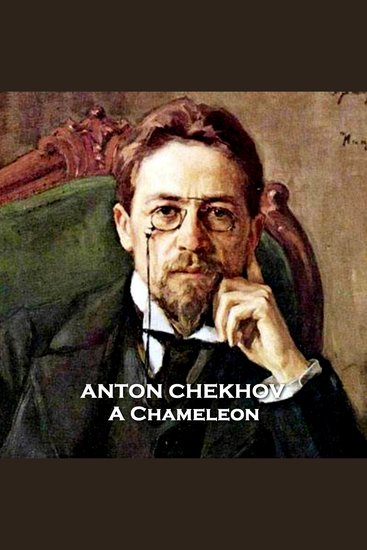
  • A Chameleon - From their pens to your ears genius in every story - cover

    A Chameleon - From their pens to...

    Anton Chekhov

    • 0
    • 0
    • 0
    Anton Pavlovich Chekhov was born on 29th January 1860 in Taganrog, on the south coast of Russia.  
    His family life was difficult; his father was strict and over-bearing but his mother was a passionate story-teller, a subject Chekhov warmed to. As he later said; ‘our talents we got from our father, but our soul from our mother’.  
    At school Chekhov was distinctly average. At 16 his father mis-managed his finances and was declared bankrupt. His family fled to Moscow. Chekhov remained and eked out a living by various means, including writing and selling short sketches to newspapers, to finish his schooling. That completed and with a scholarship to Moscow University obtained he rejoined his family. 
    He was able to help support them by selling satirical sketches and vignettes of Russian lifestyles and gradually obtained further commissions. In 1884, he qualified as a physician and, although it earned him little, he often treated the poor for free, he was fond of saying ‘Medicine is my lawful wife, and literature is my mistress.’ 
    His own health was now an issue as he began to cough up blood, a symptom of tuberculosis.  Despite this his writing success enabled him to move the family into more comfortable accommodation.  
    Chekhov wrote over 500 short stories which included many, many classics including ‘The Kiss’ and ‘The Lady with a Dog’.  His collection ‘At Dusk’ won him the coveted Pushkin Prize when was only 26.  
    He was also a major playwright beginning with the huge success of ‘Ivanov’ in 1887.   
    In 1892 Chekhov bought a country estate north of Moscow. Here his medical skills and money helped the peasants tackle outbreaks of cholera and bouts of famine. He also built three schools, a fire station and a clinic.  It left him with less time for writing but the interactions with real people gained him detailed knowledge about the peasantry and their living conditions for his stories.  
    His most famous work, ‘The Seagull’ was received disastrously at its premiere in St Petersburg. It was later restaged in Moscow to highlight its psychological aspects and was a huge success. It led to ‘Uncle Vanya’, ‘The Three Sisters’ and ‘The Cherry Orchard’.  
    Chekhov suffered a major lung hemorrhage in 1897 while visiting Moscow. A formal diagnosis confirmed tuberculosis and the doctors ordered changes to his lifestyle.  
    Despite a dread of weddings the elusive literary bachelor quietly married the actress Olga Knipper, whom he had met at rehearsals for ‘The Seagull’, on 25th May 1901. 
    By May 1904 with his tuberculosis worsening and death imminent he set off for the German town of Badenweiler writing cheerful, witty letters to his family and assuring them his health was improving.  
    On 15th July 1904 Anton Chekhov died at Badenweiler.  He was 44.
    Show book
  • Theory of the Perpetual Discomfort of Humanity The (Unabridged) - cover

    Theory of the Perpetual...

    H. G. Wells

    • 0
    • 0
    • 0
    Herbert George "H. G." Wells (1866 - 1946) was an English writer.
    He was prolific in many genres, including the novel, history, politics, social commentary, and textbooks and rules for war games. Wells is now best remembered for his science fiction novels and is called a "father of science fiction"
    THE THEORY OF THE PERPETUAL DISCOMFORT OF HUMANITY: He had been sitting with his feet upon the left jamb of my mantel, admiring the tips of his shoes in silence for some time.
    Show book
  • For the Blood is the Life - A renowned and influential early gothic vampire tale set in Italy - cover

    For the Blood is the Life - A...

    F. Marion Crawford

    • 0
    • 0
    • 0
    Francis Marion Crawford was born on August 2nd, 1854 at Bagni di Lucca, Italy. An only son and a nephew to Julia Ward Howe, the American poet and writer of ‘The Battle Hymn of the Republic’.  
     
    His education began at St Paul's School, Concord, New Hampshire, then to Cambridge University; University of Heidelberg; and the University of Rome.  
     
    In 1879 Crawford went to India, to study Sanskrit and then edited The Indian Herald. In 1881 he returned to America to continue his Sanskrit studies at Harvard University. 
     
    At this time in Boston he lived at his Aunt Julia house and in the company of his Uncle, Sam Ward. His family was concerned about his employment prospects.  After a singing career as a baritone was ruled out, he was encouraged to write.  
     
    In December 1882 his first novel, ‘Mr Isaacs’, was an immediate hit which was amplified by ‘Dr Claudius’ in 1883.  
     
    In October 1884 he married Elizabeth Berdan. They went on to have two sons and two daughters. 
     
    Encouraged by his excellent start to a literary career he returned to Italy with Elizabeth to make a permanent home, principally in Sant' Agnello, where he bought the Villa Renzi that then became Villa Crawford.  
     
    In the late 1890s, he began to write his historical works: ‘Ave Roma Immortalis’ (1898), ‘Rulers of the South’ (1900) and ‘Gleanings from Venetian History’ (1905). The Saracinesca series is perhaps his best work. ‘Saracinesca’ was followed by ‘Sant’ Ilario’ in 1889, ‘Don Orsino’ in 1892 and ‘Corleone’ in 1897, that being the first major treatment of the Mafia in literature.  
     
    Francis Marion Crawford died at Sorrento on Good Friday 1909 at Villa Crawford of a heart attack.  
     
    Set in Italy, ‘For Blood is the Life’ draws us into a world usually beyond our senses.  With Crawford’s pen the uneasy, horrific world of vampires is now upon us.
    Show book
  • The Petchenyeg - cover

    The Petchenyeg

    Anton Chekhov

    • 0
    • 0
    • 0
    The story was written during Chekhov's stay in Nice.  It was first published on November 2, 1897, in issue No. 303 of Russkikh Vedomosti. Chekhov later included an edited version of the story in the ninth volume of his collection of works, published by Adolf Marx in 1899-1901.
    Show book
  • War and Peace - cover

    War and Peace

    Leo Tolstoy

    • 0
    • 0
    • 0
    "War and Peace" is a monumental novel written by Russian author Leo Tolstoy, first published between 1865 and 1869. The book is set in the period of the Napoleonic Wars and offers a panoramic view of Russian society at that time. It follows the lives of five aristocratic families through the historical events of the early 19th century, including Napoleon's invasion of Russia in 1812. The novel explores themes of fate, free will, history, and the complexities of family and human relationships.
    Show book
  • Oil! - cover

    Oil!

    Upton Sinclair

    • 0
    • 0
    • 0
    “Passionate. . . . [The] lively satirical account of capitalist greed . . . and socialist struggle,” that inspired the film There Will Be Blood (The Guardian). From the Pulitzer Prize–winning author of The Jungle, a novel set against the backdrop of the political corruption fueling the California oil industry during the Harding administration. Oil! is a tale of the capitalist insatiability that comes between an oil baron and his son, whose growing sympathies with the labor movement and socialist ideals fuels the riff between them. Peopled with politicians, financial investors, oil magnates, a Hollywood star, and a crusading evangelist, Oil! is also a spirited social commentary on the class struggle at the heart of the divide in post–World War I America. Written by an author heralded for his compelling narratives exploring themes of social justice, Oil! is as relevant today as it was when it was first published in 1927. “A marvelous panorama of Southern California life. It is storytelling with an edge on it.” —The New Republic   “A tremendous piece of work.” —The Nation  
    Show book
