Join us on a literary world trip!
Add this book to bookshelf
Grey
Write a new comment Default profile 50px
Grey
Subscribe to read the full book or read the first pages for free!
All characters reduced
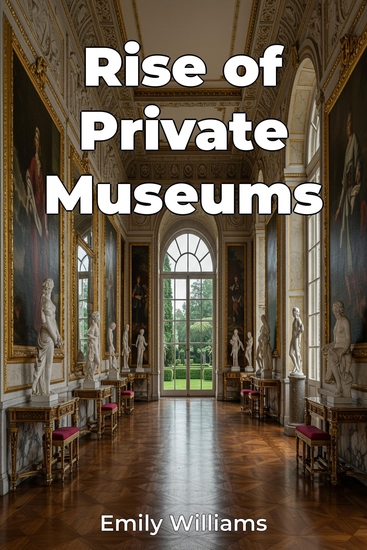
Rise of Private Museums - cover

Rise of Private Museums

Emily Williams

Translator A AI

Publisher: Publifye

  • 0
  • 0
  • 0

Summary

"Rise of Private Museums" explores the growing influence of privately owned art museums on the global art world. These institutions, funded by wealthy individuals, are reshaping cultural heritage, exhibition practices, and art history itself. The book highlights how the surge in private museums reflects both increased wealth concentration and a desire to shape cultural narratives.

 
Intriguingly, these museums can offer valuable public access to art, but also raise questions about accountability and potential biases in historical representation. The book examines the motivations behind the establishment of these museums, delving into the personal, financial, and social factors driving collectors.

 
It analyzes the impact on established public institutions and the art market, considering how private museums influence art market values and curatorial approaches. The approach unfolds by first introducing the phenomenon, then exploring collector motivations, analyzing the impact on the wider art world, and finally discussing the ethical considerations.

 
Ultimately, "Rise of Private Museums" offers a critical perspective on the intersection of art, wealth, and power. It avoids a simple celebration of art patronage, instead prompting a deeper understanding of the consequences and controversies surrounding private control of cultural assets. The book engages with debates on deaccessioning, the influence of private interests, and the potential for tax avoidance.
Available since: 02/22/2025.
Print length: 72 pages.

Other books that might interest you

  • A Rare Recording of Pope Paul VI - cover

    A Rare Recording of Pope Paul VI

    Pope Paul VI

    • 0
    • 0
    • 0
    Pope Paul VI (born Giovanni Battista Enrico Antonio Maria Montini) lived from Sept. 26, 1897 to August 6, 1978. He reigned as Pope from June 21, 1963 to his death on August 6, 1978. After succeeding John XXIII, he continued the Second Vatican Council, which he closed in 1965. He then helped to oversee the numerous reforms and improved ecumenical relations with Eastern Orthodoxy and Protestants. This speech is delivered primarily in Latin, with a short message of prayer in English for American astronauts.
    Show book
  • Chronicle The - Book Four - Full-cast dramatisation - cover

    Chronicle The - Book Four -...

    Mr Punch

    • 0
    • 0
    • 0
    Voices from the Past with David Suchet as Lord Nelson writing to his beloved Emma on the eve of Trafalgar, hoping in God that he will live to finish his letter after the Battle, while Harriet Walter as Virginia Woolf hangs about the House of Commons mourning the passing of Edward VIII and the coming of King Albert I.  Winston Churchill is captured and imprisoned by the Boers and Jane Austen sells 'Pride & Prejudice' for £110. Howard Carter discovers the tomb of Tutankhamen, and on Christmas Day, while Alan Clark is amused to find that Lord Byron once rhymed 'intellectual' with 'hen pecked you all'. And not forgetting dear Anthony Powell, who is having considerable trouble with his waterworks. 
     
    “It’s WONDERFUL.  In fact, I would describe it as one of the all-time audio greats... an unmissable five-star production.”  (The Guardian) 
    “I recommend the reader to hunt down and buy this series wherever it may be found.”  (The Spectator) 
      
    Dramatised and performed by a distinguished cast of over 30 actors, including Charles Dance, Harriet Walter, David Suchet, Timothy West, James Bolam, Maureen Lipman, Robert Powell, Jenny Agutter, Joss Ackland, Eleanor Bron, John Sessions, Imogen Stubbs. 
     
    Also available as part of the CHRONICLE BOX SET, over 11 hours of audio bliss.
    Show book
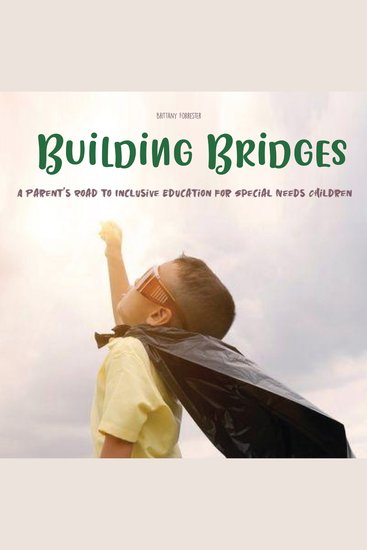
  • Building Bridges - A Parent's Road to Inclusive Education for Special Needs Children - cover

    Building Bridges - A Parent's...

    Brittany Forrester

    • 0
    • 0
    • 0
    This audiobook is narrated by an AI Voice.   
    In a world that increasingly values diversity and inclusivity, "Building Bridges" provides an inspiring and informative guide for parents navigating the complex landscape of inclusive education for their children. This heartfelt book is a must-read for anyone looking to create a brighter future for children with unique abilities. 
    	Empowerment Through Inclusivity: "Building Bridges" provides parents with the tools they need to become effective advocates for their special needs children within the educational system. Discover how to collaborate with schools and support your child's unique learning journey. 
    	Fostering Friendship and Belonging: Learn how to build bridges between special needs children and their typically developing peers. This book provides practical strategies for creating inclusive communities that foster empathy, friendship, and a sense of belonging. 
    	Overcoming Obstacles: Through real-life stories and experiences, "Building Bridges" shows you how parents have triumphed over challenges that often accompany the pursuit of inclusive education. From navigating IEP meetings to accessing specialized resources, you'll gain valuable insights into overcoming barriers. 
    	Celebrating Achievements: Be inspired by the remarkable successes and milestones of children with specific, inclusive classrooms. "Building Bridges" demonstrates that with the right support, every child has the potential to shine. 
    	Building a Support Network: Discover the importance of connecting with other parents and professionals who can offer guidance, support, and encouragement as you embark on your journey towards inclusive education. 
    Whether you're a parent seeking guidance, an educator looking to enhance your inclusive teaching practices, or someone passionate about fostering a more inclusive world, "Building Bridges" is a roadmap to a brighter future. Join the movement towards a society where every child is valued, celebrated, and allowed to thrive.
    Show book
  • Neurofeedback For Trauma - Past Present & Future - How to add neurofeedback to your service - cover

    Neurofeedback For Trauma - Past...

    Stuart R Black

    • 0
    • 0
    • 0
    It's not clear how change will come, but it's clear that change is coming. The current paradigms of treating mental health fall short. 
    The psychiatric view of mental health disorders as imbalances in brain chemistry treated by medication fails to address the root cause. 
    The psychological view of mental health disorders as learned behavioural issues has severe limitations. Psychosocial therapies that require the trauma to be reimagined (talking therapies, EMDR) are ineffective for many traumatised children, adolescents and adults. 
    Neurofeedback therapy reaches the parts other therapies cannot reach. It works at the physiological level first, building the scaffolding for psychological change. 
    The challenge has been understanding, adopting and scaling this obscure approach. 
    Stuart Black explains how these challenges can be addressed, makes the case for Neurofeedback for trauma, and describes how you can incorporate Neurofeedback therapy into your service.
    Show book
  • Tocharians The: The Enigmatic History of the Ancient Ethnic Groups in East Asia - cover

    Tocharians The: The Enigmatic...

    Editors Charles River

    • 0
    • 0
    • 0
    Located in the Tarim Basin of Asia during the first few centuries CE, a people and a kingdom grew to prominence in medieval central and east Asian geopolitics. The people are known today as the Tocharians, and their primary kingdom was Kucha, but despite their longevity, this incredible kingdom and its people have been overlooked and misunderstood by modern societies and historians for centuries. The lack of in-depth studies on the Tocharians largely stems from the fact that they are relatively newcomers to the modern academic scene - it was only in the late 19th century that historians identified them as a distinct ethnic group, and even today, philologists, historians, and archaeologists still have much to uncover about these enigmatic people and their kingdom. A potential early misidentification caused much of this confusion, yet scholars were also left wondering how the Tocharians came to occupy the Tarim Basin, which was perhaps based on the biases of 19th century historians. What has been uncovered so far is truly fascinating and important in the larger picture of Asian and Indo-European history. 
    When scholars first discovered the Tocharians in the late 19th century, they were amazed that Caucasian people who spoke an Indo-European language flourished so far away from the Indo-European homeland and other Indo-European peoples. Scholars immediately developed several theories to explain this apparent anomaly: some were quite logical and formed the basis for current models, while others were quickly and rightfully forgotten. An examination of the textual, archaeological, and art history sources reveals that the Tocharians played a major impact in the affairs of East and Central Asia, indirectly through their predecessors and their descendants, but also directly through trade, diplomacy, and most of all, religion. 
    Show book
  • MIDLIFE - Humanity's Secret Weapon - cover

    MIDLIFE - Humanity's Secret Weapon

    Andrew Jamieson

    • 0
    • 0
    • 0
    Only two species of mammal have a post-reproductive life that lasts longer than their reproductive life: the killer whale, whose elders are able to sniff out food supplies over vast oceanic distances to keep their pods fed, and Homo sapiens. While the evolutionary purpose of the killer whale's extensive life seems clear, what is the point of ours?
    
    This was a question that intrigued psychoanalyst Carl Jung, who observed that if a culture is to maintain its deepest, profoundest roots while moving forward to embrace the challenges of historical and technological change, it needs to find an equilibrium between the energy, vigour and creativity of those in the ego-driven first half of life and the experience, dignity and wisdom of those in the second. But to make it to that second half of life, we need to traverse the dreaded 'middle years', when so many of us find ourselves discontent with our jobs, unhappy in our relationships and lamenting our fetishized youths.
    
    Drawing on history, psychology, science and literature, Jamieson shows just how ubiquitous, and crucial, the 'midlife crisis' is, and the devastating consequences for society at large if we continue to regard it as something we can, and should, avoid.
    Show book