Join us on a literary world trip!
Add this book to bookshelf
Grey
Write a new comment Default profile 50px
Grey
Subscribe to read the full book or read the first pages for free!
All characters reduced
Hidden Crypto Markets - cover

Hidden Crypto Markets

Emily Johnson

Translator A AI

Publisher: Publifye

  • 0
  • 0
  • 0

Summary

Hidden Crypto Markets explores the shadowy world where cryptocurrency fuels illicit activities, venturing into unregulated exchanges and dark web marketplaces. It highlights how the initial promise of decentralization and anonymity in digital currency inadvertently created opportunities for financial crime, examining how billions in crypto vanish and resurface in illegal operations. For example, transaction obfuscation methods and privacy coins are detailed, revealing how criminals attempt to mask the origins of their funds. This book uniquely dissects the structure of illicit crypto markets, detailing methods like mixers, tumblers, and chain hopping used to obscure funds. It presents real-world case studies and employs blockchain analytics to trace the flow of funds, offering a fact-based analysis of how these markets operate beyond traditional financial regulations.

 
The narrative progresses from the history of cryptocurrency and the rise of crypto crime to the investigative techniques used by law enforcement and the ongoing debates surrounding cryptocurrency regulation. Ultimately, Hidden Crypto Markets investigates efforts to combat crypto crime, analyzing the effectiveness of current regulations and proposing improvements. It emphasizes the need for technological solutions, regulatory oversight, and international cooperation to tackle the challenges posed by unregulated exchanges and illicit crypto markets. By using government reports, academic research, and expert interviews, the book connects criminology, cybersecurity, and international finance to provide a holistic understanding of this complex issue.
Available since: 02/27/2025.
Print length: 63 pages.
Other books that might interest you

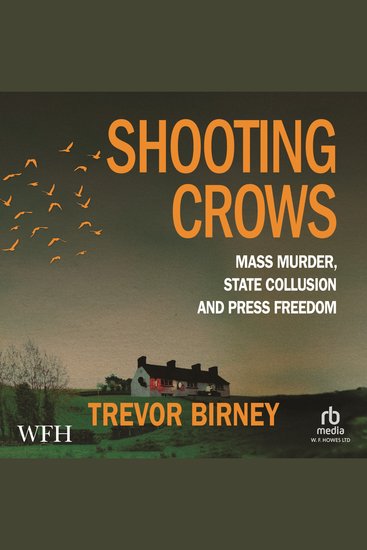
  • Shooting Crows - Mass Murder Collusion and Press Freedom - cover

    Shooting Crows - Mass Murder...

    Trevor Birney

    • 0
    • 0
    • 0
    Everyone knows where they were when Ray Houghton outfoxed the Italian goalkeeper in the 1994 World Cup finals. Every television in the country was tuned in to the match, and The Heights Bar in Loughinisland, Co. Down was no exception. But two miles down the road, three men with no interest in Ireland’s footballing progress were planning a deadly massacre. Shortly after half-time they burst through the door of the bar and opened fire, spraying bullets indiscriminately. As they fled the scene, six innocent men lay dead or dying. 
     
    In 2017 journalists Trevor Birney and Barry McCaffrey produced a groundbreaking documentary, No Stone Unturned, about Loughinisland and allegations of collusion between the RUC and the loyalist terrorists behind the attack. However, it was Birney and McCaffrey, not the perpetrators of violence who then found themselves the target of PSNI anger. 
     
    Shooting Crows tells a shocking story of collusion and betrayal, and of a State still willing to corrupt justice and persecute the innocent to hide the sins of its past.
    Show book
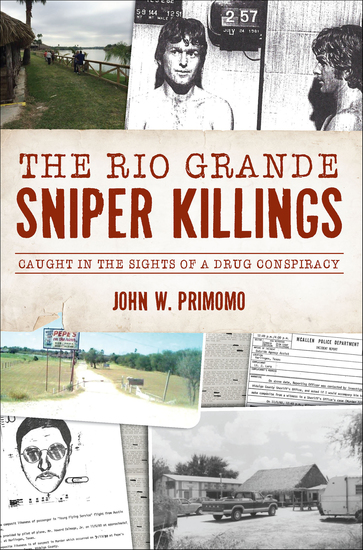
  • The Rio Grande Sniper Killings - Caught in the Sights of a Drug Conspiracy - cover

    The Rio Grande Sniper Killings -...

    John Primomo

    • 0
    • 0
    • 0
    Untangle the complex conspiracy that led to the tragic deaths of Charlotte Kay Elliott and Kevin Edwin Frase on the banks of the Rio Grande. On the night of July 13, 1980, a hitman fired a high-powered rifle into the crowd at Pepe's On the River, an outdoor bar in Mission, Texas. He missed his target, a witness in the Loop 360 drug case, but killed two young bystanders. While state court prosecutions for capital murder inexplicably faltered, a federal court gave the assassin a life sentence for attempted murder of a grand jury witness. A member of the judge's staff who was present throughout the trial, author John W. Primomo revisits the dramatic twists and turns surrounding this murder on the Rio Grande.
    Show book
  • Interview with Serial Killer John Wayne Gacy An - cover

    Interview with Serial Killer...

    John Wayne Gacy

    • 0
    • 0
    • 0
    John Wayne Gacy (March 17, 1942 - May 10, 1994) was an American serial killer and sex offender who raped, tortured and murdered at least thirty-three young men and boys between 1972 and 1978. He became known as the "Killer Clown" due to his public performances as a clown prior to the discovery of his crimes. Gacy committed all of his known murders inside his ranch-style house in Norwood Park Township, Illinois. Twenty-six victims were buried in the crawl space of this home, and three were buried elsewhere on his property; four were discarded in the Des Plaines River. The following recording is from a 1992 tv interview.
    Show book
  • Lethal Doses - The Story Behind "The Godfather Of Fentanyl" - cover

    Lethal Doses - The Story Behind...

    John Madinger

    • 0
    • 0
    • 0
    On a cold afternoon in February 1991, a frightening new drug hit the streets of New York City, a synthetic narcotic marketed in packets labeled “Tango & Cash.” As police scrambled to warn heroin users of the danger, the overdose victims began piling up in hospital emergency rooms and county morgues across three states. As a Drug Enforcement Administration agent said at the time, “We don’t know yet who’s putting this stuff out there, but whoever he is, he’s an ice-cold son of a bitch.” Fentanyl had come to America. In 2024, fentanyl is killing nearly 200 Americans every day, and not just heroin users, a seemingly unstoppable narcotic curse like none ever seen before. But few know that this plague began in the brilliant mind of the high-school dropout and chemistry prodigy that the DEA called “the best and most dangerous clandestine chemist” it has ever encountered. The clandestine chemist was George Erik Marquardt. Starting at just twelve years old, Marquardt used his extraordinary talents to make every illegal drug in the book, from bootleg booze to heroin. He brewed LSD for Timothy Leary and the Grateful Dead, methamphetamine for outlaw motorcycle gangs, nerve gas for Idaho Nazis, and even life-saving AZT for AIDS patients. But when that ice-cold son of a bitch turned to fentanyl, thousands of Americans would die. In LETHAL DOSES: The Story Behind ‘The Godfather of Fentanyl,’ award-winning author and former undercover agent for the Oklahoma Bureau of Narcotics John Madinger, tells the remarkable story of DEA’s three-year pursuit, the genesis of our fentanyl problem today, and the uniquely dangerous evil genius he spent hundreds of hours interviewing. Now you can read the incredible book on which the hit docuseries, THE GODFATHER OF FENTANYL, is based!
    Show book
  • Broadcasting Vietnam - Media Public Opinion And The Rise Of The American Antiwar Movement - cover

    Broadcasting Vietnam - Media...

    Davis Truman

    • 0
    • 0
    • 0
    This audiobook is narrated by an AI Voice.   
    "Broadcasting Vietnam" offers a powerful and deeply human look at one of the most controversial wars in modern history and how it was brought into the living rooms of America. With an unflinching eye on the role of mass media, Davis Truman examines how televised images, frontline reporting, and photojournalism contributed to turning the tide of public opinion and fueling one of the most significant protest movements in U.S. history. 
    From the revolutionary leadership of Ho Chi Minh and the early days of conflict to the escalating American involvement and the devastating use of napalm and chemical weapons, this book chronicles the Vietnam War in vivid detail. Through chapters like "Napalm Girl" and "War and Mass Media," Truman highlights the undeniable impact of iconic moments that shocked a nation and galvanized a generation. 
    Combining historical analysis with cultural insight, Truman also explores the long-term consequences of the war, including its profound impact on American society, politics, and public trust. This is not just a book about war. It's a story about how information, images, and voices changed the course of history. 
    Bold, gripping, and unflinchingly honest, Broadcasting Vietnam is essential reading for anyone seeking to understand the power of media in shaping truth, perception, and resistance.
    Show book
  • Assassinated Presidents The: The Lives and Deaths of Abraham Lincoln James Garfield William McKinley and John F Kennedy - cover

    Assassinated Presidents The: The...

    Editors Charles River

    • 0
    • 0
    • 0
    Until April 14, 1865, John Wilkes Booth was one of the most famous actors of his time, and President Abraham Lincoln had even watched him perform. But his most significant performance at a theater did not take place on the stage. That night, Booth became one of history’s most infamous assassins when he assassinated President Lincoln at Ford's Theatre in Washington, D.C. 
    	In 1880, Garfield ran as a Republican for president, and one of his supporters was a man named Charles Guiteau, who wrote and circulated a speech called “Garfield vs. Hancock” that aimed to rally support for the Republican candidate. Though few knew it, Guiteau’s family had already deemed him insane and attempted to keep him committed in an asylum, only to have him manage an escape from confinement. Garfield went on to narrowly edge Winfield Scott Hancock in the election, and Guiteau, harboring delusions of grandeur, believed he had helped tip the scales in Garfield’s favor.  
    President James Garfield had been assassinated just 20 years earlier, but McKinley didn’t worry about presidential security or his own safety, and that was the case in Buffalo. McKinley’s insistence on greeting the public and shaking hands allowed Czolgosz to walk up to him on September 6, 1901 at a public reception in the Temple of Music on the expo grounds and shoot him point blank, with one bullet grazing the president and another lodging in his abdomen.  
    In many ways, John Fitzgerald Kennedy and his young family were the perfect embodiment of the ‘60s. The decade began with a sense of idealism, personified by the attractive Kennedy, his beautiful and fashionable wife Jackie, and his young children. Months into his presidency, Kennedy exhorted the country to reach for the stars, calling upon the nation to send a man to the Moon and back by the end of the decade. But the idealism and optimism of the decade was quickly shattered, starting with Kennedy’s assassination in 1963. 
    Show book