Join us on a literary world trip!
Add this book to bookshelf
Grey
Write a new comment Default profile 50px
Grey
Subscribe to read the full book or read the first pages for free!
All characters reduced
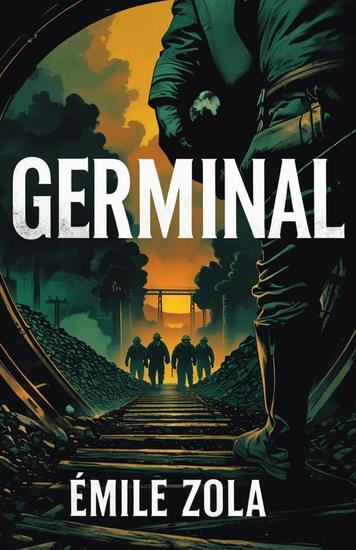
Germinal - cover

Germinal

Emile Zola

Publisher: DD Sales & Distributors

  • 0
  • 0
  • 0

Summary

Germinal, one of Émile Zola's most powerful and enduring novels, is a searing portrayal of class struggle, industrial exploitation, and the indomitable spirit of resistance. First published in 1885, this landmark of literary naturalism is set in the grim coal mines of northern France during the Second Empire. Through the story of Étienne Lantier, an idealistic young outsider who becomes a miner, Zola crafts a brutal yet compassionate examination of labor, poverty, and the rise of socialist thought. The novel follows Étienne as he witnesses the inhumane working conditions, physical degradation, and quiet desperation of the miners in the fictional town of Montsou. With growing awareness and political consciousness, he becomes a leader in a miners' strike—an uprising that is both heroic and tragic. Zola delves into the psychological and social forces that drive people to act collectively, but also confronts the bitter realities of betrayal, starvation, and the violence of both the state and the oppressed. Structured in seven dramatic parts and populated with vivid characters—both noble and flawed—Germinal paints an uncompromising portrait of 19th-century capitalism and working-class life. The novel's title, derived from the spring month in the French Revolutionary calendar, symbolizes hope and renewal. Despite the darkness, Zola plants the seeds of transformation, making Germinal not only a masterwork of realist fiction but also a rallying cry for justice and human dignity.
Available since: 09/19/2020.
Print length: 622 pages.
Other books that might interest you

  • Payment Deferred - cover

    Payment Deferred

    C. S. Forester

    • 0
    • 0
    • 0
    William Marble is a spendthrift banker living in suburban London with his wife and children. He's hard up for money, as his wife spends indiscriminately, he has a growing interest in whiskey, and rent will soon be due. But one night, a visitor calls: James Medland, William's nephew from Australia, is visiting to inform them of a death in the family. Medland is very wealthy, and very alone here at the other end of the world—and Marble, desperate for cash, quickly decides that he must do the unthinkable to get his hands on Medland's bulging wallet. Payment Deferred is an unusual crime novel in the sense that the murder happens at the outset, and there's no mystery as to who did it or why. Rather, taking cues from " The Telltale Heart ", the novel focuses on the state of mind of a guilty criminal. Marble's increasingly elaborate attempts to keep his crime secret from both his family and the authorities become a study of the damage that guilt can do to a person's psyche. Marble soon finds himself wealthy beyond necessity, but his fixation on his money problems is quickly replaced by an all-consuming obsession over this much, much darker problem. C. S. Forester (died 1966) was a significant literary figure of the 20th century. Their work has endured across generations and continues to be read and studied worldwide. As a work of classic literary fiction, Payment Deferred exemplifies the narrative craft and social insight that defined great storytelling of its era. Literary fiction of this period was characterized by careful attention to character psychology, social milieu, and the moral questions that animated public discourse.
    Show book
  • Quicksand - cover

    Quicksand

    Nella Larsen

    • 0
    • 0
    • 0
    Quicksand is a novel by American author Nella Larsen, first published in 1928. This is her first novel and she completed the first draft quickly. The novel was out of print from the 1930s to the 1970s. Quicksand is a work that explores both cross-cultural and interracial themes. Larsen dedicated the novel to her husband.
    Discussing the novel, Jacquelyn Y. McLendon called it the more "obviously autobiographical" of Larsen's two novels. Larsen called the emotional experiences of the novel "the awful truth" in a letter to her friend Carl van Vechten.
    Nella Larsen introduces the educated mixed-race protagonist, Helga Crane who struggles to find her identity in a world of racialized crisis in the 1920s. The novel begins with Helga teaching at a southern black school in Naxos which is meant to be a fictional mirroring of the Tuskegee Institute. Helga is the Daughter of a Danish mother who died when she was an adolescent and West Indian father who is absent. Her early years were spent with her Danish mother and White step-father who loathed her and there began her torn relationship with her split identity. The novel gives us a glimpse into the dichotomy of being mixed raced and the divergence into two vastly different worlds as the protagonist travels through uniquely different cultural spaces from 1920's Jazz Age Harlem to Copenhagen, Denmark.
    Show book
  • The Lost Prince - Two Boys Carrying a Sign Across Europe - cover

    The Lost Prince - Two Boys...

    Frances Hodgson Burnett

    • 0
    • 0
    • 0
    Marco Loristan and a crippled boy called The Rat are sent across Europe carrying a sign to the secret supporters of a lost dynasty, and are told nothing more than they need. Burnett wrote it during the Balkan wars, inventing the kingdom of Samavia out of the newspapers, and made the whole plot turn on two children's discipline rather than on any weapon. The Rat's transformation is the real story; the throne is the excuse. Fifty-eight plates of moonlit streets, gardens and quiet interiors by painters such as John Atkinson Grimshaw and Luke Fildes catch the same hushed, watchful Europe the boys cross.
    Show book
  • Silver Blaze - cover

    Silver Blaze

    Arthur Conan Doyle

    • 0
    • 0
    • 0
    The Adventure of Silver Blaze, one of the 56 Sherlock Holmes short stories written by Sir Arthur Conan Doyle, is one of 12 in the cycle collected as The Memoirs of Sherlock Holmes. Doyle ranked "Silver Blaze" 13th in a list of his 19 favourite Sherlock Holmes stories.One of the most popular Sherlock Holmes short stories, "Silver Blaze" focuses on the disappearance of the eponymous race horse (a famous winner, owned by a Colonel Ross) on the eve of an important race and on the apparent murder of its trainer. The tale is distinguished by its atmospheric Dartmoor setting and late-Victorian sporting milieu. It also features some of Conan Doyle's most effective plotting, hingeing on the "curious incident of the dog in the night-time":Gregory (Scotland Yard detective): Is there any other point to which you would wish to draw my attention?Holmes: To the curious incident of the dog in the night-time.Gregory: The dog did nothing in the night-time.Holmes: That was the curious incident.    Famous works of the author Arthur Conan Doyle: A Study in Scarlet, The Sign of the Four, The Adventures of Sherlock Holmes, The Memoirs of Sherlock Holmes, The Hound of the Baskervilles, The Return of Sherlock Holmes, The Valley of Fear, His Last Bow, The Case-Book of Sherlock Holmes, Stories of Sherlock Holmes, The Lost World.
    Show book
  • A Doll's House - cover

    A Doll's House

    Henrik Ibsen

    • 0
    • 0
    • 0
    Ibsen's "A Doll's House," written two years after "The Pillars of Society," became a sensation and is now widely considered his most famous play. Required reading in many secondary schools and universities, the play was highly controversial upon its release due to its sharp criticism of 19th Century marriage norms. Despite following the structure of a traditional well-made play, the play breaks convention by ending with a discussion instead of an unraveling in its final act. Although Ibsen himself denied it, "A Doll's House" is often referred to as the first true feminist play.
    Show book
  • Lavender and Old Lace - cover

    Lavender and Old Lace

    Myrtle Reed

    • 0
    • 0
    • 0
    The earth trembled beneath Ruths feet for a moment, then, all at once, she understood. The light in the attic window, the marked paragraph in the paper, and the death notices—why, yes, the Charles Winfield who had married Abigail Weatherby was Miss Ainslies lover, and Carl was his son. "He went away!" Miss Ainslies voice came again to Ruth, when she told her story, with no hint of her lovers name. He went away, and soon afterward, married Abigail Weatherby, but why? Was it love at first sight, or did he believe that his sweetheart was dead? Then Carl was born and the mother died. Twelve years afterward, he followed her—broken hearted. Carl had told her that his father could not bear the smell of lavender nor the sight of any shade of purple—and Miss Ainslie always wore lavender and lived in the scent of it—had he come to shrink from it through remorse...FROM THE BOOKS.
    Show book