Join us on a literary world trip!
Add this book to bookshelf
Grey
Write a new comment Default profile 50px
Grey
Subscribe to read the full book or read the first pages for free!
All characters reduced
Wired Love - cover

Wired Love

Ella Cheever Thayer

Publisher: DD Sales & Distributors

  • 0
  • 0
  • 0

Summary

"Wired Love" by Ella Cheever Thayer. Published by Good Press. Good Press publishes a wide range of titles that encompasses every genre. From well-known classics & literary fiction and non-fiction to forgotten−or yet undiscovered gems−of world literature, we issue the books that need to be read.
Available since: 01/15/2025.
Print length: 179 pages.

Other books that might interest you

  • The Last Chronicle Of Barset - cover

    The Last Chronicle Of Barset

    Anthony Trollope

    • 0
    • 0
    • 0
    The Last Chronicle Of Barset by Anthony Trollope is offered here in a clean English digital edition prepared for fluent ebook reading. The work stands within classics and gives modern readers direct access to a public-domain classic with navigable structure and a restrained typographic presentation. The opening pages establish the book's atmosphere with this first movement: The final novel in the Barsetshire series was first published in 1867. The large novel concerns an impoverished but learned clergyman, the Reverend Josiah Crawley, the curate of Hogglestock, as he stands accused of stealing a cheque. The novel is notable for the non-resolution of a plot continued fr This edition is suited to readers who want a reliable, uncluttered version of the text for study, rediscovery, and sustained reading.
    Show book
  • Bug-Jargal - cover

    Bug-Jargal

    Victor Hugo

    • 0
    • 0
    • 0
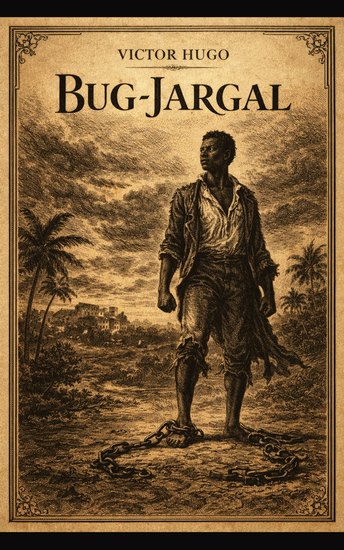
    Bug-Jargal is a powerful early novel by Victor Hugo that blends romance, revolution, and tragedy into a sweeping narrative set against the turbulent backdrop of the Haitian Revolution. Written when Hugo was still a teenager, this remarkable work already reveals the dramatic intensity, moral complexity, and poetic vision that would later define one of France's greatest literary figures.
    
    The story unfolds in the French colony of Saint-Domingue at the end of the 18th century, a society built upon rigid racial hierarchies and brutal enslavement. Amid this volatile setting, young French officer Léopold d'Auverney recounts the events that led to a violent uprising and irrevocably altered his life. At the center of the tale stands the mysterious and noble Bug-Jargal—an enslaved man of extraordinary courage, intelligence, and dignity.
    
    Though bound by chains, Bug-Jargal possesses a commanding presence that transcends his status. Secretly in love with Marie, the fiancée of Léopold, he embodies both deep devotion and unwavering honor. When rebellion erupts and plantations burn, the fragile order of colonial society collapses into chaos. Yet even as vengeance and bloodshed sweep across the land, Bug-Jargal distinguishes himself through acts of loyalty and sacrifice that challenge the prejudices of those around him.
    
    Hugo masterfully explores themes of freedom, justice, love, betrayal, and moral integrity. The novel confronts the horrors of slavery while also delving into the emotional entanglements that complicate human relationships in times of crisis. Through vivid descriptions and dramatic confrontations, Hugo portrays a world on the brink of transformation, where ideals clash with reality and personal loyalties are tested by revolutionary fervor.
    
    More than a historical adventure, Bug-Jargal is a meditation on heroism and humanity. Hugo presents his central figure not merely as a victim of oppression, but as a man of profound nobility whose strength lies in his compassion and sense of honor. The novel challenges readers to reconsider notions of race, power, and civilization, offering a bold critique of colonial injustice far ahead of its time.
    
    Filled with sweeping action, passionate emotion, and philosophical reflection, Bug-Jargal foreshadows the grandeur of Hugo's later masterpieces while standing firmly on its own as a gripping and thought-provoking work. For readers who appreciate classic literature, historical drama, and stories of courage amid upheaval, this novel offers an unforgettable journey into one of history's most dramatic revolutions—and into the heart of a hero whose legacy transcends the world that sought to confine him.
    Show book

  • Che Ti Dice La Patria? - cover

    Che Ti Dice La Patria?

    Ernest Hemingway

    • 0
    • 0
    • 0
    This audiobook is narrated by an AI Voice. 
    Two American travellers drive across Italy in the spring of 1927. They pick up a sullen young Fascist who takes the ride as his due. They eat a bad meal in Spezia, where the waitresses have other business in mind. They are fined at a roadside checkpoint for a dirty licence plate, and they cross the border into France in the rain. 
     
    Nothing much happens. That is the point. Beneath the flat surface of the journey lies a country under Mussolini, watched, coarsened and afraid, and Hemingway lets the reader see it without ever saying it aloud. 
     
    First published in Men Without Women in 1927, Che Ti Dice La Patria? (What Do You Hear from Home?) is a masterclass in the iceberg theory: a spare travel story where everything that matters stays below the surface. 
     
    Listen to the complete, unabridged audiobook of this classic short story by Ernest Hemingway.
    Show book
  • The Monk - cover

    The Monk

    M. G. Lewis

    • 0
    • 0
    • 0
    Lewis claimed to have written The Monk in just ten weeks, when he was twenty-one years of age. He published the first edition anonymously, sensing that the controversial and then-pornographic nature of the novel would stun society. And so it did—the book was so sensational, so salacious, and so scandalous, that after he put his full name (and title, as a member of Parliament) on the second edition, his reputation hardly recovered for the rest of his life. The Monk is a Gothic horror novel marked by an intricate plot, melodramatic characters, and scenes of shocking terror. It follows two plots: in the first, the celebrated monk Ambrosio meets a mysterious novice at the abbey—a woman, Matilda, posing as a man, who seems to have a powerful, irresistible charisma. Matilda seduces Ambrosio not just in body but in mind, and leads him down a path of darkness and brutal violence. In the other plot, Raymond, the son of a marquis, falls in love with a nun, and the two scheme to live together; but their plans lead to encounters with evil spirits, exorcisms, riots, dungeons, and more. The novel was shocking for its time in its frank depiction of sexuality and sexual violence, demons, spirits, and scenes of raw horror; but just as shocking was its anti-religious sentiment and thesis that evil often triumphs over good. It sold so well and offended so many that just two years after its publication Lewis was forced to issue a bowdlerized fourth edition, in which any offensive passages were either muted or expunged. Despite this attempt at satisfying society, and despite at least one written apology, Lewis spent the rest of his days in a constant struggle to escape the shadow of The Monk 's reputation, which he never quite did—even posthumous assessments of him as a person sometimes concluded that the debauched excess depicted The Monk reflected a failing of his own personal morals.
    Show book
  • Stray Leaves from Strange Literature - And Fantastics and Other Fancies - cover

    Stray Leaves from Strange...

    Lafcadio Hearn

    • 0
    • 0
    • 0
    Retellings from Sanskrit, Arabic, Talmudic and Egyptian sources, and, bound with them, the Fantastics — short, strange sketches he wrote for the New Orleans papers. Hearn made these in New Orleans before he ever saw Japan, and the manner that would produce Kwaidan is already complete. This edition adds sixty plates of painting, among them works by Olga Boznańska, Rubens and Luca Giordano, and three illustrations restored and coloured.
    Show book
  • The Further Adventures of Robinson Crusoe - cover

    The Further Adventures of...

    Daniel Defoe

    • 0
    • 0
    • 0
    This audiobook is narrated by an AI Voice. 
    **The Further Adventures of Robinson Crusoe** by Daniel Defoe — the thrilling sequel to the world's first great novel of survival. Now a settled man of sixty-one, with fortune made and years of peace behind him, Crusoe yet cannot resist the restless call of the sea. He returns to his island colony, faces a savage invasion, and loses his faithful companion Friday in a dreadful massacre in Madagascar. Undaunted, he pushes on across the Indian Ocean to India, Siam, and China — through Tartar attacks, idol temples, and the frozen wilds of Siberia — until at last the old wanderer comes safe home to England. A sweeping voyage of adventure, faith, and endurance, perfect for listeners who love classic maritime tales.
    Show book