Join us on a literary world trip!
Add this book to bookshelf
Grey
Write a new comment Default profile 50px
Grey
Subscribe to read the full book or read the first pages for free!
All characters reduced
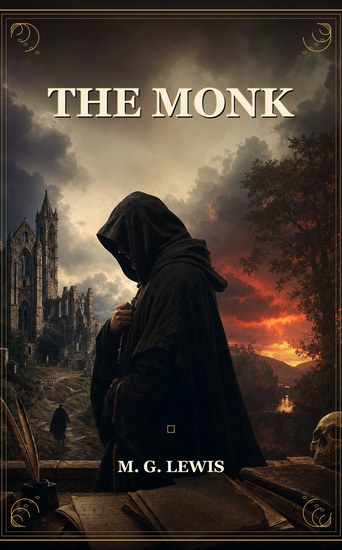
The Monk - cover

The Monk

M. G. Lewis

Publisher: Caelwick Press

  • 0
  • 0
  • 0

Summary

Lewis claimed to have written The Monk in just ten weeks, when he was twenty-one years of age. He published the first edition anonymously, sensing that the controversial and then-pornographic nature of the novel would stun society. And so it did—the book was so sensational, so salacious, and so scandalous, that after he put his full name (and title, as a member of Parliament) on the second edition, his reputation hardly recovered for the rest of his life. The Monk is a Gothic horror novel marked by an intricate plot, melodramatic characters, and scenes of shocking terror. It follows two plots: in the first, the celebrated monk Ambrosio meets a mysterious novice at the abbey—a woman, Matilda, posing as a man, who seems to have a powerful, irresistible charisma. Matilda seduces Ambrosio not just in body but in mind, and leads him down a path of darkness and brutal violence. In the other plot, Raymond, the son of a marquis, falls in love with a nun, and the two scheme to live together; but their plans lead to encounters with evil spirits, exorcisms, riots, dungeons, and more. The novel was shocking for its time in its frank depiction of sexuality and sexual violence, demons, spirits, and scenes of raw horror; but just as shocking was its anti-religious sentiment and thesis that evil often triumphs over good. It sold so well and offended so many that just two years after its publication Lewis was forced to issue a bowdlerized fourth edition, in which any offensive passages were either muted or expunged. Despite this attempt at satisfying society, and despite at least one written apology, Lewis spent the rest of his days in a constant struggle to escape the shadow of The Monk 's reputation, which he never quite did—even posthumous assessments of him as a person sometimes concluded that the debauched excess depicted The Monk reflected a failing of his own personal morals.
Available since: 05/19/2026.
Print length: 488 pages.

Other books that might interest you

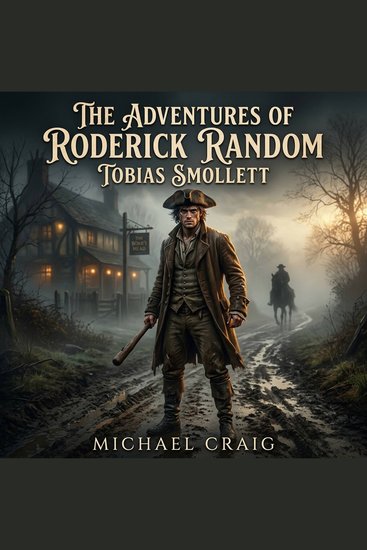
  • The Adventures of Roderick Random - A classic Picaresque Novel of rogue survival revenge and highway adventure in 18th-century Britain Join an outcast hero on an uproarious perilous journey from rags to high-stakes redemption - cover

    The Adventures of Roderick...

    Tobias Smollett

    • 0
    • 0
    • 0
    A treacherous birthright, a cutthroat world, and an underdog determined to conquer it all. 
    Born into poverty after being disowned by his cruel aristocratic grandfather, young Roderick Random is thrust into the unforgiving landscape of 18th-century Britain. Stripped of his rightful fortune and armed with nothing but a sharp wit and fierce pride, he embarks on a dizzying journey alongside his loyal but timid companion, Hugh Strap. From the merciless beatings of a tyrannical schoolmaster to terrifying nighttime encounters with desperate highwaymen and deceitful charlatans, Roderick must navigate a society rigged to crush the poor. 
    As his wealthy, spoiled cousins conspire against his very survival, and his only protector—a rugged, fiercely loyal sea-captain uncle—is forced to flee after a deadly duel, Roderick's quest for vengeance, prosperity, and a place in the world hangs by a fragile thread. 
    Why you will love this: As a foundational masterpiece of the Picaresque Novel genre, this gripping historical audiobook brims with dark humor, episodic rogue adventures, and razor-sharp social satire. If you love classic literary fiction featuring resilient antiheroes, thrilling highwaymen robberies, raucous tavern escapades, and a vast cast of eccentric archetypes, this epic coming-of-age journey offers pure, unadulterated storytelling magic. 
    Tobias Smollett (1721–1771) was a legendary Scottish poet and author whose darkly comedic, visceral depictions of gritty societal realities and maritime life profoundly influenced the modern English novel, inspiring literary giants like Charles Dickens and George Orwell.
    Show book
  • Anathema - From their pens to your ears genius in every story - cover

    Anathema - From their pens to...

    Alexander Kuprin

    • 0
    • 0
    • 0
    Alexander Kuprin was born in Narovchat, Penza in Russia on 7th September 1870. 
    At 3 his Father died and he and mother moved to Moscow. By 10 he was enrolled at the Second Moscow Military High School and there his interest in literature began. The Alexander Military Academy followed and two years later he was a sub-lieutenant and posted to an Infantry Regiment for a further four years. 
    Despite his duties he was a now a keen writer and published his first short story at this time. His military duties also garnered him experiences for his breakthrough work ‘The Duel’.  Leaving the military he left for Kiev to work for local newspapers.  He continued to publish both stories and novels and by 1901 he was in St Petersburg becoming part of a group that included Chekhov, Ivan Bunin, Maxim Gorky and Leonid Andreyev.  
    In the years that followed further controversial works and acclaim followed.  His comments on the regime meant he was also put under secret police surveillance.   
    As World War I erupted, Kuprin opened a military hospital but was then given command of an infantry company in Finland. He was soon discharged on grounds of ill health.  
    The October Revolution saw him praise Lenin, but he warned that the Bolsheviks threatened Russian culture and might cause further widespread suffering to the peasants.  As Civil War raged he took his family to Helsinki and then on to Paris. 
    Exile saw his talents decline further and his succumbing to alcoholism. He became lonely and withdrawn. The family's poverty increased his malaise.   
    In May 1937, the Kuprin’s returned to Moscow.  He now saw his work published but wrote almost nothing new.  In 1938 his health rapidly deteriorated.  Already suffering from a kidney problems and sclerosis, he had now developed cancer of the oesophagus.  
    Alexander Kuprin died on 25th August 1938.
    Show book
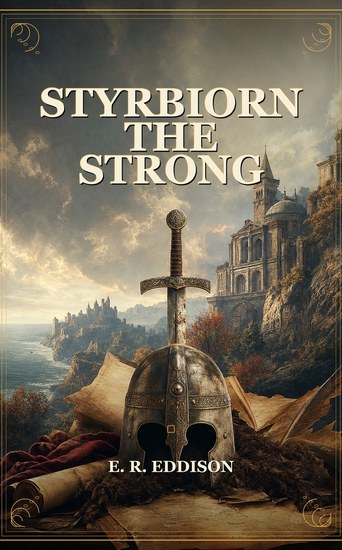
  • Styrbiorn The Strong - cover

    Styrbiorn The Strong

    E. R. Eddison

    • 0
    • 0
    • 0
    We rely on your support to help us keep producing beautiful, free, and unrestricted editions of literature for the digital age. Will you support our efforts with a donation ? The viking king Eric the Victorious rules his realm jointly with his brother, Olaf. Olaf's queen gives birth to their only son, Biorn, and Olaf dies soon after; thus Eric adopts Biorn, giving him the epithet "Styrbiorn" because of his quick temper and stubborn disposition. As Styrbiorn matures, he seeks to seize the crown from his foster father Eric. But as his reputation for strength and valor grows, his haughtyness and tendency to anger and violence continually undermine his plans. Styrbiorn the Strong is an adaptation of this ancient Norse saga. E. R. Eddison writes in a purposefully archaic way, giving the novel the flavor of an oral retelling without much insight into the charaters' inner monologues. But despite this flatter prose style, the characters remain textured, with complex motivations and rich emotional development. E. R. Eddison (died 1945) was an influential writer of the modernist period. Their work has endured across generations and continues to be read and studied worldwide. As a work of classic literary fiction, Styrbiorn The Strong exemplifies the narrative craft and social insight that defined great storytelling of its era. Literary fiction of this period was characterized by careful attention to character psychology, social milieu, and the moral questions that animated public discourse.
    Show book
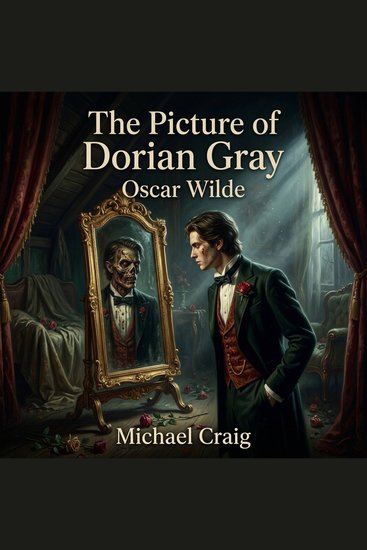
  • The Picture of Dorian Gray - A dark tale of eternal youth vanity and moral corruption Dive into this masterpiece of Philosophical Fiction Gothic Fiction where a painted canvas bears the ultimate price of a sinister bargain - cover

    The Picture of Dorian Gray - A...

    Oscar Wilde

    • 0
    • 0
    • 0
    What would you give to remain flawless forever? Would you trade your very soul? 
    In the decadent heart of Victorian London, the exquisitely beautiful Dorian Gray sits for his portrait by infatuated artist Basil Hallward. But when the cynical and charismatic Lord Henry Wotton introduces the naive youth to a hedonistic worldview, Dorian makes a terrifying, impassioned wish: that he might remain forever untouched by age, while his painted image bears the cruel ravages of time and sin. As Dorian plunges into a secret life of depravity, manipulation, and dark obsessions, his flawless face remains as pristine as an angel's. Yet, locked away in his attic, the portrait begins to warp into a gruesome reflection of his festering soul. Will his monstrous secret be discovered, or will the darkness consume him entirely? 
    Why you will love this: Masterfully intertwining suspense with profound moral questions, this is the pinnacle of Philosophical Fiction / Gothic Fiction. Fans of classic psychological horror, atmospheric historical mysteries, and stories of doomed protagonists will be utterly captivated by Wilde's biting wit and lush, evocative prose. It is a quintessential exploration of vanity, art, and the duality of human nature that keeps listeners on the edge of their seats. 
    About the Author: Oscar Wilde (1854–1900) was an Irish poet, playwright, and novelist famed for his brilliant wit, flamboyant style, and legendary conversational skills. As a leading figure of the Aesthetic movement, his works brutally yet beautifully critiqued Victorian hypocrisy, cementing his legacy as one of the English language's most enduring literary icons.
    Show book
  • Archibald Malmaison - A Life Divided Between Two Selves - cover

    Archibald Malmaison - A Life...

    Julian Hawthorne

    • 0
    • 0
    • 0
    Archibald Malmaison has two lives and no memory of either while living the other — the fits come every seven years, and in the gaps he is a different man with a different mind. Julian Hawthorne grew up among Emerson, Thoreau and Melville, produced some fifty books and later went to prison for mail fraud over a mining stock; this 1879 novella is his best, and the horror is entirely psychological.
    Show book
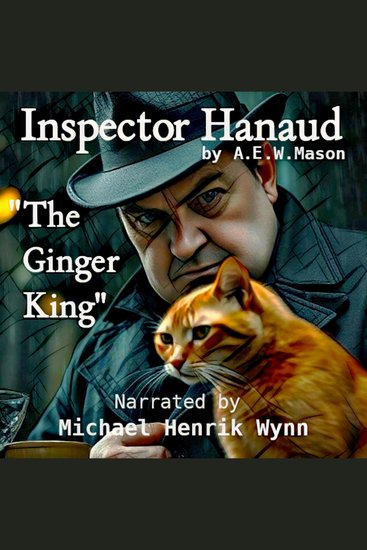
  • Inspector Hanaud and The Ginger King - Narrated by Michael Henrik Wynn - cover

    Inspector Hanaud and The Ginger...

    A. E. W. Mason

    • 0
    • 0
    • 0
    Hercule Poirot was Agatha Christie’s first creation. Poirot appeared in 1920, but there were several similar characters that preceded him. A. E. W. Mason’s Inspector Gabriel Hanaud from 1910 was one of these. Inspector Hanaud resembles Poirot in many ways, but is a more comical French sleuth. He appeared in several novels and short stories. 
    In this story, Hanaud is called in to assist in the investigation of a possible insurance fraud. 
    The narrator is Michael Henrik Wynn, the editor of the educational net radio stream, Historyradio.org
    Show book