Join us on a literary world trip!
Add this book to bookshelf
Grey
Write a new comment Default profile 50px
Grey
Subscribe to read the full book or read the first pages for free!
All characters reduced
The Life and Legacy of Rasputin - cover

The Life and Legacy of Rasputin

Editors Charles River

Publisher: Charles River Editors

  • 0
  • 0
  • 0

Summary

A lot of ink has been spilled covering the lives of history’s most influential figures, but how much of the forest is lost for the trees? In Charles River Editors’ Russian Legends series, readers can get caught up to speed on the lives of Russia’s most important men and women in the time it takes to finish a commute, while learning interesting facts long forgotten or never known.
 
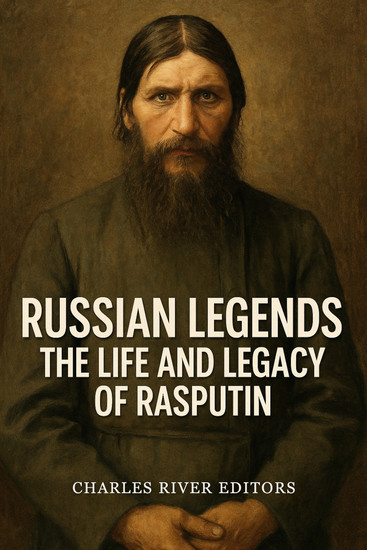
The world has never had its shortage of legends surrounding the lives of supposed mystics, visionaries, and prophets. But few have ever grabbed a hold on pop culture quite like that of Grigori Rasputin, one of the most shadowy and mysterious figures in Russian history.
 
Naturally, what makes Rasputin one of the 20th century’s most colorful and memorable figures is what we do not know. It is unclear how much basis in fact accounts of Rasputin’s life truly hold, since the sources mostly consist of memoirs, hearsay and embellished legend. Some contemporaries considered him a saintly mystic, psychic, healer and prophet, while others considered him a debauched heretic. The extent to which he beguiled the ruling Romanovs, and how he did so, remain mysterious as well.
 
It’s hard to kill a legend, and that has literally been the case with Rasputin, whose death remains the most legendary aspect of his life. Perhaps the best known part of the Rasputin story is that his murderers practically had to kill him 10 times to finish him off, using everything from poison to bullets to drowning. Naturally, exactly how Rasputin actually died remains a source of controvery as well.


Russian Legends: The Life and Legacy of Rasputin explores Rasputin’s life in an attempt to separate fact from fiction, analyzing the role he played among the Romanovs and discussing the legends of his life and death. Along with pictures of important people, places, and events, you will learn about Rasputin like you never have before, in no time at all.
 
 
Available since: 05/22/2025.
Print length: 27 pages.

Other books that might interest you

  • Zindgi Lokan Cho Hi Labhdi Hai - cover

    Zindgi Lokan Cho Hi Labhdi Hai

    Manmohan Singh Dhillo

    • 0
    • 0
    • 0
    “Zindgi Lokan Cho Hi Labhdi Hai” is a collection of insightful middle-length essays by Manmohan Singh Dhillo. Drawing from his personal experiences and observations in Amritsar, the author reflects on life, relationships, and cultural roots. Written in simple and accessible language, each essay carries a sense of familiarity and warmth, making readers feel connected to everyday life and its deeper meanings.
    Show book
  • America’s Weirdest Riots: The History and Legacy of the Most Unique American Riots - cover

    America’s Weirdest Riots: The...

    Editors Charles River

    • 0
    • 0
    • 0
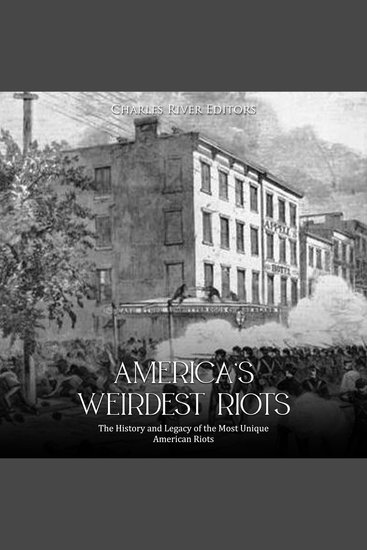
    Riots are an aspect of American history that do not show up much in history textbooks, except for famous disturbances like the Boston Tea Party or the infamous New York City draft riots of 1863. The reality is that the country has experienced thousands of riots, from early colonial times through to the present, and the issues leading up to some of the riots may seem quite peculiar to modern Americans. Americans have rioted over who was the best actor, and to free pirates from jail. Americans have rioted against bad working conditions, for the 8-hour day, against immigrants, for and against civil rights. Americans have had riots over eggnog, which Bible to use in schools, and when their favorite sports teams have won or lost. 
    For example, in 1788, the deadly Doctors' Riot occurred in New York City over the robbing of graves to provide medical students with bodies to dissect. An even stranger riot was the Eggnog Riot of 1826, when cadets at the United States Military Academy at West Point rioted over Christmas eggnog.  
    In 1844, a debate in Philadelphia over whether to allow Catholic students in public schools to read the Catholic Douay Bible rather than the King James Version sparked two savage riots, known as the Bible Riots. In the City of Brotherly Love, the Bible Riots caused a number of casualties, and two churches and a seminary were burned to the ground. 
    The 1857 Dead Rabbits Riot featured gang violence in New York City, but it could only be understood by knowing about a previous police riot, and that for a time there were two separate police forces in New York City. The police were as apt to club each other as they were to club rioting gang members.The 1870 and 1871 Orange Riots were over the July 12 Orange parades that memorialized the 1690 Battle of the Boyne. Despite the battle being almost 200 years earlier, Protestants and Irish Catholics were still fighting over it in New York City in an extremely bloody way.
    Show book
  • Eating While Black - Food Shaming and Race in America - cover

    Eating While Black - Food...

    Psyche A. Williams-Forson

    • 0
    • 0
    • 0
    Psyche A. Williams-Forson is one of our leading thinkers about food in America. In Eating While Black, she offers her knowledge and experience to illuminate how anti-Black racism operates in the practice and culture of eating. She shows how mass media, nutrition science, economics, and public policy drive entrenched opinions among both Black and non-Black Americans about what is healthful and right to eat. Distorted views of how and what Black people eat are pervasive, bolstering the belief that they must be corrected and regulated. What is at stake is nothing less than whether Americans can learn to embrace nonracist understandings and practices in relation to food. 


    Sustainable culture—what keeps a community alive and thriving—is essential to Black peoples' fight for access and equity, and food is central to this fight. Starkly exposing the rampant shaming and policing around how Black people eat, Williams-Forson contemplates food's role in cultural transmission, belonging, homemaking, and survival. Black people's relationships to food have historically been connected to extreme forms of control and scarcity—as well as to stunning creativity and ingenuity. In advancing dialogue about eating and race, this book urges us to think and talk about food in new ways in order to improve American society on personal and structural levels.
    Show book
  • Principles of Psicology - William James - cover

    Principles of Psicology -...

    William James

    • 0
    • 0
    • 0
    The Principles of Psychology is an 1890 book about psychology by William James, an American philosopher and psychologist who trained to be a physician before going into psychology. There are four methods from James' book: stream of consciousness (James' most famous psychological metaphor); emotion (later known as the James–Lange theory); habit (human habits are constantly formed to achieve certain results); and will (through James' personal experiences in life).
    Show book
  • Standing Tall - Leadership Lessons in the Life of a Soldier - cover

    Standing Tall - Leadership...

    US Army (Ret) Lt. General Robert...

    • 0
    • 0
    • 0
    Robert Foley had only been in Vietnam for six months when he was promoted to captain and given command of a rifle company. In November 1966, Foley led his men on a mission to rescue another company that had been pinned down by Viet Cong forces. His leadership that day inspired his men and led to a successful operation—and the Medal of Honor. His actions in Vietnam were only a small portion of a long and varied career of service in the US Army, but Foley did not always seem marked for success. Coming from a blue-collar suburb of Boston, his years in West Point were marked by poor grades, injuries, and sickness. With a determination to lead by example and inspire trust among others, Foley served across the globe and rose through the ranks. He even returned to West Point as Commandant of Cadets, later retiring as a 3-star general and commander of Fifth Army.
    Show book
  • Commando - A Boer Journal of the Anglo-Boer War - cover

    Commando - A Boer Journal of the...

    Deneys Reitz

    • 0
    • 0
    • 0
    The definitive account of Commando: A Boer Journal of the Anglo-Boer War, published word-for-word as Reitz first wrote it in the English translation; edited and annotated by historian and Anglo-Boer War expert, Professor Fransjohan Pretorius.
    In 1899, Deneys Reitz, then aged seventeen, enlisted in the Boer army to fight the British. He had learnt to ride, shoot and swim almost as soon as he could walk. He made full use of these skills and the endurance he had acquired in the next three years of the war, during which he fought with the Boer commandos.
    He was involved in major actions, like the battle of Spioen Kop, and he interacted with prolific political and military figures of the time, such as President Paul Kruger, Boer generals Piet Joubert, Louis Botha, Koos de la Rey, Christiaan Beyers, Jan Smuts and British commander Lord Kitchener. He even met the young Winston Churchill as a prisoner-of-war in Pretoria. Reitz forged a strong personal and political friendship with General Jan Smuts after the war, built on reciprocal respect.
    Commando is more than a historical document; it is a literary masterpiece that transcends time.
    With prose that captures both the brutality and the beauty of war, Reitz weaves a narrative that resonates with authenticity and passion.
    As relevant today as when it was first penned, Commando has become a South African classic and stands as a testament to the indomitable human spirit.
    Show book