Join us on a literary world trip!
Add this book to bookshelf
Grey
Write a new comment Default profile 50px
Grey
Subscribe to read the full book or read the first pages for free!
All characters reduced
Harvard Classics (All 51 Volumes) - cover

Harvard Classics (All 51 Volumes)

Johann Wolfgang von Goethe, Gotthold Ephraim Lessing, Thomas Carlyle, Plato, René Descartes, Immanuel Kant, Charles Darwin, Martin Luther, Robert Louis Stevenson, William Shakespeare, Dante Alighieri, Euripides, Percy Bysshe Shelley, Charles Lamb, Henry David Thoreau, Samuel Johnson, John Stuart Mill, David Hume, Joseph Addison, John Locke, John Fletcher, Francis Beaumont, Leigh Hunt, Epictetus, Thomas De Quincey, Samuel Taylor Coleridge, Jonathan Swift, Christopher Marlowe, Jacob Grimm, Wilhelm Grimm, William Hazlitt, Marcus Tullius Cicero, Daniel Defoe, Aesop Aesop, Richard Henry Dana, John Dryden, Philip Massinger, Pedro Calderón de la Barca, John Ruskin, Oliver Wendell Holmes, Ernest Renan, Robert Burns, David Garrick, Ralph Waldo Emerson, John Webster, Izaak Walton, John Bunyan, James Russell Lowell, Charles-Augustin Sainte-Beuve, Homer Homer, Edmund Burke, Plutarch Plutarch, Molière Molière, Aeschylus Aeschylus, Michael Faraday, Sophocles, William Makepeace Thackeray, Benjamin Franklin, Pierre Corneille, Jean Racine, Voltaire, Robert Browning, Oliver Goldsmith, Thomas Dekker, John Milton, Aristophanes, Blaise Pascal, Virgil Virgil, Simon Newcomb, William Penn, Walter Bigges, Philip Sidney, Herodotus, Walter Raleigh, Francis Bacon, Giuseppe Mazzini, Francis Pretty, George Berkeley, Thomas Hobbes, Adam Smith, Alessandro Manzoni, Abraham Cowley, Michel de Montaigne, Ben Jonson, John Woolman, Benvenuto Cellini, Sydney Smith, Jean Froissart, William Henry Harrison, William Harvey, Marcus Aurelius, Hans Christian Andersen, Thomas Malory, George Gordon Byron, Thomas A'kempis, Richard Steele, Thomas Brown, Archibald Geikie, Thomas Babington Macaulay, Tacitus Tacitus, William Roper, Hippocrates Hippocrates, Miguel de Cervantes, Thomas More, Friedrich von Schiller, Philip Nichols, Louis Pasteur, Joseph Lister, Jean-Jacques Rousseau, Pliny the Younger, Edgar Allan Poe, Saint Augustine, Brinsley Sheridan, Hermann Ludwig Ferdinand von Helmholtz, Francis Drake, Edward Haies, Niccolo Machiavelli, Ambroise Paré, William A. Neilson

Publisher: DigiCat

  • 0
  • 0
  • 0

Summary

The 'Harvard Classics' anthology, spanning 51 volumes, presents an unparalleled tapestry of human thought, creativity, and imagination. This collection orchestrates a symphonic array of the world's most revered literary, philosophical, and scientific works, offering a multifaceted exploration into the evolution of human intellect and culture. With enchanting narratives, philosophical treatises, and pioneering essays, it captures the essence of classical literature and ideas from diverse eras and regions. Compelling pieces within the anthology highlight universal themes of love, morality, ambition, and the human condition in a way that transcends time, providing readers with insights into the human journey across centuries. Contributors to the 'Harvard Classics' are titans of their respective fields, each contributing distinct voices that authenticate the anthology's theme of timeless wisdom. From the eloquence of Cicero's rhetoric and the sharp satire of Jonathan Swift to the revolutionary philosophies of Immanuel Kant and the profound observations of Charles Darwin, each author enriches the collection with their singular perspectives. Reflecting historical, cultural, and literary movements from antiquity to the modern era, this collection becomes a pedestal of intellectual dialogue, showcasing how diverse minds converge to address perennial human concerns. This anthology offers an exquisite opportunity for readers to immerse themselves in a world of diverse perspectives and profound insights within a single volume. Perfect for scholars, students, and curious minds alike, the 'Harvard Classics' serves as an invaluable educational resource and a gateway to understanding the rich tapestry of human thought. It fosters an engaging conversation among the contributing authors, bridging gaps between eras and philosophies, and inviting readers to ponder the enduring legacy of human creativity and intellect.
Available since: 11/13/2022.
Print length: 21084 pages.

Other books that might interest you

  • Sengoku - Warring States and the Path to Unification - cover

    Sengoku - Warring States and the...

    Rolf Hedger

    • 0
    • 0
    • 0
    The Sengoku period, meaning “Warring States,” was one of the most turbulent and transformative eras in Japanese history. Lasting from the mid-15th century to the early 17th century, it was marked by ceaseless conflict, shifting alliances, and the gradual disintegration of centralized authority. The roots of this period can be traced back to the decline of the Ashikaga Shogunate, the Ōnin War, and the rise of regional warlords known as daimyo, each vying for control over Japan’s fractured political landscape. 
    The Ashikaga Shogunate, which had ruled Japan since the early 14th century, gradually lost its grip on the country due to internal corruption, weak leadership, and an inability to maintain order. By the mid-15th century, the shogunate had become largely symbolic, with real power resting in the hands of feudal lords. These tensions erupted into full-scale conflict with the outbreak of the Ōnin War (1467–1477), a devastating civil war primarily fought in and around Kyoto. What began as a succession dispute within the shogunate spiraled into a nationwide conflict, leading to the destruction of Kyoto and the collapse of central authority. 
    With the Ashikaga Shogunate rendered powerless, Japan entered a chaotic era where military might determined control. Local daimyo, originally appointed as provincial governors, seized the opportunity to establish autonomous domains. These warlords fortified their territories, raised armies, and engaged in relentless battles to expand their influence. The traditional system of hereditary rule began to erode as capable military leaders, often of humble origins, overthrew established families. This period saw the rise of powerful daimyo such as the Takeda, Uesugi, and Hojo clans, each striving to dominate the fractured nation.
    Show book
  • Jane Eyre: A Christian Readers' Guide - cover

    Jane Eyre: A Christian Readers'...

    Rachel Kovaciny

    • 0
    • 0
    • 0
    Explore the story of Jane Eyre in a brand new light. With prompts for discussions, thought provoking questions, and a breakdown and analysis of each chapter,Rachel Kovaciny brings to the forefront the major and minor themes and valuable lessons to be learned from this classic novel. An excellent companion for the novel, this guide demonstrates a love and appreciation for the classics and elevates understanding through the author’s clear grasp of the historical context as well as Charlotte Brontë’s background. Kovaciny’s guide also approaches each analysis through the lens of a Christian worldview. Viewing the heartbreak, growth, introspection, and lessons of love and loss through a Biblical perspective allows for an even deeper understanding of the characters, plot, and even Brontë herself. A wonderful library addition for fans of classic literature, homeschool families, book clubs, or those looking to further their education on the classics, this thoughtful and thorough guide is a must have!
    Show book
  • 17 Hours to More Clarity Courage and Confidence - A Repeatable Roadmap of Intermittent Fasting Meditating and Creating - cover

    17 Hours to More Clarity Courage...

    Bradley Charbonneau

    • 0
    • 0
    • 0
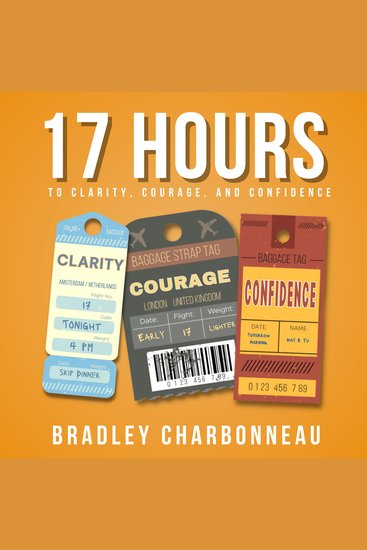
    Looking to "change your life"?What about "change your day"?Let's aim for more clarity, courage, and confidence by tomorrow at 9 am.Not your whole life.Just one single day. 
    Let me take you on a tiny journey of one night and one morning, from 4 pm to 9 am. Here's Who I Am Not: Intermittent Fasting Ph.D.Meditation guru from NepalNew York Times bestselling authorHere's Who I Am: ClearCourageousConfident 
    If your goals are those first three, I'm probably not your guy.  
    If you'd like more clarity, courage, and confidence by 9 am tomorrow, let's go on a tiny trip.  
    If you've been stuck trying to change your life, let's break that down to a period of just 17 hours, from 4 pm to 9 am, and let's focus on improving your clarity, courage, and confidence even just a tiny bit.  
    Once you feel the power, the joy, the bliss of a Tiny Win, you'll know you can do it again and again. Listen to 17 Hours today!
    Show book
  • Producing the Acceptable Sex Worker - An Analysis of Media Representations - cover

    Producing the Acceptable Sex...

    Gwyn Easterbrook-Smith

    • 0
    • 0
    • 0
    Producing the Acceptable Sex Worker considers how sex work is produced in news media narratives, a site where much of the general public draws its understanding of the industry in the absence of lived interaction with it. Taking New Zealand as a case study, this book considers an emerging discourse of acceptability for some sex workers, primarily those who do low-volume indoor work. Their acceptability is established in comparison with other kinds of sex workers, resulting in a redistribution but not a reduction of stigma. The conditions attached to acceptability reflect persistent anxieties about sex work: workers who are acceptable must give the impression that the sexual labour of the job is enjoyable and virtually indistinguishable from their personal life, eliding the work involved. Unacceptable workers have existing marginalisations magnified by their association with the industry, with migrant sex workers produced as devious or exploited, and transgender women’s involvement with the industry used to deny them the right to public space. The conditions attached to acceptability reveal how neoliberal discourses of choice, desire, authenticity, and personal responsibility inform the formation of sex work in the public eye.
    Show book
  • The Great Famine of 1315-1317 - Europe's Darkest Hour - cover

    The Great Famine of 1315-1317 -...

    Sarah Willards

    • 0
    • 0
    • 0
    The Great Famine of 1315-1317 stands as one of the darkest periods in European history, marking a time of immense suffering, social upheaval, and devastation. It was not a single event but rather a prolonged crisis, which compounded existing vulnerabilities within medieval European society. The origins of the famine can be traced back to a confluence of environmental, social, and economic factors, all of which led to one of the worst food shortages ever experienced on the continent. 
    The famine’s roots can be found in the dramatic climatic changes of the early 14th century. The period known as the Little Ice Age brought cooler temperatures, and the years leading up to the famine saw unusual weather patterns. Prolonged rain, particularly during the summer months of 1315, led to flooding and crop failure, especially in regions dependent on staple grains like wheat, oats, and barley. The disastrous harvests were compounded by already strained food supplies and a growing population. 
    The impact of the famine was felt most acutely by the poorer classes, whose subsistence farming could not sustain them through such harsh conditions. The majority of the population in rural areas relied on farming for food and income, and with crops failing, their livelihoods were destroyed. Urban centers, though slightly better equipped to withstand hardship, faced sharp increases in food prices, making it difficult for even the wealthier classes to procure sustenance. Starvation, malnutrition, and poverty became widespread, leading to mass suffering across the continent.
    Show book
  • Life as a Silent Gen - Stories and Insights from a Unique Generation - cover

    Life as a Silent Gen - Stories...

    Valerie Vogue

    • 0
    • 0
    • 0
    The Silent Generation, born between the mid-1920s and the early 1940s, is often characterized by its quiet strength and resilience. Unlike the more outspoken Baby Boomers or the politically vocal Millennials, members of this generation are sometimes referred to as the “silent” because they were raised in an era where conformity and restraint were the societal norms. Their lives unfolded during some of the most transformative and tumultuous events of the 20th century, including the Great Depression, World War II, and the early stages of the Cold War. 
    Growing up in the midst of economic hardship, many from the Silent Generation experienced a world of scarcity, hard work, and sacrifice. The Great Depression shaped their values, instilling a sense of frugality, a strong work ethic, and an appreciation for the basics of life. These formative experiences molded a generation that was deeply loyal, resourceful, and able to persevere through difficult circumstances. As children, they witnessed the turmoil of the 1930s, and as young adults, they were called upon to contribute to the war effort during World War II. 
    Yet, despite the challenges they faced, the Silent Generation was also a time of growth and progress. It was a generation that saw the advent of many technological and social changes, although their response to these innovations was often more cautious compared to younger generations. They witnessed the rise of television, the automobile culture, and, later, the early days of the space race and computing. Their era was also one of profound social change, as the civil rights movement and the women’s liberation movement began to take root, though many from the Silent Generation remained resistant to these shifts.
    Show book