Join us on a literary world trip!
Add this book to bookshelf
Grey
Write a new comment Default profile 50px
Grey
Subscribe to read the full book or read the first pages for free!
All characters reduced
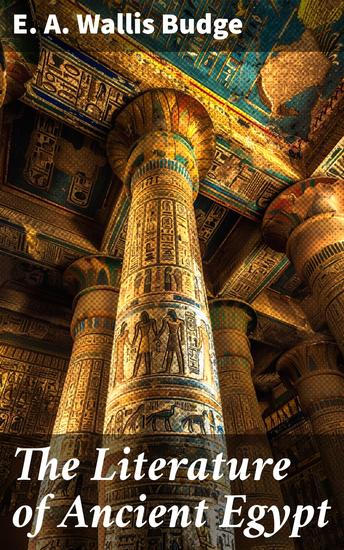
The Literature of Ancient Egypt - Including Original Sources: The Book of the Dead Papyrus of Ani Hymn to the Nile Great Hymn to Aten and Hymn to Osiris-Sokar - cover

The Literature of Ancient Egypt - Including Original Sources: The Book of the Dead Papyrus of Ani Hymn to the Nile Great Hymn to Aten and Hymn to Osiris-Sokar

E. A. Wallis Budge

Publisher: Good Press

  • 0
  • 0
  • 0

Summary

In "The Literature of Ancient Egypt," E. A. Wallis Budge presents a comprehensive exploration of the rich tapestry of ancient Egyptian texts, ranging from religious hymns to wisdom literature. This scholarly work is meticulously organized, offering both translations and contextual analyses of key inscriptions and narratives, showcasing the linguistic sophistication and literary merit of the Egyptians. Budge's classic prose not only captures the essence of these ancient works but also situates them within the cultural and historical milieu of ancient Egypt, highlighting their enduring significance. The interplay of mythology, morality, and daily life is expertly woven throughout the text, providing readers with a profound insight into the spiritual and sociopolitical landscape of one of history's most enigmatic civilizations. E. A. Wallis Budge, a renowned Egyptologist and curator at the British Museum, dedicated his life to the study of ancient Egypt, which uniquely positions him to elucidate the complexities of its literature. His extensive travels, fieldwork, and proficiency in translating hieroglyphics, alongside his deep appreciation for cultural preservation, fueled his desire to bring ancient Egyptian texts to a wider audience. Budge'Äôs scholarship is enriched by his firsthand experiences and interactions with Egyptian artifacts, allowing him to delve into the minds of the ancients with both accuracy and reverence. This book is an indispensable resource for anyone interested in ancient cultures, literature, or the evolution of written expression. Scholars and casual readers alike will find Budge's analyses illuminating, as he bridges the past with present literary concerns, inviting us to reflect on the timeless themes that resonate through our own narratives. Whether you're a seasoned historian or a novice to the subject, Budge's work promises to deepen your understanding of not just ancient Egypt, but the shared human experience reflected through literature.
Available since: 11/19/2023.
Print length: 341 pages.
Other books that might interest you

  • A Brief Guide to Maritime Strategy - cover

    A Brief Guide to Maritime Strategy

    James R. Holmes

    • 0
    • 0
    • 0
    A Brief Guide to Maritime Strategy is a deliberately compact introductory work aimed at junior seafarers, those who make decisions affecting the sea services, and those who educate seafarers and decision-makers. It introduces listeners to the main theoretical ideas that shape how statesmen and commanders make and execute maritime strategy in times of peace and war. Following in the spirit of Bernard Brodie's Layman's Guide to Naval Strategy, a World War II-era book whose title makes its purpose plain, it will be a companion volume to such works as Geoffrey Till's Seapower and Wayne Hughes's Fleet Tactics and Coastal Combat, the classic treatise that explains how to handle navies in fleet actions. It takes the mystery out of maritime strategy, which should not be an arcane art for practitioners or policy-makers, and will help the next generation think about strategy.
    Show book
  • Peter Singer - Ethics in the Modern World - cover

    Peter Singer - Ethics in the...

    Hector Davidson

    • 0
    • 0
    • 0
    Peter Singer is one of the most influential philosophers in contemporary ethics, known for his contributions to utilitarianism, animal rights, global poverty, bioethics, and environmental ethics. His ethical philosophy is grounded in the principle of utilitarianism, which holds that the right course of action is the one that produces the greatest overall happiness or well-being. Singer’s work is characterized by a practical, results-oriented approach, focusing on how ethical principles can be applied to real-world issues to alleviate suffering and promote well-being. His influential works, such as Animal Liberation and The Life You Can Save, challenge readers to consider the moral implications of their actions in a variety of contexts, from how they treat animals to how they engage with global poverty. 
    At the core of Singer’s ethical framework is the idea that all sentient beings, regardless of their species, deserve equal consideration. This principle of equal consideration of interests leads to his advocacy for the rights of animals, arguing that their capacity to suffer should give them moral consideration equal to that of humans. Singer’s call for animal liberation challenges the traditional view of animals as resources for human consumption and urges society to rethink its treatment of non-human creatures. 
    In addition to his work in animal ethics, Singer has profoundly impacted discussions on global poverty and humanitarian aid. Through his concept of effective altruism, he argues that individuals in affluent societies have a moral obligation to help those in extreme poverty. Using the famous “drowning child” analogy, Singer demonstrates that if we are morally obligated to save a child from drowning in a shallow pond, we should equally be compelled to help those suffering from poverty and preventable diseases, no matter the physical distance.
    Show book
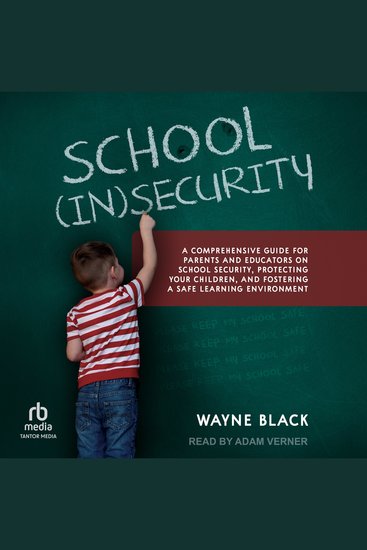
  • School Insecurity - A Comprehensive Guide for Parents and Educators on School Security Protecting Your Children and Fostering a Safe Learning Environment - cover

    School Insecurity - A...

    Wayne Black

    • 0
    • 0
    • 0
    Who makes the decisions about your child's safety and security when you send them off to school each day? What does a truly safe school look like? It's time to talk about what the parenting books don't teach you: the unmentionable events that occur in US schools every year and how to try to prevent them with invaluable information. 


    Every time you turn on the news, it seems like there is another active threat on a school in the United States. It is 100% certain that another school shooting will occur, yet many people still deny that it could happen at their school. 


    In this comprehensive guidebook for parents and professionals, Wayne Black utilizes over forty-five years of security experience in both the private and public sectors to educate you on: 


    ● Who is responsible for your school's safety and security 


    ● How to talk to the school board and administration about security policy 


    ● The most effective physical safeguards for preventing an attack 


    It's time for parents to get involved in their children's safety at school. In the words of Lori Alhadeff, a parent who lost her daughter at Parkland and founder of Make Our Schools Safe, "Your voice is your power."
    Show book
  • How to Talk About Love - An Ancient Guide for Modern Lovers - cover

    How to Talk About Love - An...

    Plato

    • 0
    • 0
    • 0
    What is love? In poetry, songs, fiction, movies, psychology, and philosophy, love has been described, admired, lamented, and dissected in endless ways. Is love based on physical attraction? Does it bring out our better selves? How does it relate to sex? Is love divine? Plato's Symposium is one of the oldest, most influential, and most profound explorations of such questions—it is even the source of the idea of "Platonic love." How to Talk about Love introduces and presents the key passages and central ideas of Plato's philosophical dialogue in a lively new translation. 


    The Symposium is set at a fictional drinking party during which prominent Athenians engage in a friendly competition by delivering improvised speeches in praise of Eros, the Greek god of love and sex. The aristocrat Phaedrus, the legal expert Pausanias, the physician Eryximachus, the comic playwright Aristophanes, and the tragic poet Agathon—each by turn celebrates different aspects of love before Socrates proposes not to praise love but to tell the truth about it. In the final speech, the politician and libertine Alcibiades argues that Socrates himself is the epitome of love. 


    Deftly capturing the essence and spirit of Plato's masterpiece, How to Talk about Love makes the Symposium more accessible and enjoyable than ever before.
    Show book
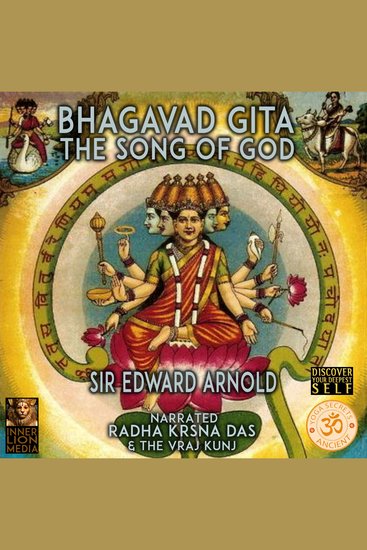
  • Bhagavad Gita - The Song Of God - cover

    Bhagavad Gita - The Song Of God

    Sir Edward Arnold

    • 0
    • 0
    • 0
      
    The Gita is a talk between prince Arjuna and his charioteer Krishna. At the start of the Dharma Yudhha (righteous war) between the Pandavas and Kauravas, Arjuna is filled with great moral dilemma and despair about the violence and death the war will cause in the battle against his own kin. He wonders if he should renounce and seeks Krishna's counsel, whose answers constitute the Bhagavad Gita. Krishna counsels Arjuna to "fulfill his Kshatriya (warrior) duty to uphold the Dharma" through "selfless action".The Krishna–Arjuna dialogues cover a broad range of spiritual topics, touching upon ethical dilemmas and philosophical issues that go far beyond the war Arjuna faces. According to some, Bhagavad Gita is written by Lord Ganesha and was told to him by Vyasa. The setting of the Gita is a great battlefield. The Bhagavad Gita presents a synthesis of ideas about dharma, theistic bhakti, and the yogic ideals of moksha.The text covers jnana, bhakti, karma, and Raja Yoga. The Gita's call for selfless action inspired many leaders of the Indian independence movement including Mahatma Gandhi; the latter referred to it as his "spiritual dictionary.
    Show book
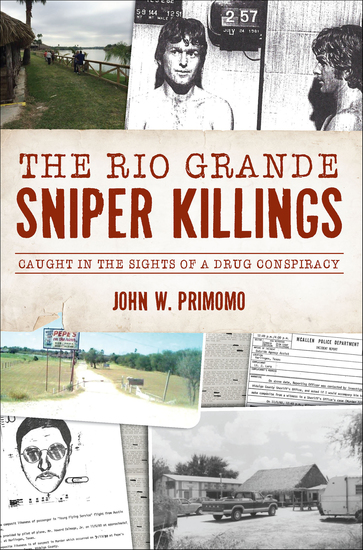
  • The Rio Grande Sniper Killings - Caught in the Sights of a Drug Conspiracy - cover

    The Rio Grande Sniper Killings -...

    John Primomo

    • 0
    • 0
    • 0
    Untangle the complex conspiracy that led to the tragic deaths of Charlotte Kay Elliott and Kevin Edwin Frase on the banks of the Rio Grande. On the night of July 13, 1980, a hitman fired a high-powered rifle into the crowd at Pepe's On the River, an outdoor bar in Mission, Texas. He missed his target, a witness in the Loop 360 drug case, but killed two young bystanders. While state court prosecutions for capital murder inexplicably faltered, a federal court gave the assassin a life sentence for attempted murder of a grand jury witness. A member of the judge's staff who was present throughout the trial, author John W. Primomo revisits the dramatic twists and turns surrounding this murder on the Rio Grande.
    Show book