Join us on a literary world trip!
Add this book to bookshelf
Grey
Write a new comment Default profile 50px
Grey
Subscribe to read the full book or read the first pages for free!
All characters reduced
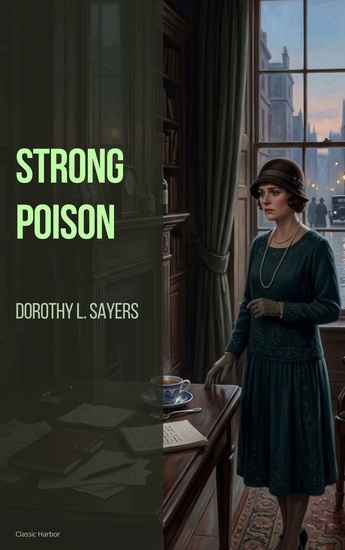
Strong Poison - cover

Strong Poison

Dorothy L. Sayers

Publisher: Classic Harbor

  • 0
  • 0
  • 0

Summary

A suspicious death, a woman accused of murder, and Lord Peter Wimsey's race to uncover the truth.

When mystery writer Harriet Vane stands accused of poisoning her former lover, the evidence appears dangerously convincing. Lord Peter Wimsey becomes determined to investigate the case and uncover the truth behind the mysterious death.

Dorothy L. Sayers combines clever detective work, psychological suspense, romance, and intricate plotting in this classic mystery. As Wimsey examines the evidence and searches for overlooked clues, the case reveals a complicated web of relationships and hidden motives.

Perfect for readers who enjoy Golden Age detective fiction, intelligent investigations, and memorable literary detectives.

Join Lord Peter Wimsey in a gripping mystery where uncovering the truth could change everything.
Available since: 09/21/2026.
Print length: 271 pages.

Other books that might interest you

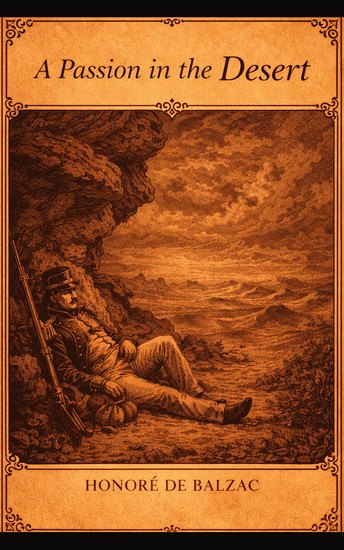
  • A Passion in the Desert - cover

    A Passion in the Desert

    Honoré de Balzac

    • 0
    • 0
    • 0
    In A Passion in the Desert, Honoré de Balzac crafts a haunting and unforgettable tale of isolation, survival, and the strange, fragile bond between man and nature. Set against the vast and merciless landscapes of the Egyptian desert during Napoleon's military campaign, this short yet powerful narrative explores the depths of human emotion under extreme circumstances.
    
    The story follows a French soldier who, separated from his regiment during the Egyptian expedition, finds himself alone in the endless desert—exhausted, starving, and facing certain death. With no civilization in sight and the scorching sun bearing down upon him, he stumbles upon a hidden oasis that becomes his temporary refuge. But his sanctuary is not unoccupied. Within a rocky grotto lies a creature as magnificent as it is deadly—a panther.
    
    What unfolds is a mesmerizing psychological drama. Rather than immediate violence, an unexpected relationship develops between the soldier and the wild animal. Through patience, instinct, and a strange mutual recognition, the two form a silent companionship born of necessity and solitude. The desert, stripped of human society and its conventions, becomes a stage where primal instincts, vulnerability, and tenderness coexist in delicate balance.
    
    Balzac masterfully examines themes of loneliness, fear, trust, and the thin line between civilization and savagery. The soldier's emotional attachment to the panther blurs the boundaries between affection and danger, reason and instinct. Is their connection genuine, or merely a projection of a desperate mind craving companionship? In this stark wilderness, stripped of rank, identity, and societal structure, the soldier confronts his own humanity in its rawest form.
    
    Through vivid imagery and lyrical prose, Balzac transforms the desert into both a physical and symbolic landscape—an expanse reflecting the emptiness, intensity, and unpredictability of the human heart. The story is not merely an adventure of survival, but a profound meditation on passion in its most elemental state: a force that can unite, sustain, and ultimately destroy.
    
    Though brief, A Passion in the Desert stands as one of Balzac's most striking and unconventional works. It is a tale of psychological depth and poetic power, inviting readers to contemplate the nature of attachment, the instincts that govern us, and the fragile illusions we build to survive isolation.
    
    For lovers of classic literature, philosophical fiction, and evocative storytelling, this remarkable narrative offers an intense and unforgettable journey into the heart of solitude—and the wild passions that arise when humanity stands alone.
    Show book

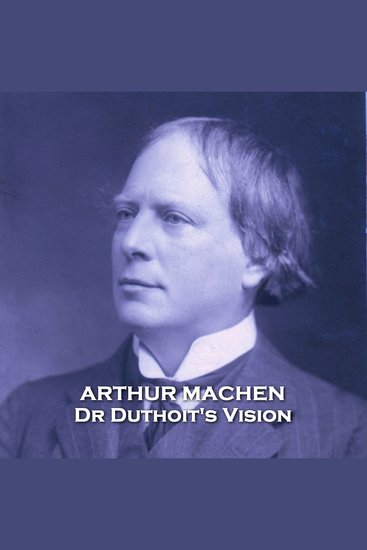
  • Dr Duthoit's Vision - From their pens to your ears genius in every story - cover

    Dr Duthoit's Vision - From their...

    Arthur Machen

    • 0
    • 0
    • 0
    Arthur Llewelyn Jones was born in Caerleon, Monmouthshire on the 3rd March 1863. 
    Machen came from a long line of clergymen, and when he was two, his father became vicar of a small parish about five miles north of Caerleon, and Machen was brought up at the rectory there. 
    In his early years he received an excellent classical education, but family poverty ruled out university, and he was sent to London to sit exams to attend medical school but failed the exams.  He did show literary promise with the publication of the poem ‘Eleusinia’ in 1821.  But life in London was difficult and it was only in 1884 that he published again and was taken on to translate several French works which thereafter became the standard editions for many years. 
    In 1887, his father died.  That same year he married Amelia Hogg, a maverick music teacher with a passion for the theatre.  He also began to receive legacies from Scottish relatives which allowed him to devote more time to writing. 
    After publishing in literary magazines in 1894 he published his first book ‘The Great God Pan’.  Its sexual and horrific content very much helped sales. 
    Over the next decade or so he wrote some of his best work but was unable to find a publisher mainly due to the collapse of the decadent market over Oscar Wilde’s scandalous trial. 
    In 1899, his wife died and during his long recovery he took up acting and travelled around the country as part of a travelling company.  Three years later he was publishing again and had remarried. 
    Re-publishing of earlier works helped anchor both his reputation and his income.  By the time the Great War opened Europe’s wounds he returned to the public eye with ‘The Bowmen’ helped by the publicity around the ‘Angel of Mons’ episode. 
    However, by the late 20’s new works had dried up and his back catalogue was no longer a source of regular income. 
    In 1932 he received a Civil List pension of ₤100 per annum but other work was not forthcoming.  His finances finally stabilised with a literary appeal in 1943 for his eightieth birthday and allowed him to live his remaining years in relative comfort. 
    Arthur Machen died on 15th December 1947 in Beaconsfield. He was 84.
    Show book
  • War And Peace - cover

    War And Peace

    Leo Tolstoy

    • 0
    • 0
    • 0
    War and Peace is a literary work by the Russian author Leo Tolstoy that mixes fictional narrative with chapters on history and philosophy. It was first published serially, then published in its entirety in 1869. It is regarded as Tolstoy's finest literary achievement and remains an internationally praised classic of world literature.The novel chronicles the French invasion of Russia and the impact of the Napoleonic era on Tsarist society through the stories of five Russian aristocratic families. Portions of an earlier version, titled The Year 1805, were serialized in The Russian Messenger from 1865 to 1867 before the novel was published in its entirety in 1869.Tolstoy said that the best Russian literature does not conform to standards and hence hesitated to classify War and Peace, saying it is "not a novel, even less is it a poem, and still less a historical chronicle". Large sections, especially the later chapters, are philosophical discussions rather than narrative. He regarded Anna Karenina as his first true novel.Before he can marry his fiancée Mercédès, Edmond Dantès, a French nineteen-year-old first mate of the Pharaon, is falsely accused of treason, arrested, and imprisoned without trial in the Château d'If, a grim island fortress off Marseille. A fellow prisoner, Abbé Faria, correctly deduces that romantic rival Fernand Mondego, envious crewmate Danglars, and double-dealing magistrate De Villefort are responsible. Over the course of their long imprisonment, Faria educates Dantès and tells him of a cache of treasure he found. After Faria dies, Dantès escapes and finds the treasure. As the powerful and mysterious Count of Monte Cristo, he enters the fashionable Parisian world of the 1830s to avenge himself.
    Show book
  • Be Young Again - cover

    Be Young Again

    Murray Leinster

    • 0
    • 0
    • 0
    Step into the extraordinary world of 'Be Young Again' by Murray Leinster with our captivating digital audiobook. This thought-provoking tale explores the concept of reversing the aging process and the profound impact it has on the protagonist's life. As you listen, you'll be drawn into a world where science fiction meets the deepest desires of the human heart, offering an insightful reflection on the human condition and the quest for eternal youth. With our expert narration, 'Be Young Again' comes to life like never before, allowing you to delve into the complex characters and thought-provoking themes at your leisure. Don't miss the opportunity to experience this literary masterpiece in a whole new way.
    Show book
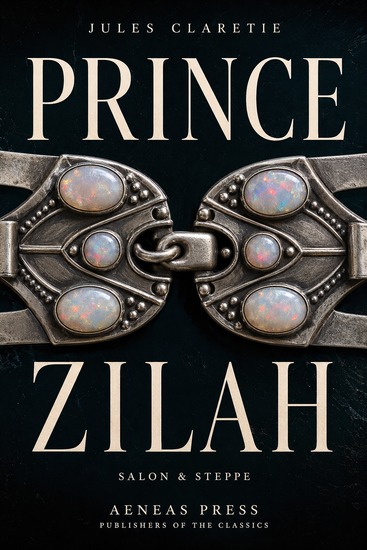
  • Prince Zilah - A Novel of Cosmopolitan Paris - cover

    Prince Zilah - A Novel of...

    Jules Claretie

    • 0
    • 0
    • 0
    A Hungarian prince in Paris marries a beautiful young woman with a past he learns about from an anonymous letter on the wedding day. Claretie reported the Franco-Prussian War and directed the Comédie-Française for twenty-eight years; the Paris here — the boxes at the opera, the Tzigane orchestra, the duelling ground at dawn — is drawn by a man who had a reserved seat at all of it. Fifty-two plates by Renoir, Manet, Degas and their circle bring the opera boxes, boulevards and drawing rooms of Claretie's Paris to life alongside the text.
    Show book
  • The White Company - English Archers in France - cover

    The White Company - English...

    Arthur Conan Doyle

    • 0
    • 0
    • 0
    A novice leaves his abbey for the world in 1366, joins a company of English archers under a knight of the old school, and marches into France where chivalry is already a business. Doyle thought this his best book by far and was baffled that readers wanted detective stories instead; he researched the fourteenth century for a year and put the longbow, not the sword, at the center. Fifty-three plates of castle, siege, and pilgrim scenes, among them works by Courbet and Meissonier, follow the archers from abbey walls to the fortresses of France.
    Show book