¡Acompáñanos a viajar por el mundo de los libros!
Añadir este libro a la estantería
Grey
Escribe un nuevo comentario Default profile 50px
Grey
Suscríbete para leer el libro completo o lee las primeras páginas gratis.
All characters reduced
A Passion in the Desert - cover

A Passion in the Desert

Honoré de Balzac

Editorial: CLXBX

  • 0
  • 0
  • 0

Sinopsis

In A Passion in the Desert, Honoré de Balzac crafts a haunting and unforgettable tale of isolation, survival, and the strange, fragile bond between man and nature. Set against the vast and merciless landscapes of the Egyptian desert during Napoleon's military campaign, this short yet powerful narrative explores the depths of human emotion under extreme circumstances.

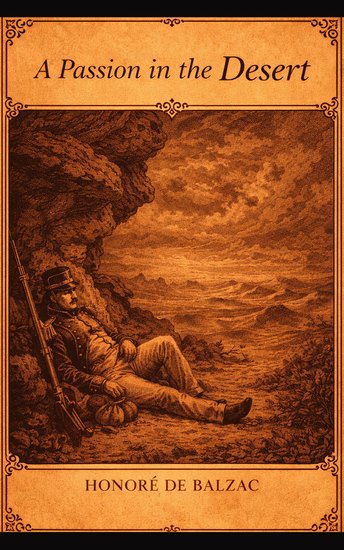
The story follows a French soldier who, separated from his regiment during the Egyptian expedition, finds himself alone in the endless desert—exhausted, starving, and facing certain death. With no civilization in sight and the scorching sun bearing down upon him, he stumbles upon a hidden oasis that becomes his temporary refuge. But his sanctuary is not unoccupied. Within a rocky grotto lies a creature as magnificent as it is deadly—a panther.

What unfolds is a mesmerizing psychological drama. Rather than immediate violence, an unexpected relationship develops between the soldier and the wild animal. Through patience, instinct, and a strange mutual recognition, the two form a silent companionship born of necessity and solitude. The desert, stripped of human society and its conventions, becomes a stage where primal instincts, vulnerability, and tenderness coexist in delicate balance.

Balzac masterfully examines themes of loneliness, fear, trust, and the thin line between civilization and savagery. The soldier's emotional attachment to the panther blurs the boundaries between affection and danger, reason and instinct. Is their connection genuine, or merely a projection of a desperate mind craving companionship? In this stark wilderness, stripped of rank, identity, and societal structure, the soldier confronts his own humanity in its rawest form.

Through vivid imagery and lyrical prose, Balzac transforms the desert into both a physical and symbolic landscape—an expanse reflecting the emptiness, intensity, and unpredictability of the human heart. The story is not merely an adventure of survival, but a profound meditation on passion in its most elemental state: a force that can unite, sustain, and ultimately destroy.

Though brief, A Passion in the Desert stands as one of Balzac's most striking and unconventional works. It is a tale of psychological depth and poetic power, inviting readers to contemplate the nature of attachment, the instincts that govern us, and the fragile illusions we build to survive isolation.

For lovers of classic literature, philosophical fiction, and evocative storytelling, this remarkable narrative offers an intense and unforgettable journey into the heart of solitude—and the wild passions that arise when humanity stands alone.
Disponible desde: 18/02/2026.
Longitud de impresión: 19 páginas.

Otros libros que te pueden interesar

  • Anna Karenina - cover

    Anna Karenina

    Leo Tolstoy

    • 0
    • 0
    • 0
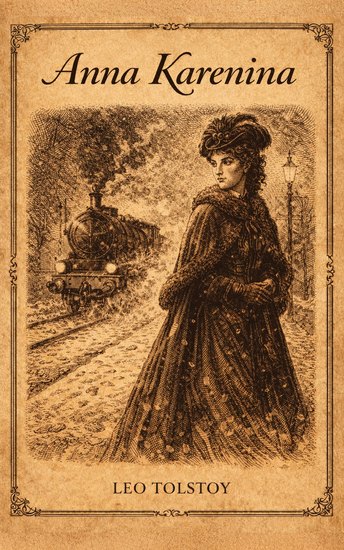
    Anna Karenina is a sweeping masterpiece of world literature that explores love, passion, loyalty, and the profound consequences of human choice within the rigid structures of 19th-century Russian society. In this monumental novel, Leo Tolstoy weaves together intimate personal dramas and expansive social commentary to create a powerful portrait of individuals struggling between desire and duty.
    
    At the heart of the story is Anna Karenina, a beautiful and intelligent woman trapped in a loveless marriage to the dignified but emotionally distant government official, Alexei Karenin. When she meets the charming and charismatic Count Vronsky, Anna is drawn into a passionate affair that defies societal conventions. What begins as an awakening of long-suppressed emotion soon spirals into scandal, isolation, and inner turmoil, as Anna confronts the harsh judgment of a society that offers little forgiveness to those who stray from its moral code.
    
    Running parallel to Anna's tragic journey is the story of Konstantin Levin, a thoughtful landowner searching for meaning in his personal and spiritual life. Through his courtship of the gentle Kitty Shcherbatsky and his reflections on work, faith, and family, Levin's path offers a contrasting exploration of fulfillment grounded in sincerity and moral growth. Together, these intertwined narratives illuminate the complexities of love in its many forms—romantic passion, marital devotion, familial bonds, and spiritual yearning.
    
    Tolstoy's storytelling is remarkable for its psychological depth and realism. He examines the inner lives of his characters with extraordinary sensitivity, capturing their doubts, hopes, and contradictions. The novel also paints a vivid panorama of Russian aristocratic society, from glittering ballrooms in St. Petersburg to the quiet rhythms of rural life, revealing the tensions between modernity and tradition, urban sophistication and agrarian simplicity.
    
    Profound, emotionally rich, and timeless in its insight into the human condition, Anna Karenina is more than a story of forbidden love—it is a meditation on happiness, morality, freedom, and the search for authentic living. Tolstoy's enduring classic continues to resonate with readers around the world as one of the greatest novels ever written.
    Ver libro
  • Hunchback of Notre-Dame The (Volume 1) - cover

    Hunchback of Notre-Dame The...

    Victor Hugo

    • 0
    • 0
    • 0
    The Hunchback of Notre-Dame or Notre-Dame de Paris is a French Gothic novel by Victor Hugo, published in 1831.
    The story is set in Paris in 1482 during the reign of Louis XI. The gypsy Esmeralda (born as Agnes) captures the hearts of many men, including those of Captain Phoebus and Pierre Gringoire, but especially Quasimodo and his guardian Archdeacon Claude Frollo. Frollo is torn between his obsessive lust for Esmeralda and the rules of Notre Dame Cathedral. He orders Quasimodo to kidnap her, but Quasimodo is captured by Phoebus and his guards, who save Esmeralda. Gringoire, who attempted to help Esmeralda but was knocked out by Quasimodo, is about to be hanged by beggars when Esmeralda saves him by agreeing to marry him for four years.
    Ver libro
  • Great Expectations - A chilling graveyard encounter sets an orphan on a gripping journey of wealth secret benefactors and broken hearts in this unforgettable masterpiece of Classic Literature - cover

    Great Expectations - A chilling...

    Charles Dickens

    • 0
    • 0
    • 0
    An escaped convict. A decaying mansion. A mysterious fortune that will change one orphan's life forever. 
    Raised by hand by his tyrannical sister and her gentle blacksmith husband, young Pip expects nothing from life but a humble existence in the bleak marshlands of Kent. But everything changes on a freezing Christmas Eve when a terrifying encounter with an escaped convict in a mist-shrouded graveyard binds Pip to a dangerous secret. Soon after, he is thrust into the eerie, time-stopped world of Satis House, home to the spectral and vengeful Miss Havisham and her beautiful, cruel ward, Estella. When a mysterious benefactor suddenly elevates Pip to the status of a gentleman, he leaves his humble origins behind for the glittering, treacherous streets of London, only to discover that his grand ambitions come with a devastating price. 
    Why you will love this: As a pinnacle of Classic Literature, this breathtaking audiobook offers an immersive, cinematic experience for fans of gothic coming-of-age novels, intricate historical fiction, and Victorian mysteries. With unforgettable archetypes, from the eccentric benefactor to the tormented antihero, listeners will be spellbound by this masterclass in suspense, atmospheric world-building, and profound social commentary. Whether you are revisiting an old favorite or discovering the twists and turns of Pip's saga for the first time, this gripping audio production is an absolute must-listen. 
    About the Author: Charles Dickens (1812–1870) remains one of the most brilliant and influential novelists of the Victorian era. Renowned for his sharp social critique, rich characterizations, and masterful blending of tragedy and comedy, his legacy continues to shape the literary landscape to this day.
    Ver libro
  • Notes From The Underground - cover

    Notes From The Underground

    Fyodor Dostoyevsky

    • 0
    • 0
    • 0
    "I don't want to be happy; I want to be myself."
    
    Notes from Underground (1864), is often considered one of the first existentialist works, exploring themes of free will, alienation, moral ambiguity and the conflict between individualism and societal norms.
    
    Alienated from society and paralysed by a sense of his own insignificance, the anonymous narrator—a bitter, self-aware, and deeply conflicted man—tells the story of his tortured life, describing, with blistering irony, his refusal to become a worker in the 'anthill' and his gradual withdrawal from society, his sharp and relentless inner monologue dissecting human behaviour, societal norms, and the illusion of rational progress.
    Notes from Underground serves as a critique of 19th-century Russian society while also posing deeper questions about the nature of existence, morality, and the individual's place within the world.
    Fyodor Dostoyevsky was a Russian novelist, journalist, and short-story writer renowned for his profound explorations of psychology, morality, and the human condition. Born in Moscow, his tumultuous life was marked by early literary success and followed by arrest and exile due to his radical political activities. He is widely regarded as one of the world's finest novelists, penning classics that include Crime and Punishment, The Idiot, Demons, and The Brothers Karamazov. He had an immense influence on 20th-century fiction and his ideas have profoundly shaped literary modernism, existentialism, and various schools of psychology, theology, and literary criticism.
    Ver libro
  • In the Steppe - From their pens to your ears genius in every story - cover

    In the Steppe - From their pens...

    Maxim Gorky

    • 0
    • 0
    • 0
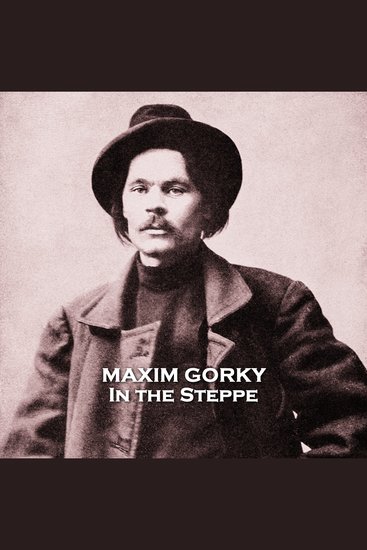
    Alexei Maximovich Peshkov was born on 28th March 1868, in Nizhny Novgorod, Russia. 
    Better known as Maxim Gorky he was orphaned at 11 and ran away from home at 12.  At 19 he had already attempted suicide and thereafter travelled, by foot, across the Russian Empire for 5 years. 
    His first book ‘Essays & Stories’ in 1898 was a sensation and so began a long career as an author of short stories, novels and plays.  Gorky saw writing as a moral and political act that would help to change the unjust world around him.  He was an ardent early advocate of the emerging Marxist movement and publicly opposed the Tsarist regime leading several times to his arrest.  
    In 1904 he began his own theatre but the censor banned every play and Gorky was forced to abandon the project. 
    But Gorky was a financially successful author, editor, and playwright and gave monies to political parties as well as for civil rights and social reform.  The brutal shooting of workers, which set in motion the Revolution of 1905, pushed Gorky more decisively toward radical solutions.  
    In 1906 he went to the United States to raise funds for the Bolsheviks. Those experiences including a scandal over travelling with his lover and not his wife deepened his contempt for the ‘bourgeois soul.’ 
    Gorky now moved to Capri in Italy, both for health reasons and to escape the increasingly repressive times in Russia.  
    An amnesty for the 300th anniversary of the Romanov dynasty saw him return to Russia in 1914. His politics remained close to the Bolshevik cause.  But soon, after the 1918 revolution, his essays referred to Lenin as a tyrant for his senseless arrests and repression.  He was soon appealing to the outside world for food aid after the catastrophic crop failure. 
    In October 1921 Gorky returned to Italy, now in Fascist hands, and settled in Sorrento until 1932.  His health worsened with the onset of tuberculosis. 
    He wrote several successful books there but now decided to find an understanding with the communist regime. Stalin invited him home and his return was hailed as a major propaganda victory.  He was decorated with the Order of Lenin, and a province, a park, and various streets re-named in his honour. 
    But he had his faults too.  In 1933, Gorky co-edited a book on the White Sea-Baltic Canal and denied even a single prisoner died during its construction, but thousands had. As well, knowing that some Nazis were homosexual, a phrase was attributed to him that said ‘exterminate all homosexuals and fascism will vanish’.  Although he was himself was quoting another he was decidedly homophobic. 
    With the increase of Stalinist repression in 1935 Gorky was placed under unannounced house arrest. 
    Maxim Gorky died on the 18th June 1936 from pneumonia.  He was 68. 
    Stalin and Molotov were among those who carried Gorky's urn of ashes at his funeral.
    Ver libro
  • Hunger - cover

    Hunger

    Knut Hamsun

    • 0
    • 0
    • 0
    "Hunger" by Knut Hamsun 
    Explore the human psyche's extremes in Knut Hamsun's renowned novel, "Hunger." Set in 19th-century Oslo, this modernist masterpiece follows a starving artist's struggle for survival and self-expression. The novel intricately portrays the protagonist's inner turmoil, balancing between sanity and madness, as he wanders through the city's streets, battling hunger and pursuing his artistic vision. 
    Hamsun's sharp, introspective writing vividly captures the ebb and flow of the narrator's mental state, making "Hunger" a profound exploration of isolation, existential angst, and human resilience. This influential work marked a significant shift in literary narrative, introducing psychological depth that paved the way for future writers. 
    "Hunger" is an unforgettable journey into the depths of human nature and a testament to the indomitable human spirit. It remains a vital read for understanding the complexities of artistic pursuit and human condition. 
    See more
    Ver libro