Join us on a literary world trip!
Add this book to bookshelf
Grey
Write a new comment Default profile 50px
Grey
Subscribe to read the full book or read the first pages for free!
All characters reduced
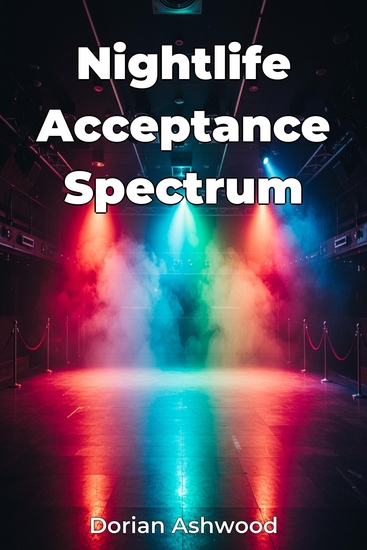
Nightlife Acceptance Spectrum - cover

Nightlife Acceptance Spectrum

Dorian Ashwood

Translator A AI

Publisher: Publifye

  • 0
  • 0
  • 0

Summary

"Nightlife Acceptance Spectrum" explores the multifaceted relationship between LGBTQ+ individuals and nightlife, going beyond surface-level visibility to examine the true extent of inclusion within these spaces. It addresses a critical question: are Pride month displays genuine, or do they mask underlying inequalities? The book delves into how licensing laws, enforcement practices, and public behavior standards shape the experiences of LGBTQ+ patrons, revealing that despite progress, microaggressions and discrimination persist. Nightlife acts as a vital social and economic space, serving as a community hub for connection and self-expression, making acceptance crucial.

 
The book uses a unique framework to assess LGBTQ+ inclusion, considering legal aspects, lived experiences, and venue practices. It draws from diverse sources such as legal documents, ethnographic observations, and interviews to provide a comprehensive picture. The book begins by historically contextualizing LGBTQ+ nightlife, then examines licensing laws, enforcement, and public behavior standards across cities. This multi-method approach connects to sociology, political science, and urban studies, offering a nuanced perspective on creating truly inclusive urban environments.
Available since: 04/07/2025.
Print length: 81 pages.

Other books that might interest you

  • Pillow Talk Sexy Surprises - 6 Erotic Stories - cover

    Pillow Talk Sexy Surprises - 6...

    Giselle Renarde

    • 0
    • 0
    • 0
    Step into the intimate world of "Pillow Talk Sexy Surprises," where hot water bottles aren't the only things heating up the bedroom. In this spicy collection of six short stories, conversations become a seductive dance of desire and connection. 
    From whispered confessions to playful banter that ignites the flames of passion, each tale offers a glimpse into the intimate chats shared between the sheets. Explore the depths of longing as lovers muse about the future, reminisce about the past, and indulge in naughty talk that leaves them begging for more. 
    Prepare to be swept away by the raw emotion that permeates "Pillow Talk Sexy Surprises." This anthology invites you to explore the intimate conversations that turn ordinary moments into unforgettable experiences. Immerse yourself in the sensual world of pillow talk tonight! 
    Read by the author
    Show book
  • Wage Labor And Capital - cover

    Wage Labor And Capital

    Karl Marx

    • 0
    • 0
    • 0
    Originally written as a series of newspaper articles in 1847, Wage-Labor and Capital were intended to give an overview of Marx’s central theories regarding the economic relationships between workers and capitalists. These theories outlined include the Marxian form of the Labour Theory of Value, which distinguishes “labor” from “labor-power”, and the Theory of Concentration of Capital, which states that capitalism tends towards the creation of monopolies and the disenfranchisement of the middle and working classes. These theories were later elaborated in Volume 1 of Capital, published in 1867. Karl Heinrich Marx FRSA was a German philosopher, a critic of political economy, economist, historian, sociologist, political theorist, journalist, and socialist revolutionary. His best-known titles are the 1848 pamphlet The Communist Manifesto and the four-volume Das Kapital.
    Show book
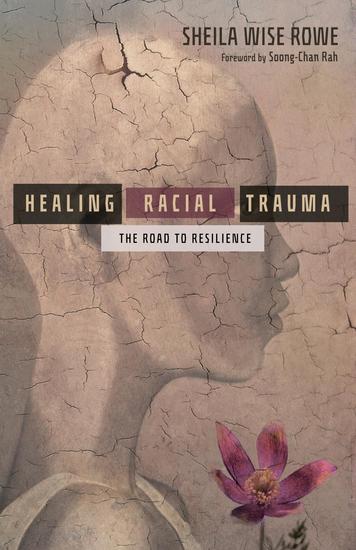
  • Healing Racial Trauma - The Road to Resilience - cover

    Healing Racial Trauma - The Road...

    Sheila Wise Rowe

    • 0
    • 1
    • 0
    Foreword INDIES Book of the Year Award - Multicultural
    Christianity Today  Book Award - Christian Living/Discipleship Award
    Publishers Weekly starred review
    "People of color have endured traumatic histories and almost daily assaults on our dignity. We have prayed about racism, been in denial, or acted out in anger, but we have not known how to individually or collectively pursue healing from the racial trauma."
    As a child, Sheila Wise Rowe was bused across town to a majority white school, where she experienced the racist lie that one group is superior to all others. This lie continues to be perpetuated today by the action or inaction of the government, media, viral videos, churches, and within families of origin. In contrast, Scripture declares that we are all fearfully and wonderfully made.
    Rowe, a professional counselor, exposes the symptoms of racial trauma to lead readers to a place of freedom from the past and new life for the future. In each chapter, she includes an interview with a person of color to explore how we experience and resolve racial trauma. With Rowe as a reliable guide who has both been on the journey and shown others the way forward, you will find a safe pathway to resilience.
    Show book
  • The Triangle of Power - Rebalancing the New World Order - cover

    The Triangle of Power -...

    Alexander Stubb

    • 0
    • 0
    • 0
    The liberal world order that emerged after the Second World War – and expanded triumphantly following the Cold War – is unravelling. Multilateral cooperation is giving way to multipolar rivalry and conflict. Global norms are eroding. What comes next will define the rest of the century; the search is on for a new global framework – a rebalancing of power.
    In The Triangle of Power, Finnish President Alexander Stubb argues that we are living through a hinge moment in history, akin to 1918, 1945 or 1989. A new international system is taking shape, driven by three major forces: the Global West, the Global East and the Global South. At the centre is the escalating competition between the United States and China, as both try to forge bilateral deals and regional alliances, but it is the Global South that will ultimately determine whether the future tilts toward cooperation or fragmentation.
    Drawing on decades at the front lines of diplomacy, and blending personal insight with political and academic experience, Stubb delivers a passionate call for values-based realism and dignified foreign policy – and warns that unless the West learns to listen, it will lose its place in the world it once led.
    Show book
  • How to Abolish Prisons - Lessons from the Movement against Imprisonment - cover

    How to Abolish Prisons - Lessons...

    Rachel Herzing, Justin Piché,...

    • 0
    • 0
    • 0
    Critics of abolition sometimes castigate the movement for its utopianism, but in How to Abolish Prisons, long-time organizers Rachel Herzing and Justin Piché reveal a movement that has made the struggle for abolition as real as the institutions they are fighting against. 


    Drawing on extensive interviews with abolitionist crews all over North America, Herzing and Piché provide a collective reconstruction of what the grassroots movement to abolish prisons actually is, what initiatives it has launched, how it organizes itself, and how its protagonists build the day-to-day practice of politics. Listeners sit in on the Winnipeg rideshares of Bar None and the meetings of the Chicago Community Bail Fund as they assess the utility of politicized mutual aid. They follow the campaigns and coalitions of Critical Resistance in Oakland and San Francisco and Survived and Punished in New York City, and learn about the prisoner correspondence projects that keep activists behind bars and outside them in constant coordination. 


    Abolitionist campaigns are constructing on-the-ground initiatives across North America to deconstruct carceral society and build resistant communities. Through the words, deeds, and personalities of this beautifully peopled movement, How to Abolish Prisons emerges as a stunning snapshot of a movement's thinking in motion.
    Show book
  • The Battle of Agincourt - England's Triumph in France - cover

    The Battle of Agincourt -...

    Nova Ashford

    • 0
    • 0
    • 0
    The Battle of Agincourt, fought on October 25, 1415, stands as one of the most celebrated military victories in English history. It was a defining moment in the Hundred Years’ War, a prolonged conflict between England and France that spanned over a century. Agincourt not only showcased the military brilliance of King Henry V but also demonstrated the effectiveness of the English longbow against heavily armored French knights. The battle’s significance goes beyond a single day of combat—it influenced the course of the war, shaped national identities, and left an enduring legacy in both military history and cultural memory. 
    To fully understand Agincourt, one must first examine the broader conflict in which it took place. The Hundred Years’ War (1337–1453) was a series of intermittent battles and political struggles between England and France, primarily over territorial claims and the right to rule France. The origins of the war can be traced back to the complex feudal relationships of medieval Europe. The English monarchy held vast territories in France, including Aquitaine, a rich and strategically important region. However, growing tensions between the English and French crowns, combined with disputes over succession, led to open warfare. 
    A key factor in the war was the question of who had the legitimate right to the French throne. In 1328, the death of Charles IV of France left the French crown without a direct male heir. Under French succession laws, Philip VI of the House of Valois was chosen as king. However, England’s King Edward III, who was the grandson of a previous French king through his mother, claimed the throne as well. His assertion of this right in 1337 marked the official beginning of the Hundred Years’ War.
    Show book