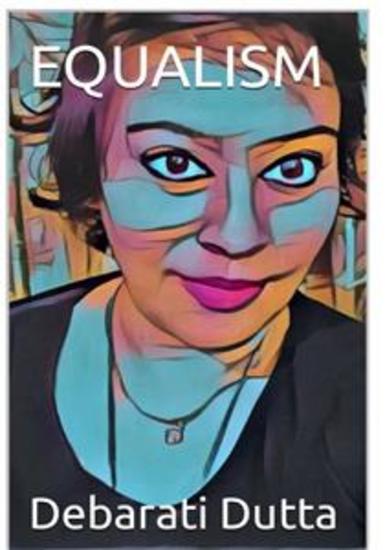
Equalism
Debarati Dutta
Publisher: Babelcube
Summary
Humanity is the first thing.. read and think, motivate positively, fault lies in the basic cause, which cause depression, unhappines, ill mental health . eleminate it and live happy..
Publisher: Babelcube
Humanity is the first thing.. read and think, motivate positively, fault lies in the basic cause, which cause depression, unhappines, ill mental health . eleminate it and live happy..
For over a century, cinephiles and film scholars have had to grapple with an ugly artifact that sits at the beginnings of film history. D. W. Griffith's profoundly racist epic, The Birth of a Nation, inspired controversy and protest at its 1915 release and was defended as both a true history of Reconstruction (although it was based on fiction) and a new achievement in cinematic art. Paul McEwan examines the long and shifting history of its reception, revealing how the film became not just a cinematic landmark but also an influential force in American aesthetics and intellectual life. In every decade since 1915, filmmakers, museums, academics, programmers, and film fans have had to figure out how to deal with this troublesome object, and their choices have profoundly influenced both film culture and the notion that films can be works of art. Some critics tried to set aside the film's racism and concentrate on the form, while others tried to relegate that racism safely to the past. McEwan argues that from the earliest film retrospectives in the 1920s to the rise of remix culture in the present day, controversies about this film and its meaning have profoundly shaped our understandings of film, race, and art. Contains mature themes.Show book
Narcissism For Dummies pulls back the curtain on a growing and misunderstood personality. This book digs into dimensions of narcissism, grandiosity, malignancy, and vulnerability, giving you the knowledge and perspective you need to identify narcissists in your life and set limits on unacceptable behavior. It also takes a look at how society plays a part in fostering narcissism, for example through social media. You'll walk away from Narcissism For Dummies with a clearer sense of the personality trait, as well as necessary coping mechanisms and tools to deal with the narcissists in your life. ● Deal with narcissistic parents, bosses, coworkers, relatives, romantic partners, and beyond ● Discover tactics and exercises for identifying, disarming, and protecting yourself from narcissists ● Set limits, establish healthy boundaries, and rebuild your self-confidence ● Understand narcissistic personality in all its manifestations Anyone whose life has been touched by narcissism will find this book helpful, whether you're coming to terms with a loved one's diagnosis, dealing with a narcissist in the workplace, or working to move forward after leaving a narcissistic relationship.Show book
It’s easy to forget how young Italy was when Benito Mussolini was born on July 29, 1883. It is hard to conceive a territory with such a long and ancient history was once young and troubled with constant conflict and instability. Similar to Germany, Italy was unified in 1861, but contrary to its northern cousin, its previous history was one of separation. Italy had no great romantic idea of a “Great Germany,” keeping it unified even during the wars between city-states. Benito Mussolini was born and raised in a highly volatile environment where ideas already considered extreme by most contemporary observers, such as Socialism, would undergo a deep and violent transformation. Mussolini would ride that wave to power, and he would hold it for decades as he opportunistically tried to strengthen Italy's position and empire. That would lead him to foreign interventions in Africa, and eventually an alliance with Nazi Germany's Adolf Hitler, ultimately costing him everything and devastating his country throughout World War II. It is often claimed that Adolf Hitler rose to power in Germany through democratic means, and while that is a stretch, it is true that he managed to become an absolute dictator as Chancellor of Germany in the 1930s through a mixture of politics and intimidation. Ironically, he had set such a course only because of the failure of an outright coup attempt known as the Beer Hall Putsch about a decade earlier. The Spanish Civil War has exerted a powerful impact on the historical imagination. Without question, the conflict was a key moment in the 20th century, a precursor to World War II, and an encapsulation of the rise of extremist movements in the 1930s, but it was also a complex narrative in and of itself, even as it offered a truly international theatre of war. Ultimately, the forces of reaction, led by General Francisco Franco, triumphed, and after his victory in 1939, Franco ruled Spain with an iron fist for 36 years.Show book
Part-time Writer guides the reader through all aspects of writing – from the embryonic stages of researching and planning, to the hard slog of the writing and editing, through to the presentation of the manuscript, and finally, approaching agents and publishers. At each stage, the author explains how she did it – and how the reader can do it too. * How can I write engaging dialogue? * What can I do to make my characters 'live' on the page? * Must I always 'show and not tell'? * How can I transform a hobby into a book? * When is the right time to show my work to others? * How should I present my manuscript? * Do I need an agent? * Should I self-publish? * Where can I find the time to write a novel? In her inimitable style, Marjorie Quarton merges literary memoir, anecdotes and straight talking to provide invaluable insights into the realities of being a writer, while offering indispensable advice on the trade, making this book a must-have for any aspiring author.Show book
The struggle over the fortified Confederate position known as Spotsylvania's Mule Shoe was without parallel during the Civil War. A Union assault that began at 4:30 A.M. on May 12, 1864, sparked brutal combat that lasted nearly twenty-four hours. By the time Grant's forces withdrew, some 55,000 men from Union and Confederate armies had been drawn into the fury, battling in torrential rain along the fieldworks at distances often less than the length of a rifle barrel. One Union private recalled the fighting as a "seething, bubbling, soaring hell of hate and murder." By the time Lee's troops established a new fortified line in the predawn hours of May 13, some 17,500 officers and men from both sides had been killed, wounded, or captured when the fighting ceased. The site of the most intense clashes became forever known as the Bloody Angle. Here, renowned military historian Jeffry D. Wert draws on the personal narratives of Union and Confederate troops who survived the fight to offer a gripping story of Civil War combat at its most difficult. Wert's harrowing tale reminds us that the war's story, often told through its commanders and campaigns, truly belonged to the common soldier.Show book
Christianity Today Book Award The Gospel Coalition Book Awards Honorable Mention Foreword INDIES Book of the Year Award Finalist The success and survival of American democracy have never been guaranteed. Political polarization, presidential eccentricities, the trustworthiness of government, and the prejudices of the voting majority have waxed and waned ever since the time of the Founders, and there are no fail-safe solutions tosecure the benefits of a democratic future. What we must do, argues the historian Robert Tracy McKenzie, is take an unflinching look at the very nature of democracy—its strengths and weaknesses, what it can promise, and where it overreaches. And this means we must take an unflinching look at ourselves. We the Fallen People presents a close look at the ideas of human nature to be found in the history of American democratic thought, from the nation's Founders throughthe Jacksonian Era and Alexis de Tocqueville. McKenzie, following C. S. Lewis, claims there are only two reasons to believe in majority rule: because we have confidence in human nature—or because we don't. The Founders subscribed to the biblical principle that humans are fallen and their virtue is always doubtful, and they wrote the US Constitution to frame a republic intended to handle our weaknesses. But by the presidency of Andrew Jackson, contrary ideas about humanity's inherent goodness were already taking deep root among Americans, bearing fruit in such perils as we now face for the future of democracy. Focusing on the careful reasoning of the Founders, the seismic shifts of the Jacksonian Era, and the often misunderstood but still piercing analysis of Tocqueville's Democracy in America, McKenzie guides us in a conversation with the past that can help us see the present—and ourselves—with new insight.Show book