¡Acompáñanos a viajar por el mundo de los libros!
Añadir este libro a la estantería
Grey
Escribe un nuevo comentario Default profile 50px
Grey
Suscríbete para leer el libro completo o lee las primeras páginas gratis.
All characters reduced
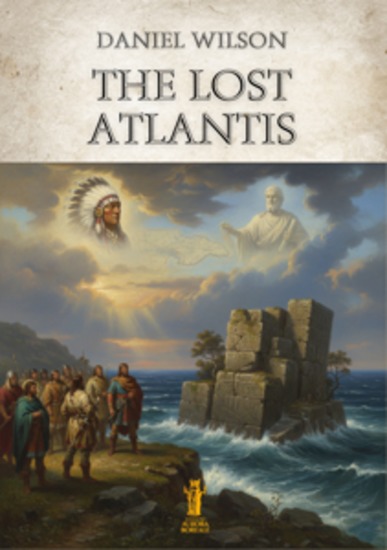
The Lost Atlantis - cover

The Lost Atlantis

Daniel Wilson

Editorial: Edizioni Aurora Boreale

  • 0
  • 0
  • 0

Sinopsis

Sir Daniel Wilson (January 5, 1816 – August 6, 1892) was a Scottish-born Canadian archaeologist, ethnologist and writer.In 1853 Wilson left Scotland to take up the post of Professor of History and English Literature in Toronto, Canada. In addition to his teaching duties, he kept up his interests in Natural history, Geology, and was very interested in the Ethnography of the indigenous groups that he encountered on his vacation treks.In 1861 he was elected a member of the American Antiquarian Society and, in 1875, a Fellow of the Royal Society of Edinburgh. He also served as president of the Canadian Institute from 1878-1881, as president of University College, Toronto, from 1880 to 1892, and as the first president of the federated University of Toronto from 1892.Wilson’s final masterpiece, The Lost Atlantis and other Ethnographic Studies, published posthumously in 1892, serves as a fascinating compendium of his lifelong intellectual pursuits, blending archaeological rigor with ethnographic observation.The title essay, "The Lost Atlantis", which we propose to our readers today, addresses one of the most enduring and fascinating myths of antiquity. Wilson approaches the legend of Atlantis through a critical and historical lens. He examines Plato's original accounts and compares them with late 19th-century geographical and geological knowledge. Wilson's goal is to explore how these myths influence our understanding of human migrations and the perceived "blank spaces" on the ancient world map.
Disponible desde: 31/12/2025.


Otros libros que te pueden interesar

  • The Battle of Lepanto - The Last Great Naval Clash - cover

    The Battle of Lepanto - The Last...

    Nova Ashford

    • 0
    • 0
    • 0
    The Battle of Lepanto, fought on October 7, 1571, stands as one of the most significant naval engagements in history. A defining moment in the struggle between Christian Europe and the expanding Ottoman Empire, it marked the climax of a centuries-long clash for dominance in the Mediterranean. Lepanto not only shaped the balance of power in the region but also signaled the beginning of the decline of the Ottoman naval supremacy. As one of the last great fleet engagements in history, the battle is remembered as a pivotal moment in the defense of Christendom and the resistance to Ottoman expansion. 
    At the heart of the conflict was the Ottoman Empire, a rising superpower that had established itself as a dominant force in the Mediterranean by the 16th century. Under the leadership of Suleiman the Magnificent, the Ottomans expanded their reach into North Africa and into Europe, pushing towards the gates of Vienna. By the time of the Battle of Lepanto, the Ottomans controlled much of the eastern Mediterranean, and their navy was one of the largest and most powerful in the world. However, the rapid expansion of the empire also stirred fears among Christian nations, who saw their way of life threatened by the growing Ottoman presence. 
    In response to this looming threat, Pope Pius V initiated the formation of the Holy League, an alliance of Catholic maritime states including Spain, Venice, and the Papal States. This coalition sought to halt the Ottoman advance and safeguard Christian territories in the Mediterranean. The Holy League’s formation was both a religious and political reaction to the Ottoman Empire's imperial ambitions.
    Ver libro
  • The Institutes of Justinian - The sixth-century codification of Roman law - cover

    The Institutes of Justinian -...

    Justinian

    • 0
    • 0
    • 0
    This recording has been digitally produced by DeepZen Limited, using a synthesized version of an audiobook narrator’s voice under license. DeepZen uses Emotive Speech Technology to create digital narrations that offer a similar listening experience to human narration.  
     
    The Institutes of Justinian is a component of the Corpus Juris Civilis, the sixth-century codification of Roman law ordered by the Byzantine emperor Justinian I. It is largely based upon the Institutes of Gaius, a Roman jurist of the second century A.D. The other parts of the Corpus Juris Civilis are the Digest, the Codex Justinianus, and the Novellae Constitutiones ("New Constitutions" or "Novels"). Justinian's Institutes was one part of his effort to codify Roman law and to reform legal education, of which the Digest also was a part. Whereas the Digest was to be used by advanced law students, Justinian's Institutes was to be a textbook for new students. The Institutes of Justinian is arranged much like Gaius's work, being divided into three books covering "persons," "things,", and "actions." Unlike the Digest, the extracts do not provide inscriptions indicating from whom the original material was taken.
    Ver libro
  • Classic Literary Myths - Sacred and Legendary Texts (3 in 1) - cover

    Classic Literary Myths - Sacred...

    Odessa Nightshade

    • 0
    • 0
    • 0
    Enter a realm where ancient visions meet literary brilliance. Classic Literary Myths brings together three profound works that shaped humanity’s understanding of the divine, the afterlife, and the beginning of all things. These tales are not just myths—they are sacred echoes of how past civilizations viewed heaven, hell, and the birth of existence. 
    Explore The Book of Enoch, a mysterious text once lost to time, revealing celestial beings, heavenly secrets, and divine judgments. Then walk alongside Dante in The Divine Comedy, a powerful descent into Hell, climb through Purgatory, and rise into the realms of Paradise in one of literature’s most breathtaking spiritual journeys. Finally, discover The Myths of Creation, where diverse global traditions grapple with how the world began—from chaos, gods, or a spark of light.
    Ver libro
  • The Shocking Truth about Public Transportation - cover

    The Shocking Truth about Public...

    Zoey Fraisers

    • 0
    • 0
    • 0
    Public transportation is often presented as the backbone of modern cities, a vital system that connects people to jobs, schools, and essential services. Advocates promote it as an affordable, eco-friendly, and efficient alternative to private vehicles, reducing congestion and improving urban mobility. Governments and transit agencies highlight its benefits, claiming it serves the public good while advancing sustainability goals. However, beyond the polished image of well-maintained buses, sleek trains, and promises of convenience, there lies a far more complicated and often troubling reality.  
      
    The public is frequently told that mass transit is the key to reducing traffic and lowering pollution, yet many systems fail to deliver on these promises. Trains break down, buses run late, and commuters find themselves packed into overcrowded vehicles, often feeling unsafe. Meanwhile, taxpayers pour billions into these systems, only to see fare increases, service cuts, and poorly maintained infrastructure. The question arises: If public transportation is supposed to be a solution, why does it so often feel like a problem?  
      
    Another significant issue is safety. Crime rates on buses, subways, and train platforms have become a growing concern, with riders facing theft, assault, and harassment. Many transit systems lack sufficient security measures, leaving passengers vulnerable. The psychological stress of commuting through unsafe environments can be overwhelming, particularly for women, the elderly, and other vulnerable populations. Despite these risks, officials frequently downplay crime statistics, insisting that public transit remains a safe option. 
    Ver libro
  • Violette Szabo - The Life That I Have - cover

    Violette Szabo - The Life That I...

    Susan Ottaway

    • 0
    • 0
    • 0
    The story of Violette Szabo is one of the most extraordinary in the annals of World War II espionage and covert operations. 


    Totally fearless and a dead shot, Violette Szabo volunteered to become part of the Special Operations Executive, Britain's premier sabotage and subversion organization of the time. On June 7, 1944, Violette left behind a two-year-old daughter to parachute into France on a special mission. 


    Szabo and other British agents were assigned to organize French resistance fighters to hinder the advance of the SS Das Reich Division to the Normandy beaches. Unfortunately, Szabo's party was soon ambushed by the SS. 


    Unable to walk due to a twisted ankle, Szabo covered the retreat of her comrades with machine-gun fire. Captured, she went through a series of interrogations and changes of confinement before ending up at Ravensbruck, the German all-women's concentration camp. She was finally executed on January 26, 1945. She was twenty-three years old. 


    This exceptional work has been written with the assistance of Violette Szabo's daughter Tanya and unravels fact and fiction about one of the most fascinating characters of World War II.
    Ver libro
  • The Antichrist - cover

    The Antichrist

    Friedrich Nietzsche

    • 0
    • 0
    • 0
    "The Antichrist" is a philosophical work by Friedrich Nietzsche, written in 1888 as part of his critique of organized religion, particularly Christianity. In this book, Nietzsche sharply criticizes the morality and values of Christianity, presenting his ideas on the concept of the "Antichrist" as a figure opposed to Christian doctrine and morality. He delves into topics such as the decline of Christianity, the nature of morality, the will to power, and the reevaluation of values.
    Ver libro