Join us on a literary world trip!
Add this book to bookshelf
Grey
Write a new comment Default profile 50px
Grey
Subscribe to read the full book or read the first pages for free!
All characters reduced
Augusta Triumphans - Leadership and Governance in Defoe's Political Landscape - cover

Augusta Triumphans - Leadership and Governance in Defoe's Political Landscape

Daniel Defoe

Publisher: Good Press

  • 0
  • 0
  • 0

Summary

In "Augusta Triumphans," Daniel Defoe offers a multifaceted exploration of the political, social, and cultural landscape of early 18th-century England, particularly during the reign of Queen Anne. The book is infused with Defoe's characteristic wit and keen observational style, presenting a blend of satire and earnest commentary. Written in the context of a nation grappling with its identity amid political factions, the work serves as both a celebration and critique of the rapidly changing society, touching upon themes of nationalism, urbanization, and the burgeoning middle class. Defoe, a prolific writer and social commentator, was deeply influenced by his varied experiences as a merchant, journalist, and political dissident. His diverse background and encounters with political unrest provided him with a unique lens through which to view the complexities of his time. "Augusta Triumphans" reflects Defoe's keen interest in societal reforms and his belief in the potential of the British populace. His work, often overlooked amidst his more famous novels, reveals his astute understanding of human nature and governance. Readers seeking insight into the socio-political dynamics of early 18th-century England will find "Augusta Triumphans" an invaluable resource. Defoe's clever prose and penetrating observations invite a deeper engagement with the historical context, making this book a significant addition to both literary and historical studies.
Available since: 10/04/2023.
Print length: 33 pages.
Other books that might interest you

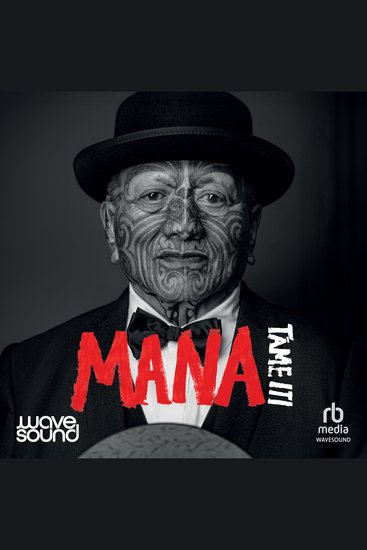
  • Mana - cover

    Mana

    Tame Iti

    • 0
    • 0
    • 0
    Mana. It's a big word. But what is it? Are you born with it, can you earn it, can it be taken away? 
     
    For more than five decades, Tame Iti has stood at the heart of Aotearoa's struggle for indigenous rights. From land marches to performance art, police raids to prison cells, his voice has challenged New Zealand to reckon with its colonial legacy.  
     
    Once branded as a dangerous and extreme activist, nowhailed as a national treasure, Tame has lived the contradictions and realities of standing with mana motuhake in a modern world. 
     
    After being silenced from speaking te reo Maori as a child, Tame went on to champion its revitalisation. He discovered the power of protest and what it means to live with mana in a world that often tries to strip it away. 
     
    This is his korero of the road he walked and the people who joined him. The comrades, the supporters, and the ones who tried to take him out. 
     
    Mana is the story of a man who has never stopped challenging the status quo. It cements Tame's place as one of Aotearoa's most iconic figures.
    Show book
  • Wonder and Worry - Contemporary History in an Age of Uncertainty - cover

    Wonder and Worry - Contemporary...

    Francis J. Gavin

    • 0
    • 0
    • 0
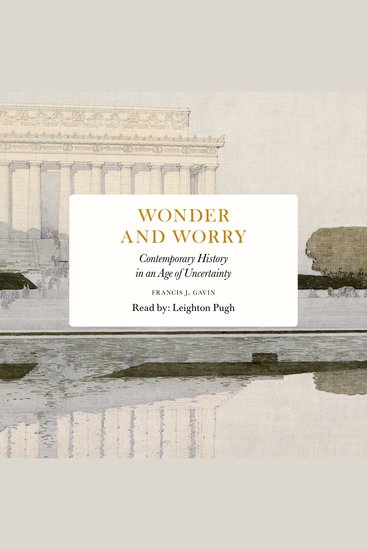
    The current global order appears to be collapsing. Long forgotten challenges, such as the return of great power competition and the specter of nuclear war, demand fresh attention, while novel, complex, and menacing planetary crises ranging from climate and disease to emerging technology loom. Meanwhile, the United States—the most consequential nation in the international system, behaves erratically and seems willing to abandon its decades-long strategy of building strong alliances, countering authoritarianism and supporting openness. How should we understand these unsettling trends? 
    Wonder and Worry offers Francis J. Gavin’s best insights on the pressing, fundamental questions we face. Gavin’s answers are nuanced, counterintuitive, and often surprisingly optimistic in this incisive and accessible contemporary history for our uncertain age. 
    Francis J. Gavin is Giovanni Agnelli Distinguished Professor and Director of the Henry A. Kissinger Center for Global Affairs at Johns Hopkins University School of Advanced International Studies in Washington, D C.
    Show book
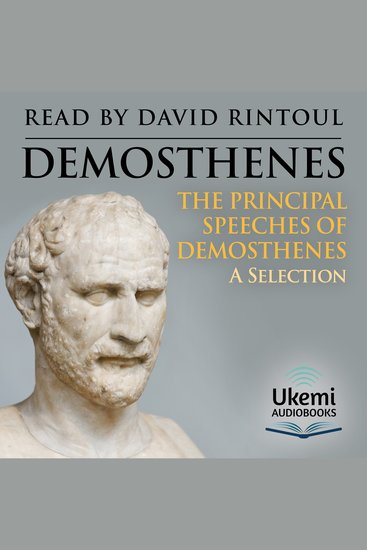
  • The Principal Speeches of Demosthenes - A Selection - cover

    The Principal Speeches of...

    Demosthenes

    • 0
    • 0
    • 0
    Demosthenes (384-322 BCE) is regarded as one of the greatest orators of Classical times. This view has persisted through the centuries even though his rousing speeches warning of the dangers of Macedonian expansion - firstly guided by Philip II and then Alexander the Great - failed to stem the course of continued military success. 
     
    A contemporary of Plato and Aristotle, it is said that Demosthenes undertook arduous measures to cure himself of a stammer by speaking with pebbles in his mouth and perfecting breath control. Starting as a speech writer, he made his mark at an unusually young age (for the time), delivering his first major public speech at the age of 30, advising Athens to build its naval fleet as a defence against the Persians. In fact, it was the ambition of Philip of Macedon that would prove the principal threat. This was recognised by Demosthenes, as shown by the main speeches included in this collection. 
     
    In the 'Three Olynthiac Orations', Demosthenes outlined the tactics of Philip’s aggression towards Olynthus, an ally of Athens. He urged support for the smaller state, but his words went unheeded until it was too late. Demosthenes’s increasingly unrestrained language - at one point he calls Philip ‘a barbarian’ - did not endear him to the Macedonian regime. 
     
    The 'Olynthiac Orations' are followed by the 'Three Philippics', which chart further military activity by the aforementioned Philip. In between the second and third 'Philippics' comes ‘On the Peace’: a speech given during a short diplomatic space engineered by Philip, but which Demosthenes clearly highlighted as an armistice rather than anything permanent. This ‘Philip’ section ends with ‘The Oration on the Letter'. Philip sent a letter to Athens, which implied that war, again, was imminent. Demosthenes responded with characteristic boldness. 
     
    The final speech on this recording is ‘On the Crown’, addressing a very different matter. The Athenian statesman Ctesiphon proposed that Demosthenes should be honoured with the ‘golden crown’ for his service to the city. This was opposed by Aeschines, a long-standing enemy of Demosthenes in Athenian politics. In the court case that followed (330 BCE), Demosthenes successfully defended Ctesiphon in a speech later described as ‘the greatest speech of the greatest orator in the world'. 
     
    Each of the orations in this collection is preceded with an introduction setting the scene, and outlining the context in which they were delivered. This also gives a concise picture of Athens at this difficult point in its history. Eight years later, when in danger of being captured and imprisoned by the young Alexander who was angered by decades of eloquent and unrestrained opposition, Demosthenes committed suicide. All the speeches are prefaced by the historical setting. Translations by Arthur Wallace Pickard and Charles Rann Kennedy.
    Show book
  • Why Palestine?: Reflections From Singapore - cover

    Why Palestine?: Reflections From...

    Walid Jumblatt Abdullah

    • 0
    • 0
    • 0
    If you’ve ever wondered why people keep talking about Palestine, or the point of keeping up with a long-drawn conflict in the Middle East and what difference you could possibly make, this book is for you. Political analyst and podcaster Walid Jumblatt Abdullah takes on questions that Singaporeans have often raised about Palestine, laying out answers that clarify and inform. 
     
    Walid examines myths (“Could Gaza Have Been Singapore?”) and sheds light on the double standards of Western powers, to whom human rights seem to matter, except for where Palestine is concerned. Explaining how the Palestinians have been systematically dehumanised for decades, the book highlights how they continue to exist nevertheless, their very existence an act of resistance. 
     
    Why Palestine? is an illuminating starting point for newcomers to the issue, and a passionate primer that seasoned activists will welcome for capturing the heart and hope of a long-disenfranchised people and those who support them.
    Show book
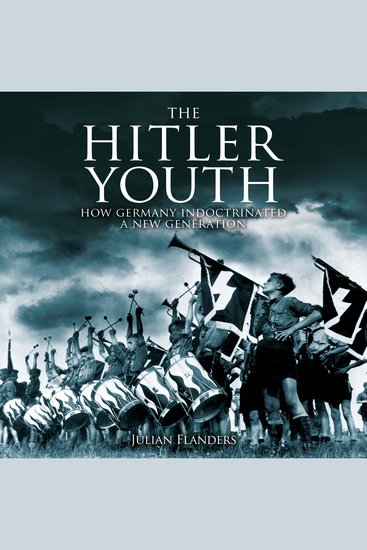
  • The Hitler Youth - How Germany Indoctrinated a New Generation - cover

    The Hitler Youth - How Germany...

    Julian Flanders

    • 0
    • 0
    • 0
    In this fascinating book, Julian Flanders examines the impact of the Hitlerjugend (Hitler Youth Movement) on Germany's young people and how it shaped German society under Adolf Hitler. By 1940 membership had reached eight million - more than 90 per cent of German children. Between 1933 and the outbreak of World War II in 1939, the movement drove a wedge between youth, the educational system, and even their own dissenting families, producing a generation of anti-intellectuals indoctrinated with Nazi ideology. On the eve of war, the Hitler Youth constituted the single most successful mass movement in the Third Reich and comprised many of its most committed Nazis. Members of Hitlerjugend went on to play a substantial role in World War II, as many underage troops fought and died for their country.
    Show book
  • Imperialism - cover

    Imperialism

    Vladimir Lenin

    • 0
    • 0
    • 0
    Written in 1916 against the backdrop of the First World War, Imperialism: The Highest Stage of Capitalism explains the flaws and power of capitalism, which inevitably lead to monopolies, imperialism and colonialism. Lenin develops Marx’s theories of political economy, which had been put forward 50 years earlier in Das Kapital. He goes on to argue that imperialism is the most advanced state of capitalism, characterised by the domination of monopolies on an international scale, with the export of capital leading to the big imperialist powers carving up the world.More than a century later, Imperialism remains highly relevant in understanding the historical background to the strategies of many of today’s major nations.
    Show book