Join us on a literary world trip!
Add this book to bookshelf
Grey
Write a new comment Default profile 50px
Grey
Subscribe to read the full book or read the first pages for free!
All characters reduced
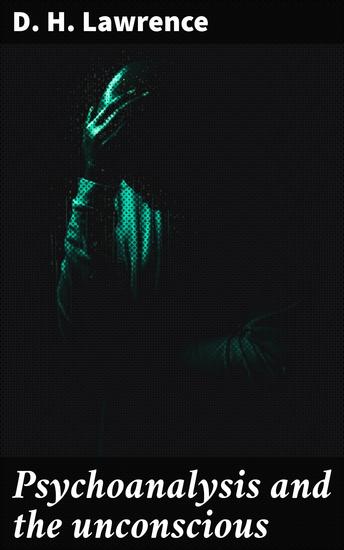
Psychoanalysis and the unconscious - Exploring the Depths of Human Psyche: A Poetic Analysis of Unconscious Mind and Artistic Expression - cover

Psychoanalysis and the unconscious - Exploring the Depths of Human Psyche: A Poetic Analysis of Unconscious Mind and Artistic Expression

D. H. Lawrence

Publisher: Good Press

  • 0
  • 0
  • 0

Summary

D. H. Lawrence'Äôs "Psychoanalysis and the Unconscious" stands as a provocative exploration of the depths of human psychology, particularly scrutinizing the interplay between unconscious desires and societal constructs. Lawrence employs a lyrical, incisive prose style, merging elements of modernist thought with early psychoanalytic theory, culminating in an innovative critique of contemporary morality and personal identity. Through vivid imagery and passionate argumentation, he navigates the complexities of the psyche, challenging readers to confront their own unconscious motivations while reflecting on the broader implications of repression in modern life. As a prominent figure of early 20th-century literature, D. H. Lawrence's own life experiences'Äîmarked by personal turbulence, industrialization, and a deep concern for the human condition'Äîshaped his insights into the psyche. His encounters with Freudian theories and the constraints of societal norms fueled an intellectual curiosity that informed his analysis of human behavior, making this work a vital part of his literary canon, bridging the gap between psychology and literary expression. "Psychoanalysis and the Unconscious" is highly recommended for readers seeking a deeper understanding of the intricacies of the mind and the effects of repression on the human spirit. Lawrence's unique perspective not only enriches our comprehension of psychoanalysis but also invites introspection, making this book an essential read for students of literature, psychology, and philosophy.
Available since: 07/10/2023.
Print length: 42 pages.

Other books that might interest you

  • Babylon - Its Dynasty Kings and Downfall - cover

    Babylon - Its Dynasty Kings and...

    Kelly Mass

    • 0
    • 0
    • 0
    Babylon was an old city that was home to some of the world's most effective empires. It was the capital of the Babylonian Empire and was considered a center of commerce, art, and more. It's thought to have been the world's biggest early city, perhaps the first to reach a population of more than 200,000 people. 
    The age-old city featured high embankments put up along both banks of the Euphrates River to include the river's seasonal floods. 
    Prophets in the Bible have predicted the “great fall of Babylon” and the Babylonian Empire has, since long ago, it has just been a sometimes-forgotten speck in history. What was it about the Babylonians that was considered so evil? Or what was it that kept their society together for so long? What is their significance now? 
    In this book, I hope you will find some answers.
    Show book
  • The Uncertainty Toolkit - How to Feel Calmer Happier and More Confident in an Uncertain World - cover

    The Uncertainty Toolkit - How to...

    Sam Conniff, Katherine Templar...

    • 0
    • 0
    • 0
    Narrated by the authors Sam Conniff and Katherine Templar Lewis, this immersive audiobook includes live interviews with real-life uncertainty survivors, all backed by an ambient soundscape composed by Ross Godfrey of Morcheeba.What can an ex-gangland boss, a recovering addict and a refugee teach you about thriving in the face of uncertainty?It’s the ‘Do you have five minutes?’ message from your boss. The ‘We need to chat’ from a loved one. Those spiralling thoughts at 3 a.m. and buzz of yet another breaking news alert. The potential coming waves of AI, climate change and unstable governments.For most of us, uncertainty is paralysing. But learning to navigate it effectively means more confidence, less anxiety and deeper connection with others.The Uncertainty Toolkit is a pioneering, evidence-based guide to doing just that. Drawing on the world’s most extensive study into ‘uncertainty tolerance’, led with professors from University College London, it explains the science behind how we cope with the unknown. This research is combined with the radical expertise of an unlikely group of experts – former addicts, hostages, gangland bosses and prisoners – who’ve turned their experience of extreme uncertainty into major mainstream success.The result is a detailed, practical blueprint that will help anyone turn unpredictability into personal and professional growth.
    Show book
  • Dark Psychology - Lies Deception Seduction Brainwashing and Conspiracies - cover

    Dark Psychology - Lies Deception...

    Wesley Felt

    • 0
    • 0
    • 0
    The concept of mind control might seem like a specialized topic that doesn’t concern us personally, often relegated to the realm of movies. However, the reality is that mind control is a genuine phenomenon, and understanding it is crucial for protecting ourselves against it. This subject has been explored since ancient times, and it is not a recent development. 
      
    Controlled societies have existed for centuries, with modern mind control techniques emerging from World War II research. Many experiments conducted during this era remain obscure unless one studies the topic closely. The government is not keen on discussing these practices openly, similar to the covert operations historically conducted by the CIA. 
      
    There are two primary methods of mind control: one based on psychological trauma and the other on physical trauma. The psychological approach involves subjecting the individual to severe emotional and physical trauma. The aim is to break down the mind and reshape the personality to perform specific functions desired by the controller. In this process, the victim is often unaware of the changes occurring in their mind and personality.
    Show book
  • Asuka Period - Buddhism Reform and the Birth of Japanese Civilization - cover

    Asuka Period - Buddhism Reform...

    Rolf Hedger

    • 0
    • 0
    • 0
    The Asuka Period (538–710) marks a pivotal era in Japan’s history, serving as the transitional phase between the ancient Kofun Period and the Nara Period. This era is often considered the birthplace of Japanese civilization, a time when the political, religious, and cultural foundations of the nation began to take shape. It was during this period that Japan first came into direct contact with continental Asia, particularly through the introduction of Buddhism, the establishment of a centralized government, and the adoption of Chinese-style political and legal systems. 
    The early years of the Asuka Period were dominated by the Soga clan, who played a crucial role in the political and religious developments of the time. Their influence can be seen in their advocacy for the adoption of Buddhism, which arrived in Japan from Korea around the mid-sixth century. Buddhism’s introduction, however, was met with resistance from the powerful native Shinto religious leaders and aristocracy, creating a conflict that would shape the religious landscape of Japan for centuries to come. 
    Despite early opposition, Buddhism gradually took hold in Japan. The Soga clan, with the support of the royal family, used Buddhism as a tool to consolidate power and gain legitimacy. By the late 6th century, the religion had become deeply integrated into the fabric of Japanese society, influencing not only spiritual practices but also politics, art, and culture.
    Show book
  • God's Monsters - Vengeful Spirits Deadly Angels Hybrid Creatures and Divine Hitmen of the Bible - cover

    God's Monsters - Vengeful...

    Esther Hamori

    • 0
    • 0
    • 0
    The Bible is teeming with monsters. Giants tromp through the land of milk and honey; Leviathan swims through the wine-dark sea. A stunning array of peculiar creatures, mind-altering spirits, and supernatural hitmen fill the biblical heavens. 


    Traditional interpretations of the creatures of the Bible have sanded down their sharp, unsavory edges, transforming them into celestial beings of glory and light—or chubby, happy cherubs. Those cherubs? They're actually hybrid guardian monsters, more closely associated with the Egyptian sphinx than with flying babies. And the seraphim? Winged serpents sent to mete out God's vengeance. Demons aren't at war with angels; they're a distinct supernatural species used by Satan and by God. The pattern is chilling. Most of these monsters aren't God's opponents—they're God's entourage. 


    Killer angels, plague demons, manipulative spirits, creatures with an alarming number of wings (and eyes all over)—these shapeshifters and realm-crossers act with stunning brutality, each reflecting a facet of God's own monstrosity. Confronting God's monsters—and the God-monster—may be uncomfortable, but the Bible is richer for their presence. For anyone interested in monsters, myths, folklore, demons, and more, God's Monsters is an entertaining deep dive into the creaturely strangeness of the Bible.
    Show book
  • An Ethics for Today - Finding Common Ground Between Philosophy and Religion - cover

    An Ethics for Today - Finding...

    Richard Rorty

    • 0
    • 1
    • 0
    One of the most widely discussed philosophers of the 21st century finds common ground between spiritual and secular ethics in this provocative book.As controversial and he was influential, Richard Rorty developed a brand of philosophical pragmatism that rejects all theories of truth. His groundbreaking work also dismisses modern epistemology and its preoccupation with knowledge and representation. Though he was a strict secularist, Rorty believed there could be no universally valid answers to moral questions. This led him to a surprisingly complex view of religion rarely expressed in his writings. In this posthumous publication, Rorty finds in the pragmatic thought of John Dewey, John Stuart Mill, William James, and George Santayana, among others, a political imagination shared by religious traditions. Rather than promote belief or nonbelief, Rorty seeks to locate patterns of similarity and difference so an ethics of decency and a politics of solidarity can rise. He particularly responds to Pope Benedict XVI and his campaign against the relativist vision. Whether holding theologians, metaphysicians, or political ideologues to account, Rorty remains steadfast in his opposition to absolute uniformity and its exploitation of political strength.
    Show book