Unisciti a noi in un viaggio nel mondo dei libri!
Aggiungi questo libro allo scaffale
Grey
Scrivi un nuovo commento Default profile 50px
Grey
Iscriviti per leggere l'intero libro o leggi le prime pagine gratuitamente!
All characters reduced
An Ethics for Today - Finding Common Ground Between Philosophy and Religion - cover

An Ethics for Today - Finding Common Ground Between Philosophy and Religion

Richard Rorty

Casa editrice: Columbia University Press

  • 0
  • 1
  • 0

Sinossi

One of the most widely discussed philosophers of the 21st century finds common ground between spiritual and secular ethics in this provocative book.As controversial and he was influential, Richard Rorty developed a brand of philosophical pragmatism that rejects all theories of truth. His groundbreaking work also dismisses modern epistemology and its preoccupation with knowledge and representation. Though he was a strict secularist, Rorty believed there could be no universally valid answers to moral questions. This led him to a surprisingly complex view of religion rarely expressed in his writings. In this posthumous publication, Rorty finds in the pragmatic thought of John Dewey, John Stuart Mill, William James, and George Santayana, among others, a political imagination shared by religious traditions. Rather than promote belief or nonbelief, Rorty seeks to locate patterns of similarity and difference so an ethics of decency and a politics of solidarity can rise. He particularly responds to Pope Benedict XVI and his campaign against the relativist vision. Whether holding theologians, metaphysicians, or political ideologues to account, Rorty remains steadfast in his opposition to absolute uniformity and its exploitation of political strength.
Disponibile da: 04/11/2010.
Lunghezza di stampa: 104 pagine.

Altri libri che potrebbero interessarti

  • Megiddo and Kadesh: The First Recorded Battles in Military History - cover

    Megiddo and Kadesh: The First...

    Charles River Editors

    • 0
    • 0
    • 0
    There are not many corners in the world that have seen as many people, civilizations, and armies as Tel Megiddo. Located in the western Jezreel Valley, it once laid upon the Via Maris, an ancient international trade route that connected ancient Egypt to the kingdoms and empires of Israel, Palestine, Syria, Anatolia, and Mesopotamia. It is because of this road that Megiddo saw so much carnage and bloodshed throughout its history. The history of the archaeological site and the Jezreel Valley is filled with many firsts and many lasts. It most certainly was the location of the first recorded chariot battle in history when the Pharaoh of Egypt, Thutmose III of the Eighteenth Dynasty, attacked his former vassals, the Canaanites, after their kings formed a coalition with the Mesopotamian kings during the 15th century B.C. It is perhaps due to the many battles that the ancient scribes bestowed the image of Armageddon upon Megiddo.  
    The legendary Egyptian Pharaoh Ramesses II wanted nothing less than to destroy the Hittite Empire and claim their territory for his own, and it was toward that end that he led his troops into the Levant in 1274 B.C. The main battle of the campaign took place outside the moderately important city of Kadesh, which was located in modern Syria. Although Egyptologists, historians, and archaeologists of the ancient Near East are quite familiar with the battle, outside of a few references in films that concern Exodus, it has failed to capture the popular imagination, despite its critical importance. For one thing, it is the earliest known pitched battle to be documented, and the number of troops deployed by both the Egyptians and Hittites may have made it the largest battle ever fought up until that point in time. 
    Arguably the most famous aspect of the battle is that it was passed down in ways that barely aligned with reality by Ramesses II, who turned the tactical setback into a propaganda victory.
    Mostra libro
  • Jewish Space Lasers - The Rothschilds and 200 Years of Conspiracy Theories - cover

    Jewish Space Lasers - The...

    Mike Rothschild

    • 0
    • 0
    • 0
    The strange tale of how one Jewish family—the Rothschilds—became a lightning rod for conspiracy theories over the course of the last two centuries . . .  


    In 2018 Congresswoman Marjorie Taylor Greene took to social media to share her suspicions that the California wildfires were started by 'space solar generators' which were funded by powerful, mysterious backers. Instantly, thousands of people rallied around her, blaming the fires on "Jewish space lasers" and, ultimately, the Rothschild family. 


    For more than 200 years, the name "Rothschild" has been synonymous with two things: great wealth, and conspiracy theories about what they're "really doing" with it. Almost from the moment Mayer Amschel Rothschild and his sons emerged from the Jewish ghetto of Frankfurt to revolutionize the banking world, the Rothschild family has been the target of myths, hoaxes, bizarre accusations, and constant, virulent antisemitism. Over the years, they have been blamed for everything from the sinking of the Titanic, to causing the Great Depression, and even creating the COVID-19 pandemic. 


    Jewish Space Lasers is a deeply researched dive into the history of the conspiracy industry around the Rothschild family.
    Mostra libro
  • Technology Turned Us Into Zombies - cover

    Technology Turned Us Into Zombies

    Raphael Terra

    • 0
    • 0
    • 0
    This audiobook has been recorded using Text to speech (TTS). 
     
    Generations blame each other for the state of the world. Kids eat a daily course of mobile phone apps and social media burgers. News is reduced to fake edible sound bites. Television and movie stars are modern day photoshopped gods. Illusion and delusion are all around us. Marketing magic created to control and manipulate the stupid masses. 
     
    Reality TV stars are elected and glorified to greater heights as charity and care workers are forgotten. Zombies walk the streets desperate to find a Wi-Fi hotspot and an awesome place to take a selfie. Kids today need to find safe havens from social media attacks where their grandparents needed to find bunkers to save them from bombs. Hard times no longer means poverty and starvation, it means not having the latest fashion, mobile phone, game console and followers. An older generation wonder what all these new gender designations mean and how anybody can be fluid. They wonder why these youngsters don't want to work for a living and despair should we ever have another world war. 
     
    Today the last generation look upon the so-called Millennials and wonder where they went wrong. In this book, we are going to find out that we are all Millennials and how to change.
    Mostra libro
  • Henry VIII - English Edition - cover

    Henry VIII - English Edition

    Santiago Machain

    • 0
    • 0
    • 0
    This audiobook is narrated by an AI Voice.   
    In the turbulent England of the 16th century, the figure of Henry VIII stands as a fascinating and contradictory sovereign: humanist prince and warrior king, loving husband and ruthless spouse, defender of the Catholic faith and architect of a national Church independent of Rome. This sixth volume traces his complete life: from his gilded youth and his six marriages to the break with the papacy, the dissolution of the monasteries, the intrigues of the court, and the twilight of a monarch consumed by illness and paranoia. This book explores his lights and shadows, his political and religious decisions, and the impact they had on ordinary people, in order to answer a central question: was Henry VIII a tyrant, a reformer, or the father of modern England?
    Mostra libro
  • Fabianism and the Empire - A Manifesto by The Fabian Society - cover

    Fabianism and the Empire - A...

    Bernard Shaw

    • 0
    • 0
    • 0
    A Manifesto by the Fabian Society
    Mostra libro
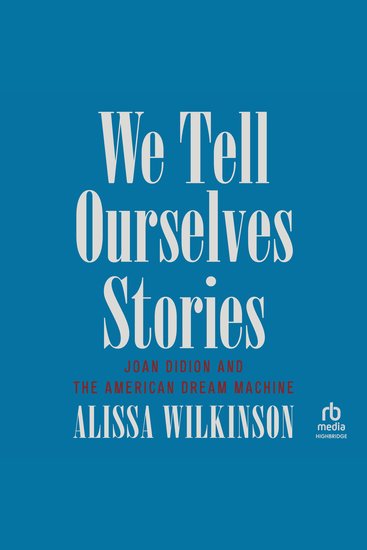
  • We Tell Ourselves Stories - Joan Didion and the American Dream Machine - cover

    We Tell Ourselves Stories - Joan...

    Alissa Wilkinson

    • 0
    • 0
    • 0
    In this riveting cultural biography, New York Times film critic Alissa Wilkinson examines Joan Didion's influence through the lens of American mythmaking. As a young girl, Didion was infatuated with John Wayne and his on-screen bravado, and was fascinated by her California pioneer ancestry and the infamous Donner Party. The mythos that preoccupied her early years continued to influence her work as a magazine writer and film critic in New York, offering glimmers of the many stories Didion told herself that would come to unravel over the course of her career. But out west, show business beckoned. 


    We Tell Ourselves Stories eloquently traces Didion's journey from New York to her arrival in Hollywood as a screenwriter at the twilight of the old studio system. She spent much of her adult life deeply embroiled in the glitz and glamour of the Los Angeles elite, where she acutely observed—and denounced—how the nation's fears and dreams were sensationalized on screen. Meanwhile, she paid the bills writing movie scripts like A Star Is Born, while her books propelled her to celestial heights of fame. 


    Peering through a scrim of celluloid, Wilkinson incisively dissects the cinematic motifs and machinations that informed Didion's writing—and how her writing, ultimately, demonstrated Hollywood's addictive grasp on the American imagination.
    Mostra libro