Join us on a literary world trip!
Add this book to bookshelf
Grey
Write a new comment Default profile 50px
Grey
Subscribe to read the full book or read the first pages for free!
All characters reduced
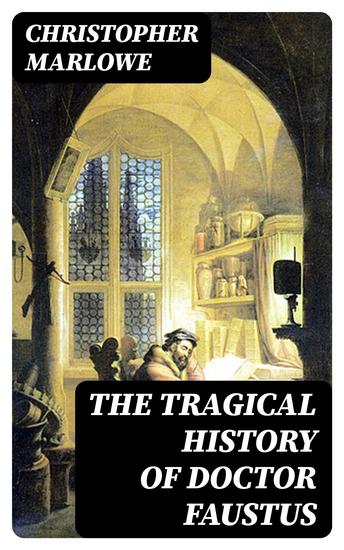
The Tragical History of Doctor Faustus - Enriched edition From the Quarto of 1616 - cover

The Tragical History of Doctor Faustus - Enriched edition From the Quarto of 1616

Christopher Marlowe

Publisher: DigiCat

  • 0
  • 0
  • 0

Summary

In "The Tragical History of Doctor Faustus," Christopher Marlowe explores the profound themes of ambition, knowledge, and the human condition through the tragic tale of Dr. Faustus, a scholar who sacrifices his soul for worldly power and knowledge. Written in blank verse, Marlowe's dramatic style captures the Renaissance tension between medieval morality and the burgeoning humanist ideals of the time. This play is imbued with allegorical elements and rich symbolism, illustrating the consequences of hubris in an age where the pursuit of knowledge was both revered and feared. Faustus's ultimate struggle serves as a cautionary tale reflecting the anxieties of an era on the brink of extraordinary intellectual growth. Christopher Marlowe (1564-1593) was a contemporary of William Shakespeare and a pioneer in early English drama. His life, marked by intrigue and mystery, mirrors the complexities of human ambition depicted in his works. Scholars suggest that Marlowe's own experiences with the ambitious and often tumultuous Elizabethan society, which valued academic prowess yet punished moral transgressions, heavily influenced his portrayal of Faustus and the pact he makes with the devil. "The Tragical History of Doctor Faustus" remains an essential read for those interested in the interplay of ambition and despair, and the ethical dilemmas of knowledge. This timeless tragedy invites readers to ponder the limits of human ambition, making it a thought-provoking addition to any literary collection.

In this enriched edition, we have carefully created added value for your reading experience:
- A succinct Introduction situates the work's timeless appeal and themes.
- The Synopsis outlines the central plot, highlighting key developments without spoiling critical twists.
- A detailed Historical Context immerses you in the era's events and influences that shaped the writing.
- An Author Biography reveals milestones in the author's life, illuminating the personal insights behind the text.
- A thorough Analysis dissects symbols, motifs, and character arcs to unearth underlying meanings.
- Reflection questions prompt you to engage personally with the work's messages, connecting them to modern life.
- Hand‐picked Memorable Quotes shine a spotlight on moments of literary brilliance.
- Interactive footnotes clarify unusual references, historical allusions, and archaic phrases for an effortless, more informed read.
Available since: 06/02/2022.
Print length: 58 pages.
Other books that might interest you

  • WHAT - The Sunday Times bestselling collection from the Poet Laureate of Punk - cover

    WHAT - The Sunday Times...

    John Cooper Clarke

    • 0
    • 0
    • 0
    Read by the author, John Cooper Clarke.'Nothing short of dazzling' – Alex TurnerDr John Cooper Clarke's dazzling, scabrous voice has reverberated through pop culture for decades, his influence on generations of performance poets and musicians plain for all to see. In WHAT, the original 'People's Poet' comes storming out of the gate with an uproarious new collection, reminding us why he is one of Britain's most beloved writers and performers. James Brown, John F. Kennedy, Jesus Christ: nobody is safe from the punk rocker's acerbic pen – and that's just the first poem.Hot on the heels of The Luckiest Guy Alive and his sprawling, encyclopaediac memoir I Wanna Be Yours, the good Doctor returns with his most trenchant collection of poems yet. Vivid and alive, with a sensitivity only a writer with a life as varied and extraordinary as Cooper Clarke's could summon, WHAT is an exceptional collection from one of our foremost satirists.
    Show book
  • vvlna - A Black Earth Tale of the Magnum Carcass - cover

    vvlna - A Black Earth Tale of...

    William Pauley III, Joseph...

    • 0
    • 0
    • 0
    Brushing away dust and dirt and sand and grit, the towering penumbra men stagger, drift, and wonder of the dark earth that surrounds them. These gods of an ancient world are simple men staring at a nothing moon struggling to invent a word to describe such darkness. The penumbra once had a word for the sun, VVLNA, but in this strange world, this black earth, there seems no use for it. And Father Jackal... every trace has vanished. The penumbra wonder if indeed they are alone here. In the distance stands The House of Wolves. There they will find answers. Some wish for food. Some wish for God. Only one will see the light.
    Show book
  • A Christmas Carol In Prose Ghost Story of Christmas - A Robin Reads Audiobook - cover

    A Christmas Carol In Prose Ghost...

    Charles Dickens

    • 0
    • 0
    • 0
    Charles Dickens' classic morality tale for Christmastide, first published in 1843. 
    Elderly miser Ebenezer Scrooge receives an unexpected visit from a series of otherworldly advisors... 
    Narrated by Robin Reads.
    Show book
  • Poetry of the senses - cover

    Poetry of the senses

    Lawrence Winkler

    • 0
    • 0
    • 0
    My love of poetry was always unrequited. As with all young boys, my English teachers forced me to memorize and recite unintelligible Shakespearean sonnets and turn bad blood into worse ink. For the next half-century, I never gave it a chance. 
    But at the age of 71, poetry came in search of me.  
    The theme of ‘senses’ made sense. As a physician and winemaker, I would try to turn exquisite impressions into exquisite expressions, solvents for the soul dipped in dyes of the heart.  
    There are 17 poems in this sense-ational collection, each with a different form, climbing higher on the sensory evolutionary ladder from the cranial nerves to the prefrontal cortex and beyond.  
    Writing them was like dropping a rose petal into an elevator shaft and waiting for the echo.  
    Read these short, jagged-edged lines as imaginary gardens of joy and pain and wonder, with a dash of dictionary.
    Show book
  • Top 10 Poets – England The - The North West - Five poems each from poets born in the English North West - cover

    Top 10 Poets – England The - The...

    William Wordsworth, Lewis...

    • 0
    • 0
    • 0
    The language of Poetry is an art that most of us attempt at some point in our lives.  Although its commonplace exposure has been somewhat marginalised in today’s often fast-paced lives we all recognise good verse that can empathise with our thoughts or open us up to experience new things in new ways, to better understand and to enjoy the many strands of our lives. 
    But finding a starting point can be overwhelming, even off-putting, so in this series we offer up our Top 10 classic poets, who brim with talent and verse, on a range of subjects and themes that we can all enjoy. 
    For centuries England has always had a leading and admired reputation for its poets and poetry.  In this volume we explore those born in the North-West who created such revered, enduring and respected verse.
    Show book
  • Messiah The - A Sacred Ecologue - Pope is one of our greatest poets here he once again demonstrates his brilliant talents - cover

    Messiah The - A Sacred Ecologue...

    Alexander Pope

    • 0
    • 0
    • 0
    Alexander Pope was born on May 21st, 1688 in London into a Catholic family.   
    His education was affected by the recent Test Acts, upholding the status of the Church of England and banning Catholics from teaching.  In effect this meant his formal education was over by the age of 12 and Pope was to now immerse himself in classical literature and languages and to, in effect, educate himself.    
    From this age too he also suffered from numerous health problems including a type of tuberculosis (Pott’s disease) which resulted in a stunted, deformed body.  Only to grow to a height of 4’ 6”, with a severe hunchback and complicated further by respiratory difficulties, high fevers, inflamed eyes and abdominal pain all of which served to further isolate him, initially, from society.  
    However his talent was evident to all. Best known for his satirical verse, his translations of Homer and the use of the heroic couplet, he is the second-most frequently quoted writer in The Oxford Dictionary of Quotations, after Shakespeare.  
    With the publication of Pastorals in 1709 followed by An Essay on Criticism (1711) and his most famous work The Rape of the Lock (1712; revised and enlarged in 1714) Pope became not only famous but wealthy.  
    His translations of the Iliad and the Odyssey further enhanced both reputation and purse.  His engagement to produce an opulent new edition of Shakespeare met with a mixed reception.  Pope attempted to "regularise" Shakespeare's metre and rewrote some of his verse and cut 1500 lines, that Pope considered to be beneath the Bard’s standard, to mere footnotes.  
    Alexander Pope died on May 30th, 1744 at his villa at Twickenham (where he created his famous grotto and gardens) and was buried in the nave of the nearby Church of England Church of St Mary the Virgin.   
    Over the years and centuries since his death Pope’s work has been in and out of favour but with this distance he is now truly recognised as one of England’s greatest poets.
    Show book