Join us on a literary world trip!
Add this book to bookshelf
Grey
Write a new comment Default profile 50px
Grey
Subscribe to read the full book or read the first pages for free!
All characters reduced
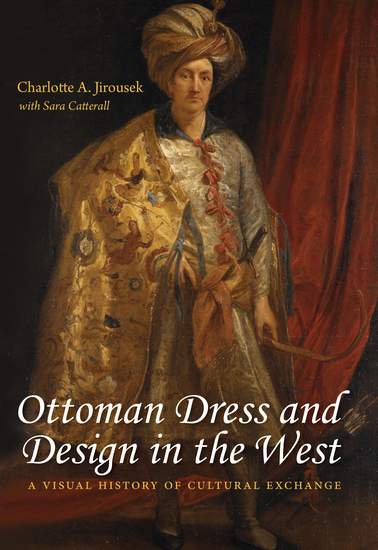
Ottoman Dress and Design in the West - A Visual History of Cultural Exchange - cover

Ottoman Dress and Design in the West - A Visual History of Cultural Exchange

Charlotte Jirousek, Sara Catterall

Publisher: Indiana University Press

  • 0
  • 1
  • 0

Summary

“This amply illustrated, attractive book is valuable for dress history scholars . . . [an] ideal textbook for courses on clothing and cultural history.” —The Journal of Dress History Ottoman Dress and Design in the West is a richly illustrated exploration of the relationship between West and Near East through the visual culture of dress. Charlotte Jirousek examines the history of dress and fashion in the broader context of western relationships with the Mediterranean world from the dawn of Islam through the end of the twentieth century. The significance of dress is made apparent by the author’s careful attention to its political, economic, and cultural context. The reader comes to understand that dress reflects not simply the self and one’s relation to community but also that community’s relation to a wider world through trade, colonization, religion, and technology. The chapters provide broad historical background on Ottoman influence and European exoticization of that influence, while the captions and illustrations provide detailed studies of illuminations, paintings, and sculptures to show how these influences were absorbed into everyday living. Through the medium of dress, Jirousek details a continually shifting Ottoman frontier that is closely tied to European and American history. In doing so, she explores and celebrates an essential source of influence that for too long has been relegated to the periphery.
Available since: 01/25/2019.
Print length: 272 pages.
Other books that might interest you

  • Redress: Ireland's Institutions and Transitional Justice - cover

    Redress: Ireland's Institutions...

    Katherine O'Donnell

    • 0
    • 0
    • 0
    How will Ireland redress its legacy of institutional abuse? What constitutes justice? What is Transitional Justice? How might democracy evolve if survivors' experiences and expertise were allowed to lead the response to a century of gender- and family separation-based abuses? REDRESS: Ireland's Institutions and Transitional Justice seeks the answers. This collection explores the ways in which Ireland – North and South – treats those who suffered in Magdalene Laundries, Mother and Baby Homes, County Homes, industrial and reformatory schools, and in a closed and secretive adoption system, over the last 100 years. The essays focus on the structures which perpetuated widespread and systematic abuses in the past and consider how political arrangements continue to exert power over survivors, adopted people and generations of relatives, as well as controlling the remains and memorialisation of the dead. As we mark the centenary of both jurisdictions on the island of Ireland, REDRESS: Ireland's Institutions and Transitional Justice forensically examines the two states' so-called 'redress' schemes and investigations, and the statements of apology that accompanied them. With diverse and interdisciplinary perspectives, this collection considers how a Transitional Justice-based, survivor-centred, approach might assist those personally affected, policy makers, the public, and academics to evaluate the complex ways in which both the Republic and Northern Ireland (and other states in a comparative context) have responded to their histories of institutionalisation and family separation. Importantly, the essays collected in REDRESS: Ireland's Institutions and Transitional Justice seek to offer avenues by which to redress this legacy of continuing harms.
    
    The Editors are donating all royalties in the name of survivors and all those affected by Ireland's carceral institutions and family separation to the charity Empowering People in Care (EPIC).
    Show book
  • Active Focus for Kids - Developing Concentration in Your Child Through Mindful Communication: A Compact Activity Guide for Parents - cover

    Active Focus for Kids -...

    Morgan Bravo

    • 0
    • 0
    • 0
    Are you tired of watching your child struggle with a lack of focus and attention? Do you wish you had the tools to help them develop the concentration skills they need to succeed in school and in life? Look no further than "Active Focus for Kids". 
    This book is the ultimate resource for parents who want to help their children improve their concentration skills. Inside, you'll find expert advice on how to communicate mindfully with your child, helping them stay focused and engaged in conversations. With the included Conversation Starters, you'll be able to initiate meaningful discussions about focus and concentration with ease. 
    But that's not all! This guide also includes a variety of fun and engaging activities that you and your child can do together at home to improve their concentration skills. From mindful breathing exercises to focus-building games, these activities are designed to help your child stay engaged and focused, while also fostering a deeper connection between you and your child. 
    So why wait? If you're ready to help your child develop the concentration skills they need to succeed, "Active Focus for Kids" is the book for you!
    Show book
  • How to Win at Feminism - The Definitive Guide to Having It All--And Then Some! - cover

    How to Win at Feminism - The...

    Anonymous

    • 0
    • 0
    • 0
    Feminism is all about demanding equality and learning to love yourself. But not too much — men hate that! From the writers of Reductress, the subversive, satirical women’s magazine read by over 2.5 million visitors a month, comes HOW TO WIN AT FEMINISM: The Definitive Guide to Having It All—And Then Some! 
    This ultimate guide to winning feminism—filled with four-color illustrations, bold graphics, and hilarious photos—teaches readers how to battle the patriarchy better than everybody else. From the herstory of feminism to how to apologize for having it all, readers will learn how to be a feminist at work and at home with tips that include: How to Do More with 33 Cents LessHow to Be Sex-Positive Even When You’re BloatedHow to Love Your Body Even Though Hers Is BetterThe 9 Circles of Hell for Women Who Don’t Help Other WomenDesigner Handbags to Hold All Your FeminismHow to Get Catcalled For Your Personality 
    HOW TO WIN AT FEMINISM is a fresh take on women's rights through the lens of the funniest women in comedy today. With this book as your wo-manual, you’ll shatter that glass ceiling once and for all (but you’ll still need to clean up the mess). 
    BONUS CONTENT- Join Mouth Time podcast hosts Quenn and Div after the audiobook for a short sesh about books and writing.
    Show book
  • Human Rights - A Universal Fight for Dignity Justice and Equality (5 in 1) - cover

    Human Rights - A Universal Fight...

    Marcus Klein

    • 0
    • 0
    • 0
    This is a bundle of 5 books, which are the following: 
    · Children's Rights: Children represent the future of our societies, yet they remain among the most vulnerable and marginalized populations worldwide. The protection of children's rights has become one of the most critical global issues in the 21st century, demanding urgent attention and action. 
    · Human Trafficking: Human trafficking is one of the gravest human rights abuses of our time, affecting millions of individuals across the globe. It is a hidden yet pervasive crime that exploits people for labor, sex, and other forms of servitude. 
    · Organ Harvesting: Organ harvesting represents one of the most pressing and disturbing ethical challenges of our time. This practice involves the removal of organs from individuals, often without consent, for transplantation or sale on the black market. While organ transplantation has revolutionized modern medicine, saving countless lives, the dark underbelly of the industry reveals a stark contrast—one where human rights are systematically violated, and vulnerable populations are exploited. 
    · Sexism: Sexism, a deeply entrenched social issue, has been pervasive throughout human history, shaping the experiences of individuals and communities across the globe. At its core, sexism refers to the belief that one gender is superior to another, typically manifesting in the unequal treatment and opportunities given to individuals based on their gender. 
    · Racism: Racism has been a persistent and destructive force throughout human history, shaping societies, cultures, and institutions in ways that continue to reverberate today. It manifests in myriad forms—through prejudice, discrimination, systemic inequities, and violence—targeting individuals and groups based on their race or ethnicity.
    Show book
  • The Yamato Period - The Dawn of Japan's Imperial Line and Cultural Foundations - cover

    The Yamato Period - The Dawn of...

    Rolf Hedger

    • 0
    • 0
    • 0
    The Yamato period, spanning from roughly the 3rd to the 7th century, marks the emergence of Japan’s first centralized political power. At the heart of this transformation was the Yamato clan, a dominant force that laid the foundation for Japan’s imperial lineage. While early Japan was fragmented into numerous rival clans, the Yamato rulers gradually asserted their dominance, forging alliances, engaging in warfare, and adopting foreign influences to solidify their authority. 
    One of the key factors behind the Yamato clan’s rise was its strategic control over fertile land in the Kinki region, an area well-suited for agriculture. This economic advantage allowed them to amass resources necessary to support a growing military force. By subjugating neighboring clans or bringing them under their influence through political marriages and alliances, the Yamato rulers expanded their reach across central and western Japan. The development of a hierarchical system of governance helped them maintain order, as powerful regional chieftains were brought into a centralized network of control under the Yamato court. 
    Military strength played a significant role in the Yamato clan’s dominance. Archaeological evidence from kofun, or large burial mounds, reveals that these early rulers possessed advanced weaponry, including iron swords and armor, likely influenced by interactions with Korea and China. These military advantages enabled them to assert control over rival clans and protect their growing territory from external threats. The construction of these elaborate burial sites also served as a demonstration of power and legitimacy, reinforcing the Yamato rulers’ status as semi-divine figures.
    Show book
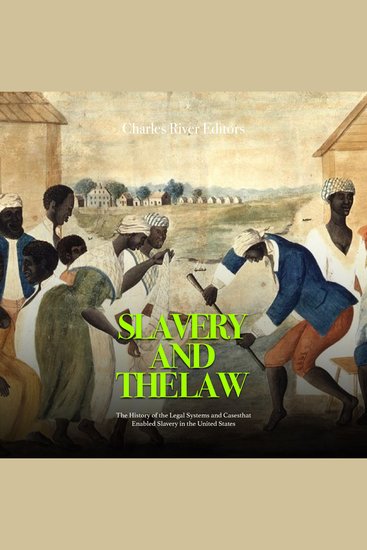
  • Slavery and the Law: The History of the Legal Systems and Cases that Enabled Slavery in the United States - cover

    Slavery and the Law: The History...

    Editors Charles River

    • 0
    • 0
    • 0
    Ultimately, while the institution of slavery existed, the principle of protecting individual property rights prevailed, alongside a necessary acknowledgment that slaves were property first and sentient human beings second. It also required a great deal of careful drafting and verbal contortions to construct the Constitution for the young republic that supported those principles of freedom and equality while at the same time facilitating the perpetuation of the “peculiar institution.” 
    	It was not until 1865, with the adoption of the Thirteenth Amendment, the instrument that abolished slavery, that any overt mention of slavery found its way into the Constitution. Before that, direct reference was always carefully avoided, although, at the same time, unmistakably alluded to. The document is filled with provisions specific to slavery, protecting and codifying it on a federal level, without anywhere making direct or overt mention of it. By 1788, when the Constitution of the United States was formally adopted, slavery had been a fact of life in the colonies for 169 years, since the first recorded arrival of black Africans in Virginia in 1619. At that time, around the institution, had evolved a system of laws that were derived in the main from English common law. The irony here is that the regime of English common law was at its root hostile to the principle of human bondage, had no tradition of slavery to call upon, and was desirous on the whole to avoid making any overt judgment or pronouncement on the matter. It, therefore, fell to colonial lawmakers to resolve that essential contradiction between treating Africans as either people or property or both. This tension remained in play throughout the era of slavery in English-speaking America until the matter was finally resolved by the outcome of the American Civil War.
    Show book