Join us on a literary world trip!
Add this book to bookshelf
Grey
Write a new comment Default profile 50px
Grey
Subscribe to read the full book or read the first pages for free!
All characters reduced
Redress: Ireland's Institutions and Transitional Justice - cover

Redress: Ireland's Institutions and Transitional Justice

Katherine O'Donnell

Publisher: UCD Press

  • 0
  • 0
  • 0

Summary

How will Ireland redress its legacy of institutional abuse? What constitutes justice? What is Transitional Justice? How might democracy evolve if survivors' experiences and expertise were allowed to lead the response to a century of gender- and family separation-based abuses? REDRESS: Ireland's Institutions and Transitional Justice seeks the answers. This collection explores the ways in which Ireland – North and South – treats those who suffered in Magdalene Laundries, Mother and Baby Homes, County Homes, industrial and reformatory schools, and in a closed and secretive adoption system, over the last 100 years. The essays focus on the structures which perpetuated widespread and systematic abuses in the past and consider how political arrangements continue to exert power over survivors, adopted people and generations of relatives, as well as controlling the remains and memorialisation of the dead. As we mark the centenary of both jurisdictions on the island of Ireland, REDRESS: Ireland's Institutions and Transitional Justice forensically examines the two states' so-called 'redress' schemes and investigations, and the statements of apology that accompanied them. With diverse and interdisciplinary perspectives, this collection considers how a Transitional Justice-based, survivor-centred, approach might assist those personally affected, policy makers, the public, and academics to evaluate the complex ways in which both the Republic and Northern Ireland (and other states in a comparative context) have responded to their histories of institutionalisation and family separation. Importantly, the essays collected in REDRESS: Ireland's Institutions and Transitional Justice seek to offer avenues by which to redress this legacy of continuing harms.

The Editors are donating all royalties in the name of survivors and all those affected by Ireland's carceral institutions and family separation to the charity Empowering People in Care (EPIC).
Available since: 03/01/2024.
Print length: 200 pages.


Other books that might interest you

  • Light in the Dark Luz en lo Oscuro - Rewriting Identity Spirituality Reality - cover

    Light in the Dark Luz en lo...

    Gloria E. Anzaldúa

    • 0
    • 0
    • 0
    Written during the last decade of her life, Light in the Dark represents the culmination of Gloria E. Anzaldúa's mature thought and the most comprehensive presentation of her philosophy. Throughout, Anzaldúa weaves personal narratives into deeply engaging theoretical readings to comment on numerous contemporary issues—including the September 11 attacks, neocolonial practices in the art world, and coalitional politics. She valorizes subaltern forms and methods of knowing, being, and creating that have been marginalized by Western thought, and theorizes her writing process as a fully embodied artistic and political practice. Resituating Anzaldúa's work within Continental philosophy and new materialism, Light in the Dark takes Anzaldúan scholarship in new directions.
    Show book
  • World War II in 1945 - The History of the Battles Fought During the War’s Final Year - cover

    World War II in 1945 - The...

    Editors Charles River

    • 0
    • 0
    • 0
    After resisting the German attack during the Battle of the Bulge, the Allied armies began advancing, and with that, the race to Berlin was truly on. While much has been written of the Battle of the Bulge, Okinawa, Midway, Stalingrad, and many other conflicts of the Second World War, the Battle for Berlin has remained in the shadows for many historians. Its importance in toppling Hitler cannot be denied, despite the fact that some thought its strategic value unnecessary to the war itself. The capture of the city and the red Soviet banner hanging victorious over the Reichstag is one of history’s most famous (an ominous) images. In the weeks it took for the Battle of Berlin to be fought, an American president passed away, a British Prime Minister had to make concessions he did not desire, a Russian leader fought his way into Western Europe to stay, and a German one took his own life. The battle’s implications would be felt for the next 50 years. 
    The Battle of Iwo Jima, code name “Operation Detachment,” is more of a misnomer than anything. It was fought as part of a large American invasion directed by steps toward the Japanese mainland, and it was more like a siege that lasted 36 days from February-March 1945, with non-stop fighting every minute. In fact, the iconic flag-raising photo was taken just four days into the battle, and as that picture suggests, the battle was not a pristine tactical event but an unceasing horror with no haven for protection.  
    Okinawa witnessed every conceivable horror of war both on land and at sea. American ground forces on Okinawa had to deal with bad weather (including a typhoon), anti-tank moats, barbed wire, mines, caves, underground tunnel networks, and fanatical Japanese soldiers who were willing to use human shields while fighting to the death. Allied naval forces supporting the amphibious invasion had to contend with Japan’s notorious kamikazes, suicide pilots who terrorized sailors.
    Show book
  • Tlaloc: The History of the Aztec God of Rain and Giver of Life - cover

    Tlaloc: The History of the Aztec...

    Charles River Editors

    • 0
    • 0
    • 0
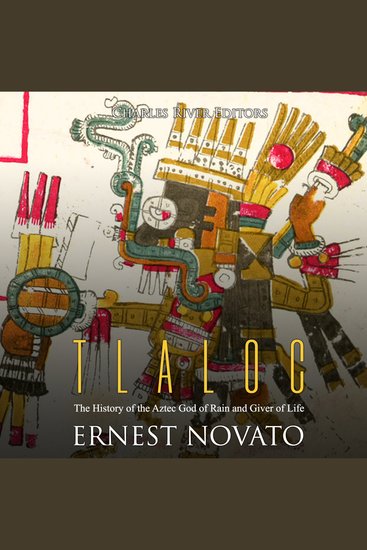
    One of the reasons for the prevalence of Tlaloc in the Valley of Mexico is that in the semi-arid climate, water was a powerful daily symbol. Although there were no naturally occurring water connections to the sea, the high altitude of the mountains and volcanoes that surrounded it caught the rain water well and formed five important lakes: Xochimilco, Xaltocan, Zumpango, Chalco and Texcoco. As the largest, Texcoco was where the Aztecs eventually built their capital city Tenochtitlan. Since this was not a desert culture, their god Tlaloc was not just a reflection of an opposite extreme they desired; instead, he was a complex god that reflected the duality of water as both a boon and a force for destruction. From his home in Tlalocan, Tlaloc was able to send good and bad waters to the people of the Valley of Mexico and beyond. He was the lord of the chthonic powers of Mexico even as far south as the Maya, who called him Chaac and connected him with warfare and agriculture much the same way the Aztec did. 
    What is known today is that Tlaloc was the god who granted good harvests and caused famines. The Aztec tell the story of Tlaloc blessing their rise to regional dominance by sending a famine to the Toltec, and his duality of good waters vs. bad waters was a product of the largely two-season system in Mexico. This was also one reason for his role in warfare since the Aztec focused on agriculture during his “wet” season and marched off to conquest if they had received his blessings. He was an earth deity, connected with aquatic animals and underground streams, and therefore also a god connected with fertility. This is reflected through his association with his wife, Xochiquetzal, the goddess of flowers, pleasure, young female sexuality and pregnancy, in the earlier myths. 
    All in all, Tlaloc is one of the most important and least well-known gods from an outsider’s perspective. 
    Show book
  • Operation Bowler - The Audacious Allied Bombing of Venice during World War II - cover

    Operation Bowler - The Audacious...

    Jonathan Glancey

    • 0
    • 0
    • 0
    March 21st, 1945. Bursting through a hazy sky, dozens of Allied fighters and bombers sweep over German-occupied Venice.Their mission: destroy Germany’s strategic outposts nestled along the port, while leaving the floating city unscathed.As bombs rained down upon Europe, flattening city after city, Venice—La Serenissima; home of Titian and Veronese; immortalized in the serene landscapes of Canaletto—remained sacrosanct. Its artistic and architectural treasure too considerable, too precious to risk destruction.But as the push up through Italy reached its final, grueling months, the Allies were confronted with a terrible dilemma. The ancient city of Venice was now closer and closer to the line of fire. As casualties mounted, the value of art—of history—seemed diminished; just a month earlier Allied bombers had reduced the ancient hilltop abbey of Monte Cassino to a stony husk.In this vivid narrative, bestselling author Jonathan Glancey reveals the thrilling story of Operation Bowler. Following the exploits of audacious Wing Commander George Westlake and his elite team, Operation Bowler explores how an unlikely squad of pilots executed perhaps the most meticulous and complex air raid of World War II, sparing not only Venice but also its people.
    Show book
  • Women With ADHD - A Life-Changing Guide to Embrace the Hidden Struggles of Living with ADHD – Includes Debunked Myths and 15 Effective Tips to Positively Transform Your Life - cover

    Women With ADHD - A...

    Roberta Sanders

    • 0
    • 0
    • 0
    Still struggling with the effects of having ADHD? 
    Do you …? 
    - Do you often feel as if life is out of control, and that it’s impossible to meet demands? 
    - Do you feel overwhelmed in stores, at the office, or at parties? Is it impossible for you to shut out sounds and distractions that don’t bother others? 
    - Do you often shut down in the middle of the day, feeling assaulted? Do requests for “one more thing” put you over the top emotionally? 
    - Do you have trouble balancing your checkbook? 
    - Do you feel like you’re always at one end of a deregulated activity spectrum — either a couch potato or a tornado? 
    - Do you feel that you have better ideas than other people but are unable to organize them or act on them? 
    - Do you start each day determined to get organized, and end each day feeling defeated? 
    - Do you despair of ever fulfilling your potential and meeting your goals? 
    Don’t let ADHD symptoms hold you back. Gain the skills you need to achieve your goals with help from this book 
    Here's a little sneak preview of what you’ll get: 
    - The 15 most effective methods for coping with ADHD 
    - 6 Executive Function Strategies that Really Work for People with ADHD 
    - How to Stop Losing Things 
    - The common signs you need to know 
    - What Happens to Women with ADHD left undiagnosed 
    - Gender differences in ADHD: Why women struggle more 
    - ADHD and Relationships 
    - ADHD and Sleep Problems 
    - ADHD and Emotional Dysregulation 
    - Effects of ADHD on Sexuality 
    - Best Jobs for Women with ADHD 
    - How to improve focus in women with ADHD 
    - Life-management Tools for Women with ADHD 
    It's time to change your life! Learn how to turn your fear and self-doubt into confidence and self-love
    Show book
  • The Arabian Art of Taming and Training Wild and Vicious Horses - cover

    The Arabian Art of Taming and...

    P. R. Kincaid

    • 0
    • 0
    • 0
    Back in the day before automobiles, a good horse trainer and veterinarian was the equivalent of “Mr Goodwrench”. A badly behaving or unhealthy equine was equivalent to breaking down on the highway or running out of gas on a lonely stretch of highway somewhere in Utah. My sources tell me that most of the training methods are ok, but stay away from the medical tips unless you are prepared to become the poster boy or girl for the local SPCA. Listen with tongue in cheek, and check with a professional before attempting any of these techniques on a real animal.Mike Vendetti, narrator
    Show book