Join us on a literary world trip!
Add this book to bookshelf
Grey
Write a new comment Default profile 50px
Grey
Subscribe to read the full book or read the first pages for free!
All characters reduced
Dombey and Son - cover

Dombey and Son

Charles Dickens

Publisher: Open Road Media

  • 0
  • 0
  • 0

Summary

A rich man’s obsessive search for an heir blinds him to his own child in this classic Victorian novel of greed, pride, and family ties.  For shipping magnate Paul Dombey, business is the essence of life. He runs his firm and his family with the same calculating efficiency. Showering attention on his sickly son, who is destined to take over the family business, Mr. Dombey diligently ignores his daughter, Florence. In his unloving eyes, she is nothing more than a “base coin that couldn’t be invested.”  In time, despite her father’s neglect, Florence grows into a capable and strong-willed woman. Dombey’s callousness, meanwhile, sets in motion his own eventual downfall. In this classic tale of ambition, pride, and redemption, Charles Dickens presents a rich and sprawling portrait of a man, his dysfunctional family, and the complex times in which they lived.
Available since: 11/29/2022.
Print length: 1745 pages.

Other books that might interest you

  • The Murders in the Rue Morgue - cover

    The Murders in the Rue Morgue

    Sampi Books, Edgar Allan Poe

    • 0
    • 0
    • 0
    "The Rue Morgue Murders" is a pioneering tale in the mystery genre, in which detective Auguste Dupin uses his acute observation and logic to solve a brutal double murder in Paris, revealing a surprising and unusual outcome.
    Show book
  • Maxim Gorky - A Short Story Collection - Nominated for the Nobel prize in literature 5 times Gorky was a truly special short story writer we implore you to see why in this collection - cover

    Maxim Gorky - A Short Story...

    Maxim Gorky

    • 0
    • 0
    • 0
    Alexei Maximovich Peshkov was born on 28th March 1868, in Nizhny Novgorod, Russia. 
     
    Better known as Maxim Gorky he was orphaned at 11 and ran away from home at 12.  At 19 he had already attempted suicide and thereafter travelled, by foot, across the Russian Empire for 5 years. 
     
    His first book ‘Essays & Stories’ in 1898 was a sensation and so began a long career as an author of short stories, novels and plays.  Gorky saw writing as a moral and political act that would help to change the unjust world around him.  He was an ardent early advocate of the emerging Marxist movement and publicly opposed the Tsarist regime leading several times to his arrest.  
     
    In 1904 he began his own theatre but the censor banned every play and Gorky was forced to abandon the project. 
     
    But Gorky was a financially successful author, editor, and playwright and gave monies to political parties as well as for civil rights and social reform.  The brutal shooting of workers, which set in motion the Revolution of 1905, pushed Gorky more decisively toward radical solutions.  
     
    In 1906 he went to the United States to raise funds for the Bolsheviks. Those experiences including a scandal over travelling with his lover and not his wife deepened his contempt for the ‘bourgeois soul.’ 
     
    Gorky now moved to Capri in Italy, both for health reasons and to escape the increasingly repressive times in Russia.  
     
    An amnesty for the 300th anniversary of the Romanov dynasty saw him return to Russia in 1914. His politics remained close to the Bolshevik cause.  But soon, after the 1918 revolution, his essays referred to Lenin as a tyrant for his senseless arrests and repression.  He was soon appealing to the outside world for food aid after the catastrophic crop failure. 
     
    In October 1921 Gorky returned to Italy, now in Fascist hands, and settled in Sorrento until 1932.  His health worsened with the onset of tuberculosis. 
     
    He wrote several successful books there but now decided to find an understanding with the communist regime. Stalin invited him home and his return was hailed as a major propaganda victory.  He was decorated with the Order of Lenin, and a province, a park, and various streets re-named in his honour. 
     
    But he had his faults too.  In 1933, Gorky co-edited a book on the White Sea-Baltic Canal and denied even a single prisoner died during its construction, but thousands had. As well, knowing that some Nazis were homosexual, a phrase was attributed to him that said ‘exterminate all homosexuals and fascism will vanish’.  Although he was himself was quoting another he was decidedly homophobic. 
     
    With the increase of Stalinist repression in 1935 Gorky was placed under unannounced house arrest. 
     
    Maxim Gorky died on the 18th June 1936 from pneumonia.  He was 68. 
     
    Stalin and Molotov were among those who carried Gorky's urn of ashes at his funeral. 
     
    01 - Maxim Gorky - A Short Story Collection - An Introduction 
    02 - Twenty-Six Men and a Girl by Maxim Gorky 
    03 - One Autumn Night by Maxim Gorky 
    04 - In The Steppe by Maxim Gorky 
    05 - Her Lover by Maxim Gorky 
    06 - Chelkash - Part 1 by Maxim Gorky 
    07 - Chelkash - Part 2 by Maxim Gorky 
    08 - Chelkash - Part 3 by Maxim Gorky
    Show book
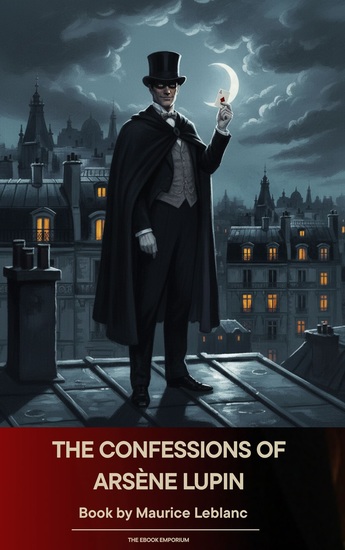
  • The Confessions of Arsène Lupin - cover

    The Confessions of Arsène Lupin

    Maurice Leblanc

    • 1
    • 0
    • 0
    "I have never been more myself than when I was someone else."
    
    In The Confessions of Arsène Lupin, the "Gentleman Burglar" becomes his own biographer. This collection of nine thrilling stories takes readers behind the scenes of Lupin's most celebrated ruses. From the mysterious "Sign of the Shadow" to the high-stakes drama of "The Invisible Prisoner," Lupin recounts his adventures with a mixture of wit, arrogance, and surprising sentimentality. We see him not just as a criminal mastermind, but as a man who values honor, rescues the innocent, and treats every heist as a work of fine art.
    
    A Deeper Look at the Legend: These stories provide a rare look into Lupin's moral code and his past. Whether he is returning a stolen heirloom to a family in need or outmaneuvering his lifelong rival, Inspector Ganimard, Lupin reveals the motivations that drive his life of crime. It is in these "confidences" that we learn what truly makes a gentleman thief tick.
    
    Masterful Short-Form Mystery: Leblanc is at the height of his powers here, crafting tight, fast-paced narratives filled with secret codes, hidden trapdoors, and brilliant deductive reasoning. Each story is a self-contained puzzle that invites the reader to try and outguess the master before the final reveal.
    
    Why It Is a Must-Read: For fans of the Netflix series or classic mystery enthusiasts, this book is essential. It serves as the perfect entry point for newcomers and a deep dive for longtime fans into the psychology of a character who remains as charming and mysterious today as he was over a century ago.
    
    Hear the truth from the master himself. Purchase "The Confessions of Arsène Lupin" today.
    Show book
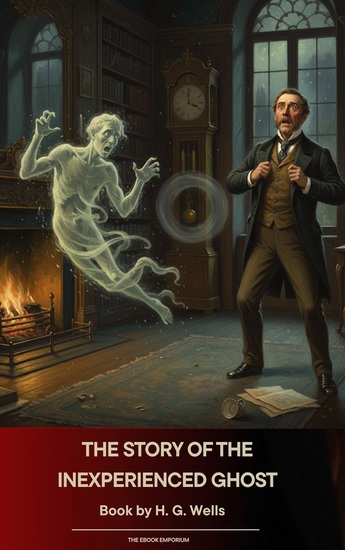
  • The Story of the Inexperienced Ghost - cover

    The Story of the Inexperienced...

    H. G. Wells

    • 0
    • 0
    • 0
    "He wasn't a terrifying ghost; he was a pathetic one. He had forgotten how to haunt."
    
    In the cozy, smoke-filled atmosphere of the Meridian Club, a man named Clayton recounts a remarkable encounter. He recently found himself face-to-face with a ghost—not a shrieking specter, but a shy, stuttering young man who had died of "inanition" and was now failing miserably at being scary. The ghost has forgotten the complex "passes" and gestures required to disappear back into the spirit world. As Clayton attempts to help the spirit regain his "spectral footing," the story takes a turn from the humorous to the chillingly profound, questioning the thin veil between the living and the dead.
    
    A Satire of the Gothic Tradition: Wells subverts every trope of the 19th-century ghost story. His phantom is a "low-grade" spirit who is self-conscious about his lack of haunting skills. By treating the afterlife as a bureaucratic or technical skill that one must master, Wells brings a grounded, modern sensibility to the supernatural, making the ghost's plight relatable and strangely human.
    
    The Fatal Curiosity: The narrative tension peaks when Clayton decided to demonstrate the ghost's secret gestures to his skeptical friends. Wells masterfully builds a sense of dread as the "inexperienced" ghost's struggle becomes a real-world danger. It is a cautionary tale about the arrogance of the living when dealing with the mysteries of the beyond.
    
    Discover the lighter—and darker—side of the supernatural. Purchase "The Story of the Inexperienced Ghost" today and master the pass.
    Show book
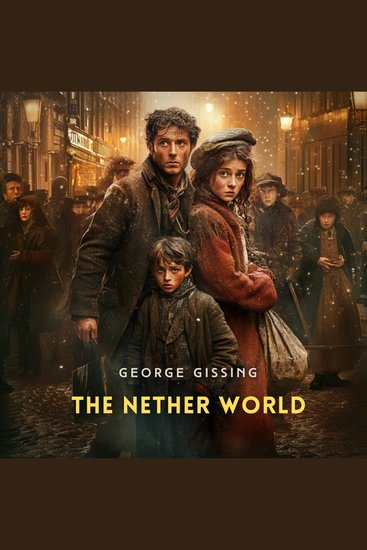
  • The Nether World - cover

    The Nether World

    George Gissing

    • 0
    • 0
    • 0
    The Nether World by George Gissing is a gritty portrayal of poverty and resilience in the slums of Victorian London. The novel follows the lives of the Hewett family, who struggle to survive amidst squalor and despair in a bleak underworld of urban destitution. Sidney Kirkwood, a compassionate figure, becomes entangled in their plight, particularly drawn to Clara Hewett, whose dreams of escape are stifled by her harsh surroundings. Meanwhile, the enigmatic Jane Snowdon endures exploitation and hardship, embodying the vulnerability of women in such conditions. Gissing unflinchingly examines the dehumanizing effects of poverty, the moral compromises it forces, and the elusive hope for redemption. While love and ambition flicker briefly, they are often crushed by circumstance. The Nether World is a powerful critique of societal neglect and class inequality, blending stark realism with moments of quiet dignity. A somber yet deeply human work, it captures both the struggles and resilience of those trapped in life’s margins.
    Show book
  • Battle of Life The - A Love Story (Unabridged) - cover

    Battle of Life The - A Love...

    Charles Dickens

    • 0
    • 0
    • 0
    The Battle of Life: A Love Story is an 1846 novel by Charles Dickens. It is the fourth of his five "Christmas Books", coming after The Cricket on the Hearth and followed by The Haunted Man and the Ghost's Bargain. The setting is an English village that stands on the site of an historic battle. Some characters refer to the battle as a metaphor for the struggles of life, hence the title. Battle is the only one of the five Christmas Books that has no supernatural or explicitly religious elements. (One scene takes place at Christmas time, but it is not the final scene.) The story bears some resemblance to The Cricket on the Hearth in two respects: it has a non-urban setting, and it is resolved with a romantic twist. It is even less of a social novel than is Cricket. As is typical with Dickens, the ending is a happy one.
    Show book