Join us on a literary world trip!
Add this book to bookshelf
Grey
Write a new comment Default profile 50px
Grey
Subscribe to read the full book or read the first pages for free!
All characters reduced
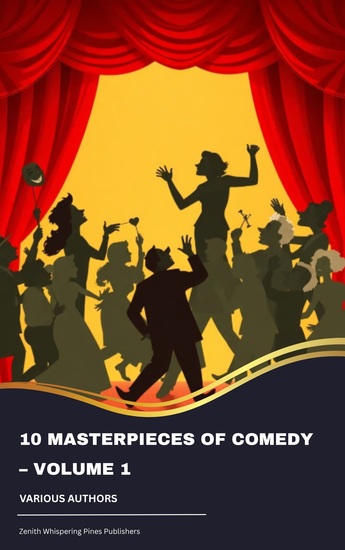
10 Masterpieces of Comedy – Volume 1 - cover

10 Masterpieces of Comedy – Volume 1

Charles Dickens, Mark Twain, Jane Austen, Jonathan Swift, Jerome Klapka, Edwin Abbott Abbott

Publisher: Zenith Whispering Pines Publishers

  • 0
  • 0
  • 0

Summary

Laughter Through the Ages: The Ultimate Curated Collection of Wit and Satire.

From biting social commentary to high-energy slapstick, 10 Masterpieces of Comedy – Volume 1 brings together essential works that have defined humor throughout literary history. This anthology serves as a grand tour of the comedic mind, featuring masterpieces that perfected the art of the "laugh out loud" moment while skewering the absurdities of human nature.

Inside this volume, you will discover:

Iconic Social Satire: Works that brilliantly lampoon the manners and hypocrisies of their time.

Timeless Romantic Comedies: Stories of mistaken identities, magical mishaps, and the chaotic nature of love.

Masterful Farce: Fast-paced plotting and hilarious situations that have kept audiences laughing for generations.

Sharp Literary Wit: Brilliant dialogue and observational humor from history's most celebrated writers.

Whether you are a student of drama, an aspiring writer, or simply someone who appreciates a well-timed jest, this collection offers a panoramic view of how comedy has evolved—and how little human folly has changed. These ten masterpieces continue to entertain, proving that true wit is timeless.

Don't miss the curtain call. Buy "10 Masterpieces of Comedy" today and own a premier library of wit.
Available since: 12/18/2025.
Print length: 2947 pages.
Other books that might interest you

  • Agnes Grey - cover

    Agnes Grey

    Anne Brontë

    • 0
    • 0
    • 0
    One young woman's quiet strength becomes her greatest rebellion.
    Agnes Grey accepts a position as a governess hoping to support her struggling family—but instead enters a world of cruelty, privilege, and loneliness. Surrounded by unruly children, indifferent parents, and a society that sees her as invisible, Agnes must fight to preserve her dignity and compassion. When an unexpected kindness blossoms into something deeper, she discovers that life's greatest trials can also reveal its greatest joys.
    
    Praised as "one of the most honest and heartfelt novels of its time," Anne Brontë's masterpiece is celebrated for its realism, emotional clarity, and timeless message of integrity and hope.
    
    If you love character-driven stories, slow-burn romance, and classics that touch the heart, this novel will stay with you long after the final page.
    
    Begin reading now—and experience a journey of courage, resilience, and quiet triumph.
    Show book
  • The Picture of Dorian Gray - cover

    The Picture of Dorian Gray

    Oscar Wilde

    • 0
    • 0
    • 0
    "It is your best work, Basil, the best thing you have ever done," said Lord Henry, languidly. "You must certainly send it next year to the Grosvenor. The Academy is too large and too vulgar. The Grosvenor is the only place."    "I don't think I will send it anywhere," he answered, tossing his head back in that odd way that used to make his friends laugh at him at Oxford. "No: I won't send it anywhere."    Lord Henry elevated his eyebrows, and looked at him in amazement through the thin blue wreaths of smoke that curled up in such fanciful whorls from his heavy opium-tainted cigarette. "Not send it anywhere? My dear fellow, why? Have you any reason? What odd chaps you painters are! You do anything in the world to gain a reputation. As soon as you have one, you seem to want to throw it away. It is silly of you, for there is only one thing in the world worse than being talked about, and that is not being talked about. A portrait like this would set you far above all the young men in England, and make the old men quite jealous, if old men are ever capable of any emotion."    "I know you will laugh at me," he replied, "but I really can't exhibit it. I have put too much of myself into it."    Lord Henry stretched his long legs out on the divan and shook with laughter.  "Yes, I knew you would laugh; but it is quite true, all the same."    "Too much of yourself in it! Upon my word, Basil, I didn't know you were so vain; and I really can't see any resemblance between you, with your rugged strong face and your coal-black hair, and this young Adonis, who looks as if he was made of ivory and rose-leaves. Why, my dear Basil, he is a Narcissus, and you--well, of course you have an intellectual expression, and all that.    But beauty, real beauty, ends where an intellectual expression begins. Intellect is in itself an exaggeration, and destroys the harmony of any face. The moment one sits down to think, one becomes all nose, or all forehead, or something horrid. Look at the successful men in any of the learned professions. How perfectly hideous they are! Except, of course, in the Church. But then in the Church they don't think. A bishop keeps on saying at the age of eighty what he was told to say when he was a boy of eighteen, and consequently he always looks absolutely delightful. Your mysterious young friend, whose name you have never told me, but whose picture really fascinates me, never thinks. I feel quite sure of that. He is a brainless, beautiful thing, who should be always here in winter when we have no flowers to look at, and always here in summer when we want something to chill our intelligence. Don't flatter yourself, Basil: you are not in the least like him."
    Show book
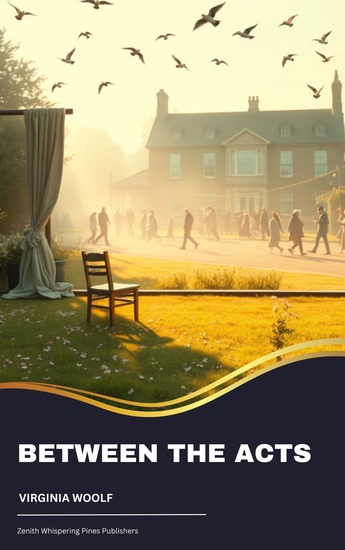
  • Between the Acts - cover

    Between the Acts

    Virginia Woolf

    • 0
    • 0
    • 0
    One summer day. One village pageant. One world quietly holding its breath before everything changes.
    In her final novel, Virginia Woolf captures the fragile beauty of ordinary lives on the eve of World War II. As neighbors gather for a village play, their private fears, desires, and regrets shimmer beneath the surface. Moments of humor, longing, and reflection weave together as the pageant unfolds—revealing how art mirrors life, and how people seek meaning when the future feels uncertain.
    
    Celebrated as "a haunting, luminous farewell from one of literature's greatest voices," this novel blends poetry, introspection, and quiet emotional power. Readers treasure it for its atmosphere, depth, and Woolf's unmatched ability to illuminate the inner world.
    
    If you love lyrical writing, character-driven stories, and classics that linger in the mind, this masterpiece will speak to you long after the last line.
    
    Open the pages—and step into Woolf's delicate, unforgettable portrait of a world between moments.
    Show book
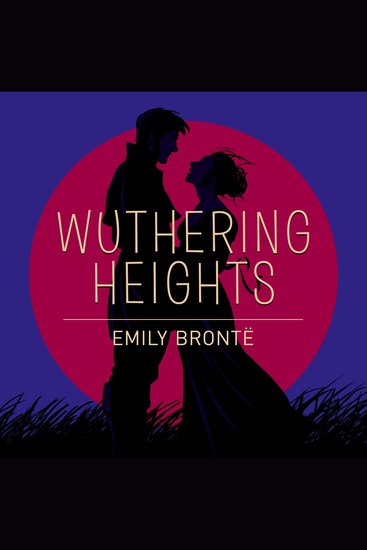
  • Wuthering Heights - cover

    Wuthering Heights

    Emily Brontë

    • 0
    • 0
    • 0
    Emily Bronte's brutally passionate poetic masterpiece is about doomed love on the bleak Pennine moors. This haunting tale of uncontrolled, violent passion between the wilful Catherine Earnshaw and the wild, dark-natured Heathcliff has gripped readers since it was first published in 1847. An extraordinary novel in the Victorian Gothic tradition that every reader will love!
    Show book
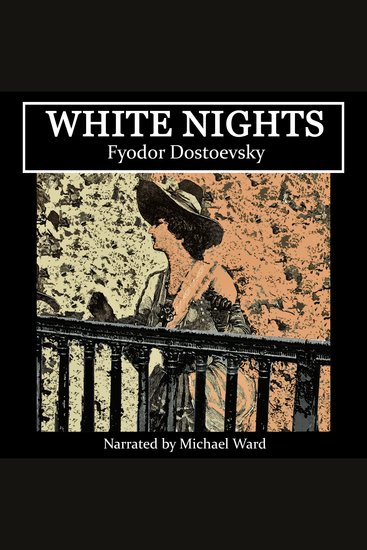
  • White Nights - cover

    White Nights

    Fyodor Dostoevsky

    • 0
    • 0
    • 0
    White Nights, a tale of lonelyness by Fyodor Dostoevsky.  
    Like many of Dostoevsky's stories, "White Nights" is told in the first person by a nameless narrator, a young man living in Saint Petersburg who suffers from loneliness. He gets to know and falls in love with a young woman, but the love remains unrequited as the woman misses her lover. How will it end? 
     Narrated by Michael Ward.
    Show book
  • My Platonic Sweetheart - cover

    My Platonic Sweetheart

    Mark Twain

    • 0
    • 0
    • 0
    "Friendship is the only cement that will ever hold the world together."
    
    Mark Twain's short story, My Platonic Sweetheart, is a charming exploration of friendship and love in which the main character (believed to represent Twain) dreams of the same woman repeatedly throughout his lifetime. Across five dreams, the narrator and the woman take on different names, and the woman's appearance changes while their ages (he, seventeen, she, fifteen) remain the same. They never fail to recognise each other and their relationship always embodies the same deep, innocent affection. The story explores themes of memory, longing, and the timeless nature of platonic love.
    Samuel Langhorne Clemens, better known by his pen name Mark Twain (1835–1910), grew up along the banks of the Mississippi River, and his early experiences inspired many of his most famous works, including The Adventures of Tom Sawyer and Adventures of Huckleberry Finn. Widely celebrated as America's greatest humorist, Twain captured the spirit of a rapidly changing nation, and his sharp wit, keen eye for human nature, and gift for storytelling made him not only a beloved novelist but also a popular lecturer and essayist.
    
    Twain's innovative style, character-driven storytelling and ability to interweave humour with profound social critique laid the groundwork for modern American literature and has inspired countless authors, including Ernest Hemingway and F. Scott Fitzgerald. Indeed, Hemingway famously declared that "all modern American literature comes from one book by Mark Twain called Huckleberry Finn."
    Show book