Join us on a literary world trip!
Add this book to bookshelf
Grey
Write a new comment Default profile 50px
Grey
Subscribe to read the full book or read the first pages for free!
All characters reduced
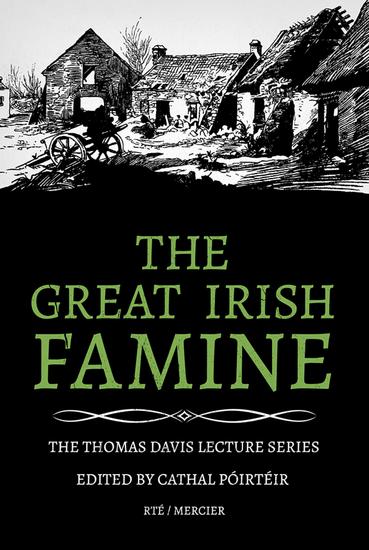
The Great Irish Famine - cover

The Great Irish Famine

Cathal Poirteir

Publisher: Mercier Press

  • 0
  • 0
  • 0

Summary

This is the most wide-ranging series of essays ever published on the Great Irish Famine, and will prove of lasting interest to the general reader. Leading historians, economists and geographers – from Ireland, Britain and the United States – have assembled the most up-to-date research from a wide spectrum of disciplines including medicine, folklore and literature, to give the fullest account yet of the background and consequences of the Famine. Contributors include Dr Kevin Whelan, Professor Mary Daly, Professor James Donnelly and Professor Cormac Ó Gráda. The Great Irish Famine was the first major series of essays on the Famine published in Ireland for almost fifty years.
Available since: 08/15/2023.
Print length: 283 pages.

Other books that might interest you

  • Our New World - A Journey to People and Places Building the Future Today - cover

    Our New World - A Journey to...

    Florian Hoffmann

    • 0
    • 0
    • 0
    The pandemic, the climate crisis, work – today's world isn't short of challenges. Social injustice. And technology that is slowly but steadily creeping into every aspect of our lives. But what if the answers to the big questions aren't found in simplistic technocracy or a mood of the-end-is-nigh?
    
    Florian Hoffmann is a founder and social entrepreneur. For years, he has been talking to, and working with, people around the world who, like himself, want to make a contribution to a more sustainable, fairer and positive future.
    
    In Our New World (Die Neue Welt), he takes the reader on an expedition to the places and people that have already arrived in this future: young entrepreneurs, innovators, founders and leaders who are courageously shaping a better world.
    
    Florian Hoffmann demonstrates the huge potential for creating a better future today. He visits places and people around the world, where courage and imagination have already paved the way for the world of tomorrow. Beacons for the way ahead, these role models encourage readers to take their own steps into the New World. Many are breaking down the border between earning money and making a positive contribution, and are asking, more generally: What impact can I have, now and in the future? How can my success offer others new chances?
    
    The journalist Saba is fighting for girls' and women's right in Pakistan. Niall dumps his high-flying job to find a solution for microplastics pollutions. Lily wants to inspire people to take up life-long learning – and develops scenarios for what future jobs might look like. These are some of the many diverse voices who believe in a better future.
    Show book
  • Leading Like the Swamp Fox - The Leadership Lessons of Francis Marion - cover

    Leading Like the Swamp Fox - The...

    Kevin Dougherty, Steven D. Smith

    • 0
    • 0
    • 0
    A study of how Francis Marion delivered the leadership and strategy to defeat the British in the South Carolina Lowcountry campaigns. “Dougherty and Smith have produced an excellent study of Marion as a commander for history enthusiasts, their work deserves to garner equal attention from those in the business community, business schools, public sector management, and the military.”—Journal of the American RevolutionFrancis Marion is certainly the stuff of which legends are made. His nickname “The Swamp Fox,” bestowed upon him by one of his fiercest enemies, captures his wily approach to battle. The embellishment of his exploits in Parson Weems’s early biography makes separation of fact from fiction difficult, but certainly represents the awe, loyalty, and attraction he produced in those around him. His legacy is enshrined in the fact that more places in the United States have been named after him than any other soldier of the American Revolution, with the sole exception of George Washington. Even today’s U.S. Army Rangers include Marion as one of their formative heroes. Surely much about leadership can be learned from such an intriguing personality.Leading like the Swamp Fox: The Leadership Lessons of Francis Marion unlocks those lessons. Divided into three parts, the book first presents the historical background and context necessary to appreciate Marion’s situation. The main body of the book then examines Marion’s leadership across eight categories, with several vignettes demonstrating Marion’s competency. The summary then captures some conclusions about how leadership impacted the American Revolution in the South Carolina Lowcountry. An appendix provides some information about how the reader might explore those physical reminders of Marion and his exploits that exist today. Readers interested in history or leadership, or both, will all find something for them in Leading like the Swamp Fox.“Useful to students of leadership, or as an introduction to the Southern Campaign and to Marion…. [A] good treatise on leadership, and its overview of the Southern Campaign is an ideal introduction to the topic.”—Journal of Military History
    Show book
  • Untangling Critical Race Theory - What Christians Need to Know and Why It Matters - cover

    Untangling Critical Race Theory...

    Ed Uszynski

    • 0
    • 0
    • 0
    What is Critical Race Theory? 


    It may be one of the most widely referenced issues of the day, but it's also one of the least understood. In its translation from the academic world to the general public, Critical Race Theory (CRT) has inaccurately become a catch-all term for anything related to race. But what does it actually mean, and how should Christians engage it? 


    Ed Uszynski—whose PhD in American culture studies navigated readings in Marxism, Critical Theory, and Critical Race Theory—carefully unpacks what critical race theorists seek to accomplish and what Christians can learn from them. Uszynski generously explores CRT's roots, context, and central tenets, revealing how its insights are used and distorted but also how they might benefit the church. With responsible answers to legitimate concerns, Uszynski goes beyond the surface to provide a reliable path of just discernment and cultural engagement.
    Show book
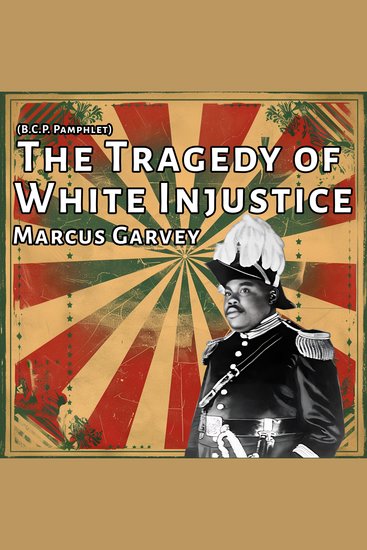
  • The Tragedy of White Injustice - (BCP Pamphlet) - cover

    The Tragedy of White Injustice -...

    Marcus Garvey

    • 0
    • 0
    • 0
    Marcus Garvey's The Tragedy of White Injustice is a powerful indictment of white racism and colonialism. Garvey argues that the white race has a long history of oppressing and exploiting non-white people all over the world, and that white racism is not simply a matter of individual prejudice, but rather a deeply ingrained system of oppression that is maintained by white institutions and social structures. Garvey also discusses the impact of white racism on Black people, arguing that it has caused them to suffer physical, psychological, and spiritual damage, and has prevented them from reaching their full potential. Garvey's book is a call to action for Black people to unite and resist oppression, and to build their own institutions and economies so that they can achieve self-determination.
    Show book
  • What's Wrong With Socialism - A Biblical Investigation for Everyone - cover

    What's Wrong With Socialism - A...

    Daniel Alan Brubaker

    • 0
    • 0
    • 0
    What’s Wrong With Socialism: A Biblical Investigation For Everyone takes a clear, accessible look at one of the most debated political and economic systems of our time—through the lens of the Bible. 
    Author Daniel Alan Brubaker, PhD explores socialism not just as an abstract theory, but as a lived reality with deep implications for human freedom, justice, wealth, and responsibility. Drawing on Scripture, history, and practical examples, Brubaker asks whether socialism’s promises of equality and fairness hold up when tested against biblical principles and real-world outcomes. 
    This audiobook helps listeners understand:The core ideas of socialism and why they appeal to many.How socialism differs from voluntary sharing and generosity modeled in the Bible.What Scripture teaches about wealth, justice, and the proper use of possessions.The dangers of materialism, state control, and the suppression of personal responsibility.How mercy and justice are often confused in debates about public policy. 
    Written in straightforward, non-technical language, this is a biblical investigation for everyone—students, pastors, church groups, anyone wrestling with the promises and pitfalls of socialism. Brubaker takes the topic seriously, showing where and why socialism ultimately fails the biblical test. 
    Whether you are new to the discussion or already familiar with political and economic debates, this audiobook will equip you with clear categories and biblical grounding to think more deeply about socialism and its alternatives. 
    For Christians seeking clarity in an age of confusion, or for anyone interested in the intersection of faith, economics, and justice, What’s Wrong With Socialism offers a compelling and thought-provoking guide.
    Show book

  • Loneliness - Finding Connection and Solitude in a Disconnected World - cover

    Loneliness - Finding Connection...

    Maria Garrets

    • 0
    • 0
    • 0
    In an age where technology provides countless ways to connect with others, it’s paradoxical that many people are more isolated and lonely than ever. The proliferation of social media platforms, instant messaging apps, and virtual communities should, in theory, make us feel more connected. However, the opposite has often proven to be true. Instead of fostering genuine relationships, these digital connections can leave us feeling empty, misunderstood, and yearning for deeper, more authentic interactions. This phenomenon is what I call the paradox of loneliness—where the very tools designed to bring us closer together end up magnifying our sense of isolation.  
     Loneliness is not just about being physically alone; it is a state of mind that reflects our emotional and psychological distance from others, and sometimes even from ourselves. We may feel lonely in a crowded room, or while scrolling through endless updates from friends and family. This paradox has a profound impact on our well-being, raising important questions: Why do we feel so disconnected in a world that’s seemingly more connected than ever? How did we arrive at this point? What can be done to bridge the gap between our yearning for connection and the realities of modern life? 
    Show book