Join us on a literary world trip!
Add this book to bookshelf
Grey
Write a new comment Default profile 50px
Grey
Subscribe to read the full book or read the first pages for free!
All characters reduced
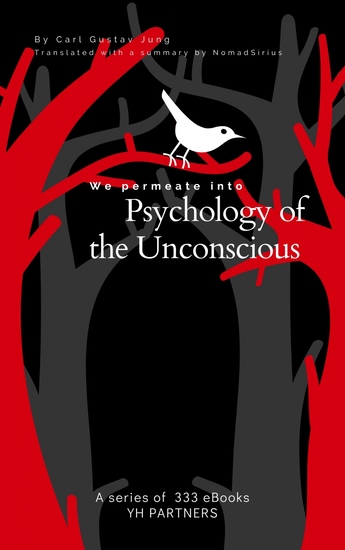
We Permeate into Psychology of the Unconscious - cover

We Permeate into Psychology of the Unconscious

Carl Gustav Jung

Translator 박 Nomadsirius

Publisher: 와이에이치파트너스

  • 0
  • 0
  • 0

Summary

Prologue.Carl Gustav Jung is a Swiss psychiatrist. In 1902, he received his medical doctorate from the University of Zurich. He developed complex research under the psychologist Eugen Bleuler, a professor at the university. While interacting with Freud, he began to study in-depth psychology in earnest. In 1908, at the age of 34, he and Freud formed the International Psychoanalytic Society. In 1912, after publishing \'Transformation and Symbolism of the Libido\', he broke up with Freud due to differences in his views on the unconscious. At the age of 44 in 1918, he strengthened his own in-depth psychology by using the expression of ‘the prototype of collective unconsciousness.’ For the archetype study of collective unconsciousness, a comparative work between cultural and religious history is performed. In 1930, a paper dealing with the theoretical consideration of prototypes was presented. In 1935, he led the Eranos Conference, a group of scholars, and interacted with scholars around the world. Focusing on the fact that the prototype of the collective unconscious changes the personality in relation to the self-consciousness, he immersed himself in the study of alchemy. In 1948, the Jung Institute was established in Zurich, Switzerland. In 1953, the complete English edition was published. ‘Psychology of the Unconscious’ was written in 1912 at the age of 38. Jung explores the unconscious world by analyzing Miss Miller\'s phantasy system. In the unconscious desire that transcends time and space, he seeks the identity of human conflict. Through a common bond connected to ancient times, he expands the mechanism of the unconscious to develop intellectual insight. This book is an easy condensed form of a long and difficult text in a summary format.
Available since: 09/09/2022.
Print length: 60 pages.

Other books that might interest you

  • Unbroken: The Trauma Response Is Never Wrong - And Other Things You Need to Know to Take Back Your Life - cover

    Unbroken: The Trauma Response Is...

    PhD MaryCatherine McDonald

    • 0
    • 0
    • 0
    A profound new approach to healing trauma, grounded in a radical reframing of how we understand this nearly universal experienceFor centuries, we’ve been taught that being traumatized means we are somehow broken—and that trauma only happens to people who are too fragile or flawed to deal with hardship. But as a researcher, teacher, and survivor, Dr. MaryCatherine McDonald has learned that the only thing broken is our society’s understanding of trauma. “The body’s trauma response is designed to save our lives—and it does,” she says. “It’s not a sign of weakness, but of our function, strength, and amazing resilience.”With Unbroken: The Trauma Response Is Never Wrong, Dr. McDonald overturns the misconceptions about trauma with the latest evidence from neuroscience and psychology—and shares tested practices and tools to help you work with your body’s coping mechanisms to accelerate healing. Here, you’ll explore:• What is trauma? The latest science that undoes the stigmas of shame, blame, and humiliation• Moral injury—having our basic sense of how the world should work overturned• The truth about triggers—what they really are and how they can guide the healing journey• Traumatic patterns—new findings to help break free from recurring habits and toxic dynamics• Why we can always rewrite our inner narratives, no matter how much time has passed• Finding a “relational home” for trauma—how we can help each other return to wholenessDr. McDonald’s case studies reveal the many ways trauma can manifest and persist in our lives, yet there’s one factor every case has in common: the trauma response itself reveals the path to healing. “Our traumatic experiences reveal that we can be bent, dented, or bruised,” she says, “but we cannot be broken.” For anyone who has gone through trauma or wants to help others who are struggling, here is an empowering resource for finding our way home to our bodies, rebuilding our relationships, and returning to full engagement with life.
    Show book
  • A Reading of the Inaugural Address of President Andrew Jackson - cover

    A Reading of the Inaugural...

    President Andrew Jackson

    • 0
    • 0
    • 0
    Andrew Jackson (March 15, 1767 - June 8, 1845) was an American politician and lawyer who served as the seventh president of the United States from 1829 to 1837. Before his presidency, he rose to fame as a general in the U.S. Army and served in both houses of the U.S. Congress. Jackson's legacy is controversial. He has been praised as an advocate for working Americans and preserving the union of states, and criticized for his racist policies, particularly towards Native Americans. His political philosophy became the basis for the Democratic Party. The following is a reading of President Polk's inaugural address on March 4, 1829.
    Show book
  • Narcissism Survival Guide 4 Books in 1 - Recovery from Emotional Abuse and Toxic Relationships - cover

    Narcissism Survival Guide 4...

    Emma Collins

    • 0
    • 0
    • 0
    Prepare to embark on a transformative journey toward healing, self-discovery, and empowerment as you explore the profound complexities of love and its impact on our lives. 
    Have you ever found yourself questioning the true nature of love and its ability to heal and transform? Have you experienced the devastating effects of narcissistic abuse, leaving you feeling lost, broken, and alone in your pain? If so, then this book is your guiding light on the path to healing and restoration. 
    As you delve into the pages of this powerful narrative, you'll embark on a deeply personal journey alongside the author, who courageously shares her own experiences of overcoming emotional abuse and reclaiming her sense of self. Through heartfelt reflections and poignant insights, you'll gain invaluable wisdom and guidance to navigate the complexities of narcissistic abuse and emerge stronger, wiser, and more resilient than ever before. 
    With each chapter, you'll uncover the insidious nature of narcissistic abuse and its profound impact on the human psyche. From the subtle manipulations to the soul-shattering betrayals, you'll gain a deeper understanding of the toxic dynamics at play and learn how to break free from the chains of emotional bondage. 
    But this book is more than just a recounting of past traumas—it's a beacon of hope and healing for all who have suffered at the hands of narcissistic abusers. Through the author's compassionate guidance, you'll discover practical strategies and empowering insights to reclaim your sense of self-worth, rebuild your shattered confidence, and embrace a future filled with love, joy, and inner peace. 
    So, if you're ready to take the first step toward healing and reclaiming your power, don't wait another moment. Click "Buy Now" and embark on a journey of healing, transformation, and true liberation. Your path to healing begins here.
    Show book
  • The Gospel of Women's Health - Awakening Athena Again - cover

    The Gospel of Women's Health -...

    MD Kenna Stephenson

    • 0
    • 0
    • 0
    Medicine in the 21st century preys on women through performing unnecessary procedures, prescribing excessive synthetic medications, and making diseases out of normal changes in a woman’s life. The current standard of care for women manufactures fear and anxiety that drives women to comply with harmful treatments and in doing so women go against their own intuition and inner guidance. 1.2 billion women will become menopausal by the year 2030, and women deserve to know the truth about the art and science of women’s health and how to create the best level of physical, emotional, and spiritual health for the decades to come.  
    The Gospel of Women’s Health is filled with solutions, clear answers, and expert guidance for girls from age 7 to women in their 90s in how to deal with problems and health concerns of daily life. Practical and affordable solutions are presented for you, the reader, and every recommendation is supported by strong clinical research and science. This book is timeless and timely and has changed lives worldwide in its revelation of the truth about women’s health. 
    Case studies illustrate the diagnosis, treatment, and recovery from common conditions including obesity, stress, burn-out, high blood pressure, headaches, depression, anxiety, heart disease, fibromyalgia, insomnia, sexual dysfunction, and post-traumatic stress disorder. The Gospel of Women’s Health will prepare you for health care conversations to expertly navigate among the predators in the medical system who seek to destroy the vitality of women. 
    Women must empower themselves against the madness, mayhem, and bikini focus of women’s medicine, and The Gospel of Women’s Health is your guide in the battle for your best health. 
    Show book
  • Byzantium and Constantinople: The History of the Ancient Greek City that Became the Byzantine Empire’s Capital - cover

    Byzantium and Constantinople:...

    Editors Charles River

    • 0
    • 0
    • 0
    Due to the importance of the Roman Empire and the offshoot Byzantine Empire, it’s often forgotten that Constantinople wasn’t chosen at random; in fact, the city already existed, and it lent its name to the empire that was subsequently centered there. Byzantium, known originally as Byzantion, was an ancient Greek city centuries before it became known as Constantinople, and the etymology of Byzantion/Byzantium is still unknown. It has been suggested that Byzantion is of Thracian origin and may be derived from the Thracian personal name Byzas, which means “he-goat.” Ancient Greek legend refers to King Byzas as the leader of the Megaran colonists and the founder of the city, but the earliest name for a city on the site is “Lygos,” which likely corresponds to an earlier Thracian settlement described by Pliny the Elder in his seminal work, Natural History: “On leaving the Dardanelles we come to the Bay of Casthenes, ...and the promontory of the Golden Horn, on which is the town of Byzantium, a free state, formerly called Lygos; it is 711 miles from Durazzo.” 
    Pliny went on to explain that Lygos was a Thracian settlement founded between the 13th and 11th centuries BCE. The site, however, was probably abandoned well before Megara founded Byzantion around 657 BCE across from Chalcedon on the Asiatic side of the Bosphorus. The city was briefly renamed Augusta Antonina in the early 3rd century CE by the Emperor Septimius Severus, who razed the city to the ground in 196 CE for supporting a rival contender in the civil war and had it rebuilt in honor of his son and successor, Marcus Aurelius Antoninus, known as Caracalla. This new name appears to have been quickly forgotten and abandoned, with the city reverting to Byzantium after the assassination of Caracalla in 217 CE, and that’s how it would be known when Constantine fatefully moved the seat of power there over a century later.
    Show book
  • Free - A Child and a Country at the End of History - cover

    Free - A Child and a Country at...

    Lea Ypi

    • 0
    • 1
    • 0
    Longlisted for the 2021 Baillie Gifford Prize for Non-Fiction 


    A reflection on "freedom" in a dramatic, beautifully written memoir of the end of Communism in the Balkans. 


    Lea Ypi grew up in the last Stalinist country in Europe: Albania, a place of queuing and scarcity, of political executions and secret police. While family members disappeared to what she was told were "universities" from which few "graduated," she swore loyalty to the Party. In her eyes, people were equal, neighbors helped each other, and children were expected to build a better world. 


    Then the statues of Stalin and Hoxha were toppled. Almost overnight, people could vote and worship freely, and invest in hopes of striking it rich. But factories shut, jobs disappeared, and thousands fled to Italy, only to be sent back. Pyramid schemes bankrupted the country, leading to violence. One generation's dreams became another's disillusionment. As her own family's secrets were revealed, Ypi found herself questioning what "freedom" really means. With acute insight and wit, Ypi traces the perils of ideology, and what people need to flourish.
    Show book