Join us on a literary world trip!
Add this book to bookshelf
Grey
Write a new comment Default profile 50px
Grey
Subscribe to read the full book or read the first pages for free!
All characters reduced
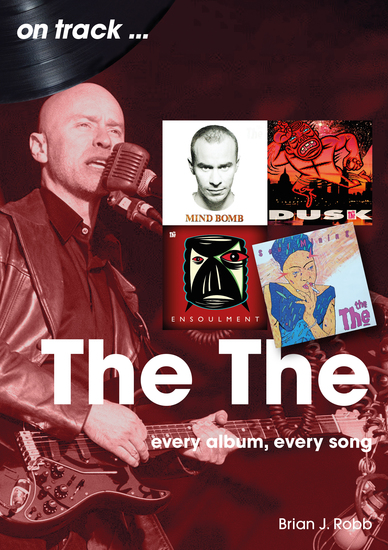
The The - Every Album Every Song - cover

The The - Every Album Every Song

Brian J. Robb

Publisher: Sonicbond Publishing

  • 0
  • 0
  • 0

Summary

The The was always a personal project for songwriter Matt Johnson. Started in 1979, when Johnson was a teenager, the post-punk outfit became central to the political and personal pop of the 1980s. Never a singles band, despite a few minor hits, their albums were successful: Infected in 1986 reached 14, followed by 1989’s Mind Bomb at number four and 1993’s Dusk at number two. Band members included Johnny Marr and DC Collard, with other collaborators including JG Thirlwell, Jools Holland, Neneh Cherry, Zeke Manyika, and Sinead O’Connor - a Who’s Who of 1980s independent pop.A reluctant live musician, Johnson created Infected: The Movie instead of a world tour in 1986. The Mind Bomb band, including Marr and Eller, launched the 1989-90 The The vs The World tour. Johnson appeared to retire following 2000’s Naked Self, although he kept busy, with a sideways move into scoring movies. It wasn’t until 2018 that The The returned to playing live and this was followed in 2024 with the new album, Ensoulment and its accompanying tour, almost a quarter of a century after the band’s last recorded music. In recent years, Johnson has been busier than ever with podcasts, an Official Bootleg series,and other idiosyncratic projects.
 
The AuthorBrian J. Robb is the New York Times and Sunday Times bestselling biographer of Leonardo DiCaprio, Johnny Depp, and Brad Pitt. He has also written books on silent cinema, the films of Philip K. Dick, Wes Craven, Laurel and Hardy, the Star Wars movies, Superheroes, Gangsters, and Walt Disney, as well as science fiction television series Doctor Who and Star Trek, and Depeche Mode for Sonicbond Publishing. His illustrated books include an Illustrated History of Steampunk and Middle-Earth Envisioned, a guide to J.R.R. Tolkien's The Lord of the Rings (Winner, Best Book, Tolkien Society Awards). He is a Founding Editor of the Sci-Fi Bulletin website and lives near Edinburgh, UK.
Available since: 09/15/2025.
Print length: 160 pages.

Other books that might interest you

  • Dahomey Kingdom - The Amazon Warriors and the Kingdom of Blood and Power - cover

    Dahomey Kingdom - The Amazon...

    Rolf Hedger

    • 0
    • 0
    • 0
    The Kingdom of Dahomey emerged as a dominant force in West Africa during the early 17th century, rising from a small tribal settlement to a powerful and organized state. Located in present-day Benin, Dahomey was founded by the Fon people, who established a centralized monarchy that would go on to shape the region’s history for centuries. The kingdom’s foundation was marked by military expansion, strategic leadership, and a distinct socio-political structure that set it apart from neighboring states. 
    The origins of Dahomey can be traced back to the reign of King Houegbadja, who ruled in the early 1600s. He is often credited with transforming the region into a formidable kingdom by unifying various smaller communities under a single rule. Before Dahomey’s consolidation, the region was dominated by the more powerful Allada Kingdom. However, through strategic alliances and calculated warfare, the rulers of Dahomey gradually expanded their influence, laying the groundwork for future dominance. 
    One of the key aspects of Dahomey’s rise was its strong central government. Unlike many other African polities of the time, Dahomey’s monarchy operated with an intricate administrative system. The king, known as the Ahosu, wielded absolute power but was supported by a council of advisors and military leaders who ensured efficient governance. This structured political organization allowed Dahomey to maintain stability even as it expanded through military campaigns.
    Show book
  • 101 Reasons to Love The Bewitched TV Show - cover

    101 Reasons to Love The...

    Gina Meyers

    • 0
    • 0
    • 0
    "101 things you've always wanted to know about the Bewitched television series. Test your skills.
    Show book
  • Straightening My Crown - Conquering My Royal Mistakes - cover

    Straightening My Crown -...

    Mackenzie Douthit McKee

    • 0
    • 0
    • 0
    A raw, courageous account of a young woman determined to turn her turmoil into triumph. 


    Small-town girl turned reality TV star Mackenzie McKee has grown up in front of the world as part of MTV's hit reality shows 16 & Pregnant, Teen Mom 3, and Teen Mom OG. Fans have experienced the ups and downs of motherhood and marriage right alongside Mackenzie—from difficult childbirths due to her type 1 diabetes diagnosis, to the untimely death of her beloved mother, Angie Douthit. But through it all, Mackenzie never falters in her deep love of family and God. 


    In her new memoir, Mackenzie proves there is more to her than what the glaring spotlight of fame has shown. She confronts a never-before-shared secret that upends her young life, and explores her struggle to gain acceptance in a family where she felt she was the only one who was less-than-perfect. Follow along as Mackenzie learns to stand tall, conquer her mistakes and fears, and "straighten her crown" in an effort to help others straighten theirs.
    Show book
  • We Oughta Know - How Céline Shania Alanis and Sarah Ruled the ’90s and Changed Music - cover

    We Oughta Know - How Céline...

    Andrea Warner

    • 0
    • 0
    • 0
    A lively collection of essays that re-examines the extraordinary legacies of the four Canadian women who dominated ’90s music and changed the industry forever
    		 
    Fully revised and updated, with a foreword by Vivek Shraya
    		 
    “A fascinating, fun, and infuriating read.” — Tegan Quin, Tegan and Sara 
    		 
    In this of-the-moment essay collection, celebrated music journalist Andrea Warner explores the ways in which Céline Dion, Shania Twain, Alanis Morissette, and Sarah McLachlan became bonafide global superstars while revolutionizing ’90s music. In an era when male-fronted musical acts dominated radio and were given serious critical consideration, these four women were reduced, mocked, and disparaged by the media and became pop culture jokes, even as their albums were topping the charts and demolishing sales records.
    		 
    With empathy, humor, and reflections on her own teenaged perceptions of Céline, Shania, Alanis, and Sarah, Andrea offers us a revised and expanded edition of her 2015 book, providing a new perspective on the legacies of the four Canadian women who dominated the ’90s airwaves and influenced an entire generation of current day popstars with their voices, fashion, and advocacy. As the world is now reconsidering the treatment and reputations of key women in ’90s entertainment, We Oughta Know is definitively entering the chat.
    Show book
  • Tokugawa Shogunate - Peace Isolation and the Preservation of Samurai Culture - cover

    Tokugawa Shogunate - Peace...

    Rolf Hedger

    • 0
    • 0
    • 0
    The Tokugawa Shogunate, also known as the Edo period (1603–1868), was a time of unprecedented peace and stability in Japan, following centuries of war and political fragmentation. This era began with the victory of Tokugawa Ieyasu at the Battle of Sekigahara in 1600, a decisive conflict that allowed him to consolidate power over the warring daimyo. Three years later, in 1603, he was granted the title of shogun by the emperor, officially marking the beginning of Tokugawa rule. 
    Ieyasu’s triumph at Sekigahara was not merely a military success but also a demonstration of his strategic brilliance and political foresight. By carefully forging alliances and exploiting rivalries among the daimyo, he ensured that his Tokugawa clan would emerge as the dominant force in Japan. Once in power, Ieyasu took immediate steps to secure his family’s hold over the nation. He redistributed land among the daimyo, rewarding loyal vassals and weakening potential threats. This reorganization of landholdings laid the foundation for the centralized feudal system that would define the Tokugawa era. 
    Although Ieyasu formally retired in 1605, passing the title of shogun to his son Tokugawa Hidetada, he continued to wield significant influence from behind the scenes. His retirement was a strategic move designed to solidify the legitimacy of hereditary succession, ensuring that the Tokugawa family would maintain control for generations. This transition of power set a precedent for stability, preventing the kind of succession disputes that had plagued previous shogunates.
    Show book
  • Australia - A History of the Land Down Under - cover

    Australia - A History of the...

    Lillian Brooks

    • 0
    • 0
    • 0
    Australia is a land of remarkable geological history, shaped over millions of years by natural forces. Its distinctive landscapes, vast deserts, tropical rainforests, and rugged mountain ranges offer a glimpse into the ancient past of the continent. The story of Australia's land begins long before human habitation, when it was part of the supercontinent Gondwana. 
    Approximately 300 million years ago, Gondwana began to break apart, and Australia, once connected to Antarctica, began its slow drift northward. Over millions of years, Australia became isolated, allowing unique plants and animals to evolve in this distant, isolated environment. This geological isolation contributed to the development of Australia’s unique biodiversity, with species found nowhere else on Earth. The landscape was sculpted by forces such as tectonic shifts, volcanic activity, and erosion, leading to the creation of natural wonders like the Great Barrier Reef, the outback, and the Blue Mountains. 
    When the first humans arrived on the continent, around 65,000 years ago, Australia’s land was already a place of immense natural beauty and complexity. The Aboriginal peoples, the continent’s first inhabitants, established deep and enduring connections to the land. For Indigenous Australians, the land is not just a physical space but a living, spiritual entity that is central to their cultural identity. This profound connection is expressed through stories, rituals, and a deep understanding of the natural world.
    Show book