Join us on a literary world trip!
Add this book to bookshelf
Grey
Write a new comment Default profile 50px
Grey
Subscribe to read the full book or read the first pages for free!
All characters reduced
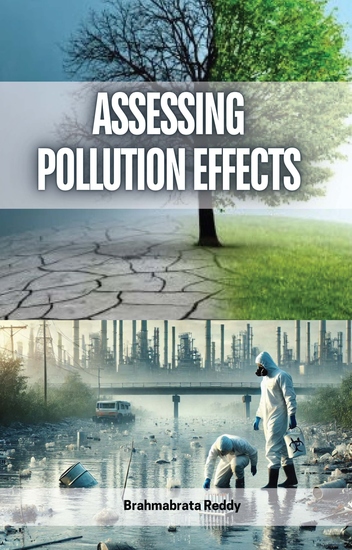
Assessing Pollution Effects - cover

Assessing Pollution Effects

Brahmabrata Reddy

Publisher: Educohack Press

  • 0
  • 0
  • 0

Summary

Assessing Pollution Effects provides an in-depth examination of the causes, impacts, and mitigation of pollution on our environment and ecosystems. At present, pollution is occurring at an unprecedented scale, with alarming trends such as the widespread release of toxic chemicals, biocides, and industrial waste. These human activities are drastically altering natural systems, endangering biodiversity, and threatening the ecological balance critical for life’s sustainability.
This book explores the effects of pollution on air, water, and soil, detailing their origins, transformations, and consequences for ecosystems and human health. Topics include environmental regulations, remediation technologies, and the role of environmental impact assessments in ensuring sustainability. Special focus is given to how pollution affects humans, animals, and plants, creating significant health, economic, and social challenges.
Designed for students and professionals, this book serves as an essential resource for understanding and addressing environmental pollution effectively.
Available since: 01/24/2025.
Print length: 294 pages.
Other books that might interest you

  • Popular Scientific Lectures - cover

    Popular Scientific Lectures

    Ernst Mach

    • 0
    • 0
    • 0
    This recording has been digitally produced by DeepZen Limited, using a synthesized version of an audiobook narrator’s voice under license. DeepZen uses Emotive Speech Technology to create digital narrations that offer a similar listening experience to human narration.  
     
    Ernst Mach was a Moravian-born Austrian physicist and philosopher, who contributed to the physics of shock waves. The ratio of one's speed to that of sound is named the Mach number in his honor. As a philosopher of science, he was a major influence on logical positivism and American pragmatism. Through his criticism of Newton's theories of space and time, he foreshadowed Einstein's theory of relativity.Included in this compilation are a set of scientific lectures that were intended to popularize science in the late 19th and early 20th century. Now in the twenty-first century, and scientific literacy falling to an all-time low, a call to popularize science could not be more needed.
    Show book
  • Beat the Bots - A Writer's Guide to Surviving and Thriving in the Age of AI - cover

    Beat the Bots - A Writer's Guide...

    Jane K. Cleland

    • 0
    • 0
    • 0
    Beat the Bots offers science-based creativity techniques that guide you through the writing process to unlock your imagination and create compelling stories that resonate with emotional truth in ways AI can’t match. 
      
    Even though artificial intelligence is based on a technology called “machine learning,” computers can’t learn to be creative—but you can. This book will show you the way. AI is, by definition, derivative, not creative. It can’t bring rational judgment to determine the quality or value of its work. When you bring those capabilities to your writing, your stories will touch readers’ hearts and minds. 
      
    Just as real food is better for us than processed food, and actual social interactions are more meaningful than social media, when it comes to writing your story, artificial intelligence can’t replicate your individual human intelligence, imagination, and sensibility. Technical wizardry can’t tell your story. Only you can do that. Your uniqueness is what separates you from a chatbot, and explains why you can’t be replaced by an algorithm. You’ll succeed because you’re human, not in spite of it. 
      
    Through engaging FAQs, invaluable “Pro Tips,” and “AI Weighs In” revelations, you’ll be able to apply the writing lessons and creativity tactics to all aspects of storytelling, bringing your distinctive vision and voice to your projects in ways AI simply can’t. Thought-provoking, science-based guided exercises challenge you to apply each chapter’s lessons to your own writing. Whether you’re writing a novel, literary nonfiction, or a memoir, you’ll be able to write stories that are fresh and compelling—your stories—and those are the books that publishers want and readers crave. That’s how you’ll beat the bots.
    Show book
  • Treasury of Folklore: Stars and Skies - Sun Gods Storm Witches and Soaring Steeds - cover

    Treasury of Folklore: Stars and...

    Willow Winsham

    • 0
    • 0
    • 0
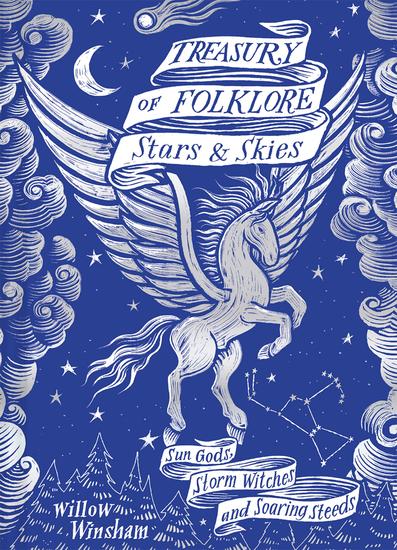
    Following on from the hugely popular Treasury of Folklore: Seasand Rivers and Woodlands and Forests comes Treasury of Folklore: Stars and Skies, an exploration of the mysteries of the stars, skies and heavens above.
    People have gazed up at the same stars for millennia, trading stories about them; conjuring gods and goddesses; mapping the constellations; and navigating the complex human world below. The tales, traditions and myths included here traverse countries and continents and have been chosen to highlight how humans are linked through time and place, with shared dreams, fears and ways of rationalising the unknown.
    Under 'Stars and Heavens' Willow delves into rosy fingered dawn and the hubris of Icarus, the Greek myths surrounding the constellations and the omen of meteors, the trials of the Hawaiian goddess Hina and the legend of the rabbit in the moon. In the section on 'Skies' we are introduced to winged Pegasus and the Firebird, the Witch of Westray and stories of storms, the mysteries of the Northern Lights and unexplained UFOs. 
    Treasury of Folklore: Stars and Skies is a fascinating portal into a rich history of myths surrounding the sky, an aspect of the natural world that continues to fascinate and confound.
    Show book
  • A Little Bit of Land - cover

    A Little Bit of Land

    Jessica Gigot

    • 0
    • 0
    • 0
    From midwifing new lambs to harvesting basil, Jessica Gigot invites the reader into her life on a small farm and the uncommon road that led her there. Fascinated by farming and the burgeoning local food movement, she spent her twenties wandering the Pacific Northwest, interning at small farms and doing graduate work in horticulture, always with an eye towards learning as much as she could about how and why people farm. Despite numerous setbacks and the many challenges of farming, she created a family and farm life defined by resilience and a genuine love of the land.   
    In A Little Bit of Land, Gigot explores the intricacies of small-scale agriculture in the Pacific Northwest and the changing role of women in this male-dominated industry. Gigot alternates between chapters describing joys, routines, and challenges of farm life and chapters reflecting on her formative experiences in agriculture, on farms and in classrooms from Ashland to the Skagit Valley. Throughout, she explores questions of sustainability, economics, health, and food systems.
    Show book
  • Among Typhoons And Pirate Craft - cover

    Among Typhoons And Pirate Craft

    Lindsay Anderson

    • 0
    • 0
    • 0
    Anderson served as third officer aboard the Eamont. Eamont was an opium clipper built in Cowes. Eamont was involved in the opening of Japan to foreigners in 1858, serving as a dispatch boat between Nagasaki and Shanghai, and was one of the first vessels to open up a trade with Formosa. The Eamont was employed in the negotiations for the first commercial treaty with Japan. On this occasion she ran into Nagasaki and quietly dropped anchor, in spite of the fact that opposition to the proposed commercial treaty was very strong at the time. On the following morning 150 boat-loads of Japanese attempted to tow her to sea, being evidently ignorant of an anchor's raison d'etre. But though they attempted several similar methods to get rid of her they refrained from any armed attack, and, eventually, her mission was completely successful. This was in 1858, and the Eamont's crew saw many wonderful sights in that tierra incognita. The September Typhoon of 1858 destroyed several well-known opium clippers at Double Island, including the Anonyma, Gazelle, Pantaloon, and Mazeppa. Eamont was anchored off Double Island, with "150 fathoms of chain out and a second anchor backed on it at 60 fathoms." The waves in the anchorage were estimated to be as large as 40 feet, and the Eamont’s crew had to cut away her masts. Eamont was one of only two ships in that anchorage to survive the night, the other being the Hazard. (See Wikipedia article on Eamont (schooner)) ( wikipedia and david wales)
    Show book
  • Millenia of Minds - Thinkers Who Rewired Humanity - cover

    Millenia of Minds - Thinkers Who...

    Ylia Callan

    • 0
    • 0
    • 0
    This audiobook is narrated by an AI Voice.  What distinguishes a great mind from an ordinary one? How do the rarest geniuses see the world in ways others cannot? 
     
    Millenia of Minds, Thinkers Who Rewired Humanity explores the extraordinary cognitive processes of the most influential thinkers of the last millennium and beyond. This book goes beyond biographies and achievements to examine how genius thinks, imagines, and perceives. It reveals patterns of thought that allowed these individuals to unlock truths invisible to ordinary minds. 
     
    From Isaac Newton, who felt the geometry of motion before calculus existed, to Nikola Tesla, who internally simulated entire machines; from Srinivasa Ramanujan, who received mathematics like visions in dreams, to Kurt Gödel, who discovered the limits of logic itself — this book examines the minds that reshaped mathematics, physics, and philosophy. Other minds include Michael Faraday, Albert Einstein, John von Neumann, Alan Turing, Marie Curie, James Clerk Maxwell, Wolfgang Pauli, Euclid, Archimedes, Aristotle, and Carl Friedrich Gauss. 
     
    Each chapter explores unique cognitive traits: structural intuition, internal simulation, persistent perception, system-building, and the capacity to sense underlying coherence or inconsistency. The book highlights how these minds operated in isolation, endured personal cost, and yet reshaped human understanding. 
     
    More than a history of genius, this work is a guide to appreciating the architecture of human thought, intuition, and creativity. It demonstrates that exceptional cognition is not simply knowledge accumulated, but the ability to perceive reality’s hidden structure and act upon it. 
     
    For readers fascinated by science, mathematics, philosophy, or the nature of human consciousness, this book offers a rare opportunity to explore how the greatest minds actually thought, and what their methods reveal about the untapped potential of our own cognition.
    Show book