Join us on a literary world trip!
Add this book to bookshelf
Grey
Write a new comment Default profile 50px
Grey
Subscribe to read the full book or read the first pages for free!
All characters reduced
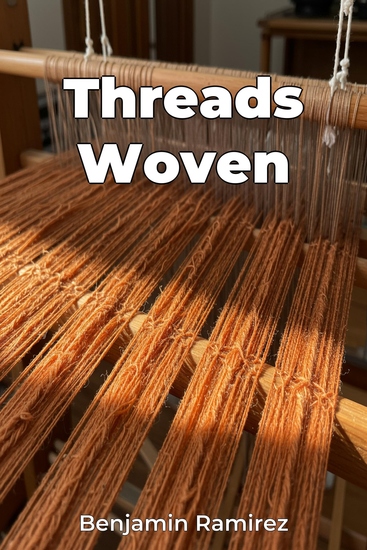
Threads Woven - cover

Threads Woven

Benjamin Ramirez

Translator A AI

Publisher: Publifye

  • 0
  • 0
  • 0

Summary

Threads Woven explores the captivating history of textiles, revealing how weaving has profoundly shaped cultures, economies, and artistic expressions worldwide. From ancient hand-spun threads to modern industrial fabrics, the book uncovers textiles' cultural significance and their role as a tangible record of human ingenuity. Surprisingly, textiles have not only clothed humanity but also propelled technological advancements, evidenced by innovations like the loom, which revolutionized production efficiency.

 
The book examines the origins of weaving techniques, the social transformations driven by the textile industry, and the aesthetic value of woven materials. It progresses chronologically, first introducing weaving principles and materials like cotton, wool, and silk. Then it delves into historical periods and regions, showcasing unique weaving styles from ancient Egypt to pre-Columbian America. Finally, it explores the modern textile industry, addressing mass production, synthetic fibers, and sustainability challenges.

 
By examining archaeological findings, historical documents, and insights from artists and designers, Threads Woven offers a multifaceted perspective. It connects to anthropology, economics, and art history, enriching the analysis and offering a comprehensive understanding of how textiles serve as a medium of communication and cultural expression, making it valuable for those interested in history, design, and cultural studies.
Available since: 03/03/2025.
Print length: 71 pages.
Other books that might interest you

  • Mouse Utopia Experiment The: The Controversial History of the Experiment that Predicted the Collapse of Human Society - cover

    Mouse Utopia Experiment The: The...

    Editors Charles River

    • 0
    • 0
    • 0
    In 1968, biologist John Calhoun began an experiment at the National Institute of Mental Health in Maryland. Calhoun was interested in discovering the factors that drove and limited rodent population growth; he had joined the Rodent Ecology Project in Baltimore in 1946, and he and other members of the project had become interested in understanding how to reduce rodent pests in America’s cities without the use of poison. 
    	Calhoun had already undertaken similar experiments. In fact, this would be his 25th attempt at creating a self-sustaining rodent colony. This experiment was known as the Mortality-Inhibiting Environment for Mice, but informally, it was known as mouse heaven or, more commonly, mouse utopia.  
    	The experiment was carefully crafted, and Calhoun’s previous experience was used to design a “perfect” environment for mice. Free from predators, disease, and stress, with unlimited access to water and plentiful food supplies, the mice involved could, in theory, live much longer lives than mice in the wild. Calhoun built the “mouse universe,” added mice, and provided food and water. Then, for almost five years, he simply watched what happened in mouse utopia. 
    	While it may be fair to wonder how a fairly obscure zoological experiment that took place over 50 years ago has any relevance to modern society, since the experiment ended, people have been using the findings of what became known as the Calhoun Mouse Utopia Experiment to make predictions about human behavior and human societies. In the decades since Calhoun finished his work, this experiment has been used to “prove,” among other things, that modern urban society is doomed, that contemporary society will inevitably lead to lethal levels of overpopulation, and even that political creeds such as communism and socialism are unsustainable.
    Show book
  • Integrate your inner child Recovery from childhood trauma Meditation Courses & Coaching Sessions - reparent your little one overcome childhood neglect abandonment reconnect self-love - cover

    Integrate your inner child...

    Love, And, Bloom

    • 0
    • 0
    • 0
    Sometimes in childhood, we may accumulate anger sadness, or feel emotional neglect when our needs were not met. This may result from the loss of connections in our identity. We felt anger disappointment or possibly rage.  
    We will use a meditation session to release the feeling of shame. It takes a conscious healing method to repair our little one inside. There may be hidden feelings that we have not been aware of.  
    Then, we will have a deep integration process work. We find our true identity and let our little one once again express the pain and sadness. We let them shine and be playful. We are no longer at war with ourselves reacting to the old programs and past coping mechanisms. 
    Show book
  • The Art of Not Caring - cover

    The Art of Not Caring

    Vera Mindwell

    • 0
    • 0
    • 0
    This audiobook is narrated by an AI Voice.  
    "What if the stress and overwhelm in your life aren’t caused by what you face—but by caring too much about things that don’t deserve your energy? In this liberating audiobook, Vera Mindwell challenges the belief that constant concern, emotional investment, and striving make us better or happier. Instead, she reveals how modern culture trains us to overthink, overextend, and overidentify with expectations that drain our wellbeing every day. 
    Drawing on psychology, neuroscience, and philosophy, Mindwell explains why the brain clings to worries, approval, and imagined threats—and how this automatic caring becomes a mental habit we mistake for responsibility. She offers a compelling alternative: the skill of selective concern, the art of choosing what actually matters while releasing everything that never truly did. 
    Through practical strategies and evidence-based insights, you’ll learn how emotionally grounded people set boundaries without guilt, detach from unhelpful narratives, and stay centered even when life gets loud. Mindwell dismantles the myth that caring more makes you more compassionate, showing instead how intentional detachment leads to healthier relationships, clearer priorities, and genuine inner peace. 
    If you’re tired of carrying the weight of everyone’s expectations, this audiobook invites you to let go—and finally breathe again."
    Show book
  • The Dead Beat - cover

    The Dead Beat

    Marilyn Johnson

    • 0
    • 0
    • 0
    Marilyn Johnson was enthralled by the remarkable lives that were marching out of this world—so she sought out the best obits in the English language and the people who spent their lives writing about the dead. She surveyed the darkest corners of Internet chat rooms, and made a pilgrimage to London to savor the most caustic and literate obits of all. Now she leads us on a compelling journey into the cult and culture behind the obituary page and the unusual lives we don't quite appreciate until they're gone.
    Show book
  • We Will Not Cease - cover

    We Will Not Cease

    Archibald Baxter

    • 0
    • 0
    • 0
    We Will Not Cease is the unflinching account of New Zealander Archibald Baxter's brutal treatment as a conscientious objector during World War I. 
    In 1915, when Baxter was 33, he was arrested, sent to prison, then shipped under guard to Europe where he was forced to the front line against his will. Punished to the limits of his physical and mental endurance, Baxter was stripped of all dignity, beaten, starved and left for dead by the New Zealand military. In the final attempt to discredit him authorities consigned him to a mental institution, an experience that would haunt him for the rest of his life.
    Show book
  • Zionism - An Emotional State - cover

    Zionism - An Emotional State

    Derek J. Penslar

    • 0
    • 0
    • 0
    Emotion lies at the heart of all national movements, and Zionism is no exception. For those who identify as Zionist, the word connotes liberation and redemption, uniqueness and vulnerability. Yet for many, Zionism is a source of distaste if not disgust, and those who reject it are no less passionate than those who embrace it. The power of such emotions helps explain why a word originally associated with territorial aspiration has survived so many years after the establishment of the Israeli state. 


    Zionism: An Emotional State expertly demonstrates how the energy propelling the Zionist project originates from bundles of feeling whose elements have varied in volume, intensity, and durability across space and time. Beginning with an original typology of Zionism and a new take on its relationship to colonialism, Penslar then examines the emotions that have shaped Zionist sensibilities and practices over the course of the movement's history. The resulting portrait of Zionism reconfigures how we understand Jewish identity amidst continuing debates on the role of nationalism in the modern world.
    Show book