

Join us on a literary world trip!
Add this book to bookshelf
Grey
Write a new comment Default profile 50px
Grey
Subscribe to read the full book or read the first pages for free!
All characters reduced
Temple Architecture - cover

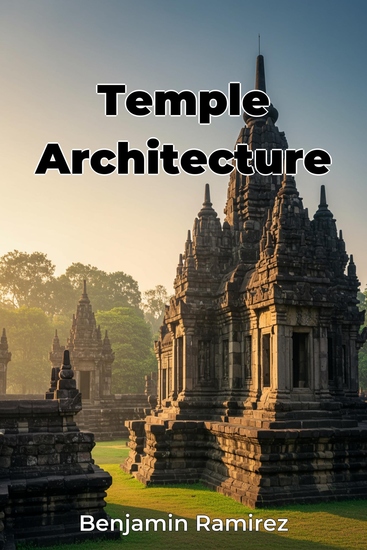
Temple Architecture

Benjamin Ramirez

Translator A AI

Publisher: Publifye

  • 0
  • 0
  • 0

Summary

Temple Architecture explores the profound connection between religious buildings and the spiritual experiences they foster. Delving into diverse architectural styles across faiths, the book uncovers how specific designs communicate religious beliefs and values. Temples, beyond being mere structures, serve as communal spaces, fostering spiritual connections and collective identity.

 
Did you know that architectural choices, like layout and ornamentation, contribute to the overall sacred atmosphere? Or that understanding the historical context of religious architecture is vital for appreciating its nuances? 

 
This book takes a systematic approach to understanding temple architecture, blending architecture, religious studies, and cultural history. It moves beyond aesthetics to reveal deeper meanings within sacred spaces. The analysis incorporates historical records, architectural plans, and on-site observations, enhanced by visual aids.

 
The book progresses through three parts: introducing core concepts and styles, analyzing designs from different periods and religions, and examining the practical implications for architects.

 
This exploration demonstrates how temple design is not just functional but actively shapes religious experiences, reinforcing the bond between worshippers and the divine.
Available since: 03/06/2025.
Print length: 65 pages.

Other books that might interest you

  • Sui Dynasty - Reunification and the Grand Canal Legacy - cover

    Sui Dynasty - Reunification and...

    Rolf Hedger

    • 0
    • 0
    • 0
    The period before the rise of the Sui Dynasty was marked by fragmentation and instability, as China remained divided between the Northern and Southern Dynasties. This era, which lasted from the late 4th century to the late 6th century, was characterized by constant warfare, shifting alliances, and a deep cultural divide between the north and south. The fall of this system set the stage for the reunification of China under the Sui Dynasty. 
    The north was ruled by a succession of non-Han Chinese states, often founded by nomadic groups that had migrated into China during the decline of the Western Jin Dynasty. The Northern Wei, established by the Tuoba clan of the Xianbei people, was the most powerful of these states. Over time, the rulers of the Northern Wei adopted Chinese customs, Confucian governance, and Buddhism, which helped stabilize their rule. However, internal struggles, court intrigue, and opposition from powerful aristocratic families led to the dynasty’s division into the Eastern and Western Wei, eventually giving rise to the Northern Qi and Northern Zhou dynasties. 
    In contrast, the Southern Dynasties were ruled by Han Chinese elites who maintained a more traditional Chinese way of life. The Eastern Jin, followed by the Liu Song, Southern Qi, Liang, and Chen dynasties, governed the southern regions, centered around the lower Yangtze River. These dynasties often suffered from weak central control, as powerful noble families exerted significant influence over the government. While the south was culturally rich and economically prosperous, political instability and frequent coups weakened its ability to resist northern invasions.
    Show book
  • Imperial Chinese Foundations - Uniting the Land (3 in 1) - cover

    Imperial Chinese Foundations -...

    Rolf Hedger

    • 0
    • 0
    • 0
    The story of China's imperial unification represents one of history's most consequential political transformations. "Imperial Chinese Foundations: Uniting the Land" explores the three dynasties that forged China's imperial system—a political structure that would endure for over two millennia. 
    The brief but revolutionary Qin Dynasty (221-206 BCE) ended centuries of warring states by conquering all rivals under the leadership of the First Emperor, Qin Shi Huang. Through military might, standardized writing, currency, measurements, and a unified legal code, the Qin created China's first centralized bureaucratic empire—though their harsh Legalist policies triggered rebellion after the emperor's death. 
    The Western Han Dynasty (206 BCE-9 CE) consolidated imperial rule through a more pragmatic blend of Confucian ideology and centralized governance. Under Emperor Wu's dynamic leadership, the Han expanded Chinese territory, opened the Silk Road, established the civil service examination system, and created cultural and political institutions that would define Chinese civilization for millennia. 
    As power shifted to the Eastern Han (25-220 CE), the dynasty initially flourished before facing mounting challenges from natural disasters, court intrigues, and the Yellow Turban Rebellion. Yet even as political cohesion weakened, this period saw remarkable innovations—including paper, the seismograph, and advances in mathematics and medicine—while Buddhism began its profound influence on Chinese civilization. 
    Through examining these three foundational dynasties, we witness the birth and evolution of the imperial Chinese state that would serve as a template for governance across East Asia and continue to influence Chinese identity into the modern era.
    Show book
  • A New Christ - cover

    A New Christ

    Wallace Wattles

    • 0
    • 0
    • 0
    A  new Christ refers to the idea that every individual has the potential to access the same divine power and creative ability as Jesus, allowing them to manifest their desires and achieve greatness in their own lives, essentially becoming a "Christ-like" figure through positive thought and action. "The very best thing you can do for the whole world is to make the most of yourself.". "There is one Mind, and I AM that Mind. That Mind is eternal, and it is Life. I am that Mind, and I am ETERNAL LIFE." "You can never become a great man or woman until you have overcome anxiety, worry, and fear." "The Principle of Power gives us just what we ask of it; if we only undertake little things, it only gives us power for little things; but if we try to do great things in a great way it gives us all the power there is.
    Show book
  • Horror for Weenies - Everything You Need to Know about the Films You're Too Scared to Watch - cover

    Horror for Weenies - Everything...

    Emily C. Hughes

    • 0
    • 0
    • 0
    You don't have to miss out just because you don't like to be frightened! Stop trying to read nonsensical Wikipedia plot summaries (we know you're doing it), and let an expert tell you everything you need to know about the most influential horror films of the past sixty years—without a single jump scare or a drop of gore. 


    With a rundown of the history and significance of horror cinema, explanations of common tropes, and detailed entries on twnety-five important movies ranging from Night of the Living Dead to The Blair Witch Project to Get Out, Horror for Weenies will turn even the scarediest of cats into a confident connoisseur. 


    Each entry includes: a detailed plot summary, with enough jokes that it won't freak you out; smart, illuminating analysis of the film's themes and cultural significance; descriptions of iconic scenes you definitely do not want to look at; and talking points for impressing even the biggest scary-movie buffs. 


    Horror for Weenies is the first installment in the Outsider's Guide series, which offers highly listenable crash courses in major cultural phenomena, so you can catch the references and understand the big deal. Never get left out of a conversation again!
    Show book
  • Secrets of Dark Money: Exposing Hidden Conspiracies in the Catholic Church - "Unlock the truth! Dive into riveting audio lessons revealing secrets of dark money in the Catholic Church" - cover

    Secrets of Dark Money: Exposing...

    Orson Truesdale

    • 0
    • 0
    • 0
    Secrets of Dark Money: Exposing Hidden Conspiracies in the Catholic Church**   
    ⭐⭐⭐ Simplified Guide & Explanations Included ⭐⭐⭐ 
    Are you eager to deepen your understanding and uncover the truths concealed within faith's financial shadows? 
    Looking for an all-encompassing resource that reveals everything you need to know about the hidden conspiracies in the Catholic Church? 
    Your quest ends here! 
    This guide is your ultimate resource for enhancing your comprehension, honing your analytical skills, and participating in engaging exercises. With this material, you're on your path to enlightenment. 
    Updated for exploring the complexities of financial secrets within the Church. 
    Key features of this enriched guide: 
    - In-depth insights into the hidden financial dynamics within the Church 
    - Comprehensive explanations of the influences of dark money on faith 
    - Effective strategies for understanding and questioning these hidden narratives 
    Our guide sets itself apart through its thorough exploration, vital for your understanding. Subjects are not merely touched upon; they are explored in depth and clarity. 
    Crafted with a clear structure and straightforward language, our guide ensures smooth transitions between topics. Bid farewell to complex jargon and embrace clear, precise, and technically accurate content. 
    So, why wait? Click the BUY NOW button, secure your guide, and embark on your journey to unveil the Secrets of Dark Money within the Catholic Church! 
    Unlock the mysteries and gain the knowledge you seek!
    Show book
  • Icons and Instincts - Choreographing and Directing Entertainment's Biggest Stars - cover

    Icons and Instincts -...

    Vincent Paterson, Amy Tofte

    • 0
    • 0
    • 0
    For the first time, the choreographer of Michael Jackson, Madonna, Björk, and many others reveals stage stories through his extraordinary journey. 


    Vincent Paterson began his professional dancing career late in life. It would take an exceptional turn when he became one of the lead dancers in Michael Jackson's Beat It music video. Through hard work, he rises to the rank of choreographer and director for the world's greatest singers, but also for cinema and musical comedy. 


    He tells with humility the fascinating universe of film sets, the rehearsal sessions where he had to orchestrate and synchronize dozens of dancers, life backstage where it is sometimes necessary to manage a few whims of the stars, his successes and his disappointments. It is a dive into the heart of the world of dance.
    Show book
