

Join us on a literary world trip!
Add this book to bookshelf
Grey
Write a new comment Default profile 50px
Grey
Subscribe to read the full book or read the first pages for free!
All characters reduced
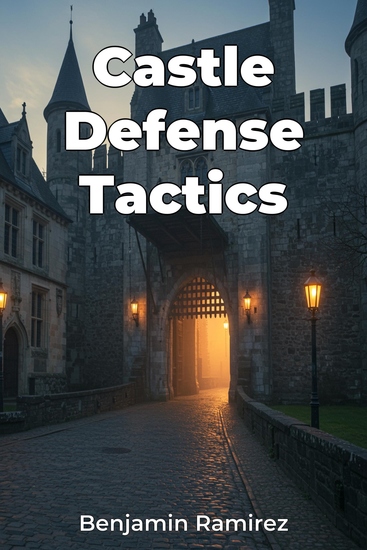
Castle Defense Tactics - cover

Castle Defense Tactics

Benjamin Ramirez

Translator A AI

Publisher: Publifye

  • 0
  • 0
  • 0

Summary

Castle Defense Tactics explores the intricate relationship between medieval castle architecture and the military strategies employed to defend them. Far from being static structures, castles evolved dynamically in response to ever-changing siege warfare techniques. The book emphasizes how architectural elements like motte-and-baileys, keeps, and concentric designs were strategically integrated with innovative defense tactics, such as utilizing arrow slits and sallying forth, to maintain their strategic importance.

 
The book investigates the evolution of castle design alongside the development of military tactics, revealing how these elements collectively influenced the balance of power and social hierarchies. By drawing upon medieval chronicles, siege accounts, and architectural surveys, the book provides a comprehensive understanding of the historical, social, and technological contexts that shaped castle construction and military leadership. Case studies of famous sieges provide tangible examples of how specific defensive tactics were applied and how even the most formidable castles could be vulnerable.

 
This examination of castle defense is structured to build a thorough understanding of both castle design and defensive strategies. Beginning with the fundamental architectural components and progressing through the development of defense tactics and weaponry, the book culminates in an analysis of the long-term impact of castle design and siege warfare on military and architectural strategies. This approach highlights the dynamic interplay between architecture and military tactics.
Available since: 05/05/2025.
Print length: 64 pages.

Other books that might interest you

  • Eugenics and Other Evils - cover

    Eugenics and Other Evils

    G.K. Chesterton

    • 0
    • 0
    • 0
    Most Eugenists are Euphemists. I mean merely that short words startle them, while long words soothe them. And they are utterly incapable of translating the one into the other, however obviously they mean the same thing. Say to them "The persuasive and even coercive powers of the citizen should enable him to make sure that the burden of longevity in the previous generation does not become disproportionate and intolerable, especially to the females"; say this to them and they will sway slightly to and fro like babies sent to sleep in cradles. Say to them "Murder your mother," and they sit up quite suddenly. Yet the two sentences, in cold logic, are exactly the same. (Summary by Gilbert Keith Chesterton)
    Show book
  • A Librarian's War - The Man Who Fought World War II with Books and Brought the Joy of Reading to Millions - cover

    A Librarian's War - The Man Who...

    Molly Guptill Manning

    • 0
    • 0
    • 0
    Though unknown to most readers, no one made a greater contribution to reading habits in America than Ray Trautman. Growing up in the rural Midwest, Trautman looked to reading as a way of exploring the world and yet, discovered that with no community library and limited funds finding books was a challenge. This sparked in him a lifelong passion to build libraries and ensure free access to books for all. After working his way through college, Trautman became an independent bookseller, and then joined the Civilian Conservation Corps during the Depression, building libraries and teaching people how to read. In late 1940, after earning a degree in library studies from Columbia, he landed the job of a lifetime: Chief Librarian of the Army. Many military leaders believed books were an unnecessary distraction for troops, but Trautman relentlessly championed books, believing that they were key to the fight against totalitarianism and ultimately built the largest and most far-reaching library system in the world. He devised the "Armed Services Editions," wallet-sized paperbacks and printed miniature magazines for soldiers. He also created the most popular comic book in the Army, Overseas Comics. Along the way, Trautman fought book bans and book-resistant generals, was nearly killed in the Battle of the Bulge while on a special assignment for Dwight Eisenhower, and joined forces with librarians and publishers to spread access to reading. Trautman was credited with distributing nearly a half billion books, magazines, and comic books to troops. When the war ended in 1945, Trautman brought the fight for books home: advocating for rural libraries, building libraries in prisons, campaigning for more books for the visually impaired, and working to develop materials for adults with low reading proficiency so they could improve their literacy skills. A Librarian's War introduces a man who dedicated his life to instilling a passion for reading and unhindered access to books.
    Show book
  • Thomas Mann: A short biography - 5 Minutes: Short on time - long on info! - cover

    Thomas Mann: A short biography -...

    5 Minutes, 5 Minute Biographies,...

    • 0
    • 0
    • 0
    Thomas Mann, great novelist and nobel prize laureate: Life and works in a short biography! Everything you need to know, brief and concise. Infotainment, education and entertainment at its best!
    Show book
  • A Reading of the Inaugural Address of President George Washington - cover

    A Reading of the Inaugural...

    President George Washington

    • 0
    • 0
    • 0
    George Washington (February 22, 1732 - December 14, 1799) was a Founding Father and the first president of the United States, serving from 1789 to 1797. As commander of the Continental Army, Washington led Patriot forces to victory in the American Revolutionary War against the British Empire. He is commonly known as the Father of His Country for his role in bringing about American independence. The following is a reading of President Washington's inaugural address delivered on April 30, 1789.
    Show book
  • Progressive Dystopia - Abolition Antiblackness and Schooling in San Francisco - cover

    Progressive Dystopia - Abolition...

    Savannah Shange

    • 0
    • 0
    • 0
    San Francisco is the endgame of gentrification, where racialized displacement means that the Black population of the city hovers at just over three percent. The Robeson Justice Academy opened to serve the few remaining low-income neighborhoods of the city, with the mission of offering liberatory, social justice-themed education to youth of color. While it features a progressive curriculum, including Frantz Fanon and Audre Lorde, the majority Latinx school also has the district's highest suspension rates for Black students. In Progressive Dystopia Savannah Shange explores the potential for reconciling the school's marginalization of Black students with its sincere pursuit of multiracial uplift and solidarity. Drawing on ethnographic fieldwork and six years of experience teaching at the school, Shange outlines how the school fails its students and the community because it operates within a space predicated on antiblackness. Seeing San Francisco as a social laboratory for how Black communities survive the end of their worlds, Shange argues for abolition over revolution or progressive reform as the needed path toward Black freedom.
    Show book
  • My Bondage and My Freedom - cover

    My Bondage and My Freedom

    Frederic Douglass

    • 0
    • 0
    • 0
    "I was a slave yesterday, and am a man today."
    
    In this gripping and sophisticated sequel to his first narrative, Frederick Douglass provides a panoramic view of his life. My Bondage and My Freedom doesn't just chronicle the brutality of the plantation; it explores the psychological mechanisms of oppression and the profound intellectual awakening that led Douglass to strike for his freedom. From his childhood on Maryland's Eastern Shore to his rise as a world-renowned orator and leader of the abolitionist movement, Douglass's story is a testament to the indomitable human spirit. He courageously exposes the "slave-holding religion" of the South and the persistent prejudices of the North, offering a roadmap for justice that remains startlingly relevant.
    
    A Voice of Radical Intellectualism: Unlike his first book, this volume shows Douglass as a fully independent thinker who has broken away from his early mentors to forge his own path. He analyzes how slavery dehumanizes both the enslaved and the master, arguing that freedom is not merely the absence of chains, but the presence of equal rights and self-sovereignty.
    
    The Power of Literacy: Douglass famously recounts how learning to read was his "pathway from slavery to freedom." He describes the mental transformation that occurred when he realized that the power to describe his own experience was the first step toward reclaiming his humanity.
    
    Why It Is Essential: My Bondage and My Freedom is a foundational text of American identity. It is a work of high literary merit and a searing indictment of systemic injustice. To read Douglass is to witness the transformation of a "piece of property" into one of the most eloquent and influential voices in history.
    
    Witness the triumph of the human will. Purchase "My Bondage and My Freedom" today.
    Show book
