¡Acompáñanos a viajar por el mundo de los libros!
Añadir este libro a la estantería
Grey
Escribe un nuevo comentario Default profile 50px
Grey
Suscríbete para leer el libro completo o lee las primeras páginas gratis.
All characters reduced
A Greater Britain - Rethinking the UK's Global Strategy - cover

A Greater Britain - Rethinking the UK's Global Strategy

Azeem Ibrahim

Editorial: Biteback Publishing

  • 0
  • 0
  • 0

Sinopsis

Britain is no longer the great power it once was. Caught between an unmoored America and a fractured Europe, it confronts rising authoritarian challenges from China and Russia, while its domestic debates drift into abstract moralising. Lacking a coherent vision for the future, the country risks sliding further into managed decline, its global relevance steadily eroding.
Yet such a trajectory is not inevitable. In this clear-eyed assessment of Britain's economic, ideological and strategic vulnerabilities, Azeem Ibrahim identifies the essential building blocks of renewal. He outlines a programme of reforms that will allow a genuinely independent Britain to capitalise on its core strengths. After all, as a lean and specialised nuclear power with one of the world's most sophisticated intelligence networks, as well as world-class universities and a cultural reach second only to the US, the UK can still shape global affairs.
A Greater Britain argues that a clear strategic anchor and bold leadership are needed if the UK is to convert its advantages into real influence. By formulating a pioneering Knowledge Power Doctrine, the book offers a global strategy for a once powerful nation, providing nothing short of a roadmap back to British greatness.
Disponible desde: 20/01/2026.
Longitud de impresión: 384 páginas.
Otros libros que te pueden interesar

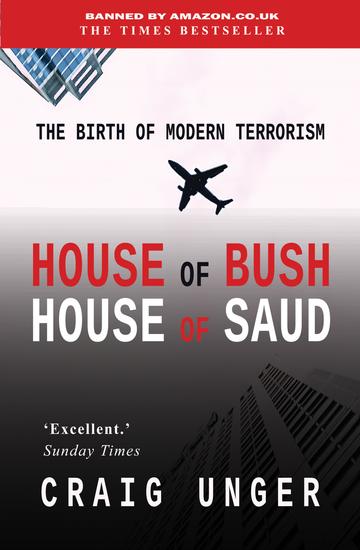
  • House of Bush House of Saud - The Birth of Modern Terrorism - cover

    House of Bush House of Saud -...

    Craig Unger

    • 0
    • 0
    • 0
    In 2001, the 9/11 attacks awoke the world to the military-style threat of Islamism. Due to the White House, the nationality of fifteen Saudis among the nineteen suicide bombers remained cast in shadows. In this exceptional tour-de-force, Craig Unger meticulously pieces together the US role in the birth of modern terrorism by relying on research and interviews with those who would prefer to deny the truth.The acclaimed account of the link between modern terrorism and Saudi and corporate greed whose first UK publisher cancelled for fear of libel, and which several online retailers dared not stock.'Excellent.'—Sunday Times'A notably intelligent piece of investigative reporting which lights the blue touch-paper.'—Observer'A forensic examination.'—Daily Telegraph'Very powerful.'—Guardian, book of the week'Hard-hitting.'—Independent on Sunday'An explosive book.'—Scotland on Sunday'None can match this.'—Irish Times'Well-sourced... cool, calm and collected.'—Times Higher Education Supplement'As chilling as it is gripping.'—Belfast Telegraph'Craig Unger has done America and the world a huge favor.'—Michael Moore, Director of Fahrenheit 9/11, the movie inspired by House of Bush House of Saud'Unger's meticulously researched book raises troubling questions about the ties between the Bush family and the Saudi royal family, especially in the aftermath of 9/11. It's a provocative read that challenges conventional narratives.'—The Washington Post'Craig Unger's House of Bush, House of Saud is a compelling and disturbing account of the intertwining interests of two powerful families. While some may dismiss it as conspiracy theory, the depth of research demands attention.'—The Washington Post'Unger's book is a gripping and unsettling exploration of the Bush-Saudi nexus. It's a damning indictment of how personal and financial interests can overshadow national security.'—The Guardian'Craig Unger's House of Bush, House of Saud is a meticulously documented account of the symbiotic relationship between two of the world's most powerful families. It's a chilling read that raises more questions than it answers.'—The Independent'Unger's book is a riveting and deeply researched exposé that sheds light on the shadowy connections between the Bush family and the Saudi elite. It's a sobering reminder of the complexities of global power dynamics.'—The Sydney Morning Herald'Craig Unger's House of Bush, House of Saud is a provocative and eye-opening investigation into the ties that bind American politics and Saudi wealth. It's a must-read for anyone interested in the hidden forces behind global events.'—Le Monde'Unger's book is a meticulously researched and deeply unsettling account of the Bush-Saudi relationship. It's a powerful critique of the intersection of politics, oil, and terrorism.'—Der Spiegel'Craig Unger's House of Bush, House of Saud is a provocative and deeply researched account of the intricate ties between the Bush family and the Saudi royal family. While some of its claims are controversial, the book provides valuable insights into the intersection of oil, politics, and terrorism.'—Foreign Affairs'Unger's book is a bold and controversial examination of the ties between the Bush family and the Saudi royal family. While some may question its conclusions, the depth of research and the questions it raises make it a valuable contribution to the field.'—International Affairs
    Ver libro
  • The Black Boom - cover

    The Black Boom

    Jason L Riley

    • 0
    • 0
    • 0
    Economic inequality continues to be one of the most hotly debated topics in America, but there has been relatively little discussion of the fact that black-white gaps in joblessness, income, poverty, and other measures were shrinking prior to the pandemic. Why was it happening, and why did this phenomenon go unacknowledged by so much of the media? 


    In The Black Boom, Jason L. Riley—acclaimed Wall Street Journal columnist and senior fellow at the Manhattan Institute—digs into the data and concludes that the economic lives of black people improved significantly under policies put into place during the Trump administration. 


    Less inequality is something that everyone wants, but disapproval of Trump's personality and methods too often skewed the media's appraisal of effective policies advocated by his administration. If we want to make real progress in improving the lives of low-income minorities, says Riley, we must look beyond our partisan differences at what works and keep doing it. Unfortunately, many press outlets were unable or unwilling to do that.
    Ver libro
  • From Warlords to Statelords - Armed Groups and Power Trajectories in Libya and Yemen - cover

    From Warlords to Statelords -...

    Federica Saini Fasanotti,...

    • 0
    • 0
    • 0
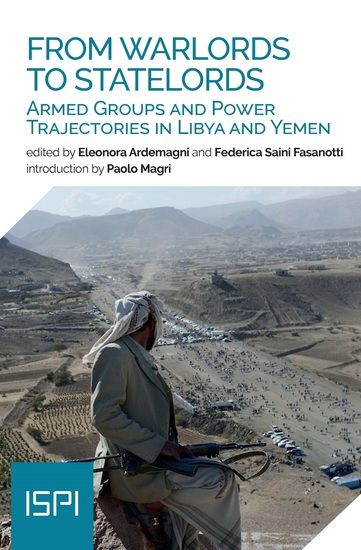
    In Libya and Yemen armed groups play a central role. Pervading weak and contested institutions, they have gradually brought their webs of survival, profit and governance under the state umbrella: warlords have become the new lords of the state. Armed groups control most of the energy revenues, critical infrastructure, smuggling and illicit trafficking. Their leaders are multifaceted: they are simultaneously military commanders, tribal chiefs, politicians and businessmen.
    Combining comparative analysis and case studies, this Report sheds light on the "economic face" of the armed groups and their power trajectories. How do armed groups build networks of profit and loyalty in the territories they hold? How does clientelism mark a continuity trend with former authoritarian regimes?
    Ver libro
  • Civil Wars - A Very Short Introduction - cover

    Civil Wars - A Very Short...

    Monica Duffy Toft

    • 0
    • 0
    • 0
    Civil wars are the most common form of large-scale political violence. In the past thirty years, the study of civil wars has been one of the largest growing segments of the international relations field. Their causes are complex, ranging from fights over access to housing, jobs, and land or other resources, to political contests over offices, rights, and representation. Groups form, collapse, coalesce, align and realign, and then fight amongst themselves. Governments themselves change through elections, coups, military defeats, or revolutions. Understanding the origins of civil wars and their trajectories therefore demands some appreciation of the economic, political, social, cultural, and geographic order of societies. If there is one factor that best predicts why a civil war erupts, it is a prior civil war. That is why knowledge of a country's history of political violence, and associated narratives about who is to blame and why, are critical to understanding where a civil war might next occur. We now have a better understanding of the conditions under which civil wars generally emerge, how the fighting evolves, and how civil wars end. However, historical understanding—the human dimensions—remain every bit as critical. This book explores current debates on civil wars and how the reasons for fighting (and the nature of belligerents themselves) are changing.
    Ver libro
  • A Life in the American Century - cover

    A Life in the American Century

    Jr. Joseph S. Nye

    • 0
    • 0
    • 0
    For the past eight decades, we have lived in "the American Century"—a period during which the US has enjoyed unrivaled power—be it political, economic, or military—on the global stage. Born on the cusp of this new era, Joseph S. Nye Jr. has spent a lifetime illuminating our understanding of the changing contours of America power and world affairs. His many books on the nature of power and political leadership have rightly earned him his reputation as one of the most influential international relations scholars in the world today. 


    In this deeply personal book, Joseph Nye shares his own journey living through the American century. From his early years growing up on a farm in rural New Jersey to his time in the State Department, Pentagon, and Intelligence Community during the Carter and Clinton administrations where he witnessed American power up close, shaping policy on key issues such as nuclear proliferation and East Asian security.  After 9/11 drew the US into wars in Iraq and Afghanistan, Nye remained an astute observer and critic of the Bush, Obama, and Trump presidencies. Today American primacy may be changing, but he concludes with a faint ray of guarded optimism about the future of his country in a richer but riskier world.
    Ver libro
  • The Rise of the American Corporate Security State - Six Reasons to Be Afraid - cover

    The Rise of the American...

    Beatrice Edwards

    • 0
    • 0
    • 0
    "A vital book about the ridiculously cozy relationship between corporate wealth and government power and how it only seems to be getting worse" (William Cohan, author of Money and Power). 


    In the United States today we have good reasons to be afraid. Our Bill of Rights has been rendered powerless by ubiquitous surveillance and our freedoms are impaired by government control of information, systemic financial corruption, and unfettered corporate influence in our elections. Behind a thinning veneer of democracy, the Corporate Security State is tipping the balance between the self-interest of a governing corporate elite and the rights of the people to freedom, safety, and fairness. 


    In The Rise of the American Corporate Security State, Beatrice Edwards examines the real reasons to be afraid in twenty-first-century America, and outlines how we can address them. Our first steps in the right direction may be small, but they are important. They are based on the principle that we have a right to know what our government is doing and to speak openly about it. Creeping censorship, secret courts, and clandestine corporate control are all anathema to democratic practices and must be corrected now—before this last chance to redeem our rights is lost.
    Ver libro