Join us on a literary world trip!
Add this book to bookshelf
Grey
Write a new comment Default profile 50px
Grey
Subscribe to read the full book or read the first pages for free!
All characters reduced
The Unspoken Challenges of Being a Working Mom - cover

The Unspoken Challenges of Being a Working Mom

Aurora Brooks

Publisher: Shuttle Systems

  • 0
  • 0
  • 0

Summary

Why Working Moms are the Ultimate SuperheroesTable of ContentsWhy Working Moms are the Ultimate SuperheroesThe Juggling Act of Working MomsThe Superpower of Time ManagementThe Art of PrioritizationThe Role of Support SystemsThe Guilt FactorThe Impact on ChildrenEmpowering IndependenceBreaking Gender StereotypesSelf-Care for Working MomsSetting BoundariesEmbracing Me-TimeThe Superhero MindsetResilience and AdaptabilityStrength in VulnerabilityCelebrating Working MomsRecognizing AchievementsSupporting Working MomsFrequently Asked QuestionsHave Questions / Comments?In today's fast-paced world, working moms are the unsung heroes who effortlessly juggle multiple roles and responsibilities. They are the epitome of strength, resilience, and determination. ""Why Working Moms are the Ultimate Superheroes"" is a short read book that delves into the challenges, triumphs, and unique qualities that make working moms truly exceptional.""The Juggling Act of Working Moms"" explores the daily balancing act that working moms perform, seamlessly managing their professional commitments while also taking care of their families. From multitasking to time management, this chapter uncovers the superpower that enables working moms to accomplish so much in a limited amount of time.""The Superpower of Time Management"" delves deeper into the strategies and techniques that working moms employ to make the most of their time. From prioritizing tasks to efficient scheduling, this chapter reveals the secrets behind their ability to accomplish so much in a day.""The Art of Prioritization"" explores how working moms navigate the never-ending to-do lists and make tough decisions about what truly matters. This chapter provides practical tips and insights on how to prioritize effectively and avoid burnout.""The Role of Support Systems"" highlights the importance of a strong support network for working moms. From partners and family members to friends and colleagues, this chapter emphasizes the significance of having a support system in place to help navigate the challenges of balancing work and family life.""The Guilt Factor"" addresses the common feelings of guilt that working moms often experience. This chapter offers guidance on how to overcome guilt and find a healthy balance between work and family.""The Impact on Children"" explores the positive effects that working moms have on their children. From instilling independence to breaking gender stereotypes, this chapter celebrates the ways in which working moms empower and inspire their children.""Empowering Independence"" delves into the importance of fostering independence in childrenThis title is a short read. A Short Read is a type of book that is designed to be read in one quick sitting.These no fluff books are perfect for people who want an overview about a subject in a short period of time.
Available since: 09/13/2023.
Print length: 29 pages.

Other books that might interest you

  • End of the Bronze Age The: The History of the Kingdoms that Dominated the Near East in the Late Bronze Age - cover

    End of the Bronze Age The: The...

    Charles River Editors

    • 0
    • 0
    • 0
    When scholars look at the passage of history, certain epochs and transitions to new periods tend to stand out. The transition from the early modern to the Industrial Age in the late 18th century and the collapse of the Roman Empire are two of the more well known, but the transition from the Bronze to the Iron Age during the late 13th and early 12th centuries BCE arguably changed the structure and course of world history more fundamentally than any period before or since. During this period, numerous wealthy and enduring kingdoms of the eastern Mediterranean Sea region collapsed, and new ones rose in their places.  
    At the center of this period of turmoil was a group of people known today as the Sea Peoples, the English translation of the name given to them by the Egyptians. Despite their prominent role in history, however, the Sea Peoples remain as mysterious as they were influential; while the Egyptians documented their presence and the wars against them, it has never been clear exactly where the Sea Peoples originated from, or what compelled them to invade various parts of the region with massive numbers. Whatever the reason, the Sea Peoples posed an existential threat to the people already living in the region. 
    	Naturally, the mystery surrounding the Sea Peoples has led to all kinds of theories aiming to identify them. While plenty of theories are plausible, there are other fanciful theories that have attempted to associate the Sea Peoples with the Atlantic Ocean and even Troy.
    Show book
  • Victimhood Memory and Consumerism - Profiting from Pablo - cover

    Victimhood Memory and...

    David Goyes, Katja Franko

    • 0
    • 0
    • 0
    Inhabitants of Medellín, Colombia, suffered from the war-like violence perpetrated by drug cartels and other actors in the 1980s and 1990s. Thousands died, including innocent civilians, judges, and journalists, many more were injured and suffered psychological trauma. Three decades later, however, transnational media companies such as Netflix have transformed the traumatic memories into entertainment while the main perpetrator, Pablo Escobar, became a 
    recognizable brand name. 


    Victimhood, Memory, and Consumerism: Profiting from Pablo documents the story of violence inflicted on Medellín, and critically examines the status of its victims. Drawing on unique empirical material, the book addresses the impact of commercial exploitation of the city's violent past on the victims of mass drug violence and on the present nature of the city. 


    Victimhood, Memory, and Consumerism offers a poignant critique of the role of the global market economy in the unequal distribution of narrative power among those engaged in processes of collective memory construction. A thoroughly compelling listen, this volume will appeal internationally to academics in criminology and victimology, as well as those interested in critical perspectives on Netflix, commercialism, and Colombian history.
    Show book
  • Dustin Mark Poems The: 1-100 - 100 Poems That No Longer Need to Be Written - cover

    Dustin Mark Poems The: 1-100 -...

    Dustin Mark

    • 0
    • 0
    • 0
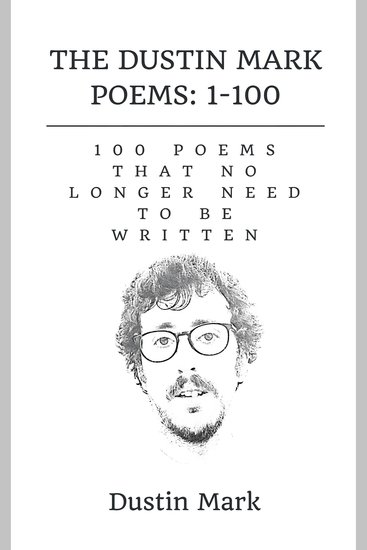
    Dustin Mark was held captive in a basement with no access to the outside world. He didn’t know when he would be released, or even if he would be released at all. With little to live for, he turned to poetry, and suddenly: everything to live for. 
    The Dustin Mark Poems: 1-100: 100 Poems That No Longer Need to Be Written is the product of a man left with nothing but his own thoughts and his own spirit.
    Show book
  • Korean Made Easy - Beginner - Volume 2 of 3 - cover

    Korean Made Easy - Beginner -...

    Lingo Wave

    • 0
    • 0
    • 0
    We broke our new series on learning Korean down into different learning stages. Start with the "Lower Beginner" books followed by the "Beginner" and "Upper Beginner" books. Next, progress to the "Intermediate" series, then test and reinforce your knowledge with the "Conversations" series. 
    This audiobook is divided into units.While it provides different learning patterns and accommodates various needs, this audiobook focuses on helping you improve your ability to understand, speak, and memorise Korean. 
    In Unit 1 you will hear Korean decoded with each syllable spoken very slowly and clearly with repetition. Immediately before each sentence is spoken, you will hear the translation, so you will always understand what is being said. 
    Unit 2 focuses solely on increasing your listening ability, which will improve your abilities to engage in dialogue with a native Korean speaker. This chapter requires you to listen very carefully to nuances in the language. 
    By Unit 3 you will already notice progress in your abilities to speak and understand Korean. The spoken translation is followed by two repetitions in Korean at a completely natural speed. While you are learning to process naturally spoken Korean, Units 3 and 4 will help you memorise new vocabulary and full sentences. 
    In Unit 5 you can test yourself on how much you have learned. If you are having difficulties, we suggest you revisit the listening, speaking, or memorisation section of Units 1, 2 3 or 4, according to what you need more help with. 
    Topics covered in this book: 
    1. Asking about family 
    2. Asking about relationship status 
    3. Expressing frequency 
    4. Talking about spare time activities and hobbies 
    5. Using quantifiers/determiners 
    6. Talking about preference 
    7. Talking about abilities 
    8. Talking about location of places 
    9. Describing appearance 
    10. Talking about personality 
    ...
    Show book
  • This Country Hates Our Boys - Boy You Are On Your Own - cover

    This Country Hates Our Boys -...

    Mzamo Masito

    • 0
    • 0
    • 0
    'I do not hate boys, I hate men.'
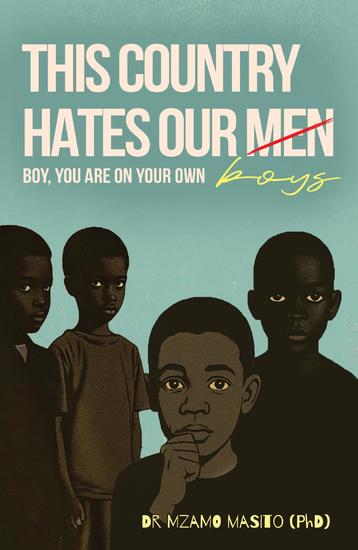
    This provocative statement sets the stage for a searing exploration of the complex relationship South African society holds with its Black and Coloured men and boys. Dr Mzamo Masito's urgent new book, This Country hates Our Boys, confronts the pervasive 'cold and hot love' that often translates into collective male guilt. When a child goes missing, a collective sigh of relief by men is heard when the blame points to maternal filicide, such as headlines like 'South African woman guilty of kidnapping and trafficking daughter aged 6' (BBC).
    The widely accepted phrase 'amadoda zizinja' – men are dogs – is more than a colloquialism; it's a symptom of a society where positive masculine role models are scarce. This linguistic shortcut flattens the nuanced reality of masculinity into a single, simplistic concept of patriarchy, obscuring the complex, chaotic social issues at play.
    Through the vital work of African Men Care, a non-profit organisation, Dr Masito unpacks the interlocking crises facing Black boys and men: educational disparities, mental health struggles, pervasive violence, and fractured relationships. More crucially, the book illuminates a clear path forward.
    'Every man is every boy' is not merely an observation but a powerful call to action. The struggles of adult men today are often rooted in the unaddressed needs and unrealised potential of the boys they once were. The lament 'awekho amadoda' (there are no men) serves as a stark warning: without decisive intervention, we risk losing entire generations. This book reveals how individual trauma metastasises into a collective crisis. When boys lack robust interior lives and positive identity models, the repercussions echo through families, schools, and communities. Hurt boys mature into hurting men, perpetuating cycles that impact everyone, including the girls and women in their lives.
    ¬This Country Hates Our Boys is essential reading for men, educators, policymakers, community leaders, parents, and anyone committed to breaking cycles of hurt and forging futures where all young people can thrive. The ultimate goal is revolutionary in its simplicity: to empower both girls and boys, ensuring no child is left behind.
    Show book
  • Still No Word from You - Notes in the Margin - cover

    Still No Word from You - Notes...

    Peter Orner

    • 0
    • 0
    • 0
    A new collection of pieces on literature and life by the author of Am I Alone Here?, a finalist for the NBCC Award for Criticism 


    From the acclaimed fiction writer about whom Dwight Garner of the New York Times wrote, "You know from the second you pick him up that he's the real deal," comes Still No Word from You, a unique chain of essays and intimate stories that meld the lived life and the reading life. For Orner, there is no separation. Covering such well-known writers as Lorraine Hansberry, Primo Levi, and Marilynne Robinson, as well as other greats like Maeve Brennan and James Alan McPherson, Orner's highly personal take on literature alternates with his own true stories of loss and love, hope and despair. In his mother's copy of A Coney Island of the Mind, he's stopped short by a single word in the margin, "YES!"—which leads him to conjure his mother at twenty-three. He stops reading Penelope Fitzgerald's The Beginning of Spring three quarters of the way through because he knows that finishing the novel will leave him bereft. Orner's solution is to start again from the beginning to slow the inevitable heartache. 


    Still No Word from You is a book for anyone for whom reading is as essential as breathing.
    Show book