We are sorry! The publisher (or author) gave us the instruction to take down this book from our catalog. But please don't worry, you still have more than 500,000 other books you can enjoy!
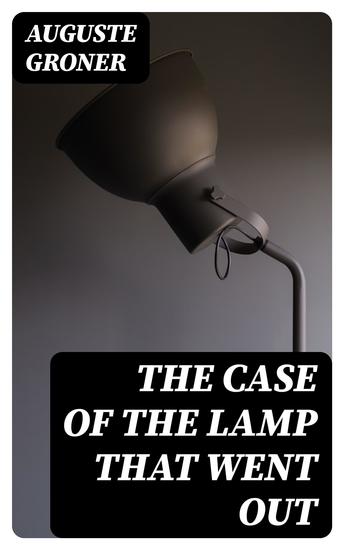
The Case of the Lamp That Went Out
Auguste Groner
Translator Grace Isabel Colbron
Publisher: DigiCat
Summary
In 'The Case of the Lamp That Went Out,' Auguste Groner affords us a vivid entree into the gaslit world of late 19th-century Austro-Hungarian crime, through the astute deductions of his implacable detective, Joseph Muller. A masterpiece of the genre, Groner's work weaves elaborate narrative threads with a lexicographer's love for linguistic precision, rivaling his contemporaries in the burgeoning detective mystery canon. With a narrative as tightly coiled as the watch springs of Vienna's famed timepieces, the novel unfurls the enigma surrounding the untimely demise of a dapper young gent in a seemingly unsolvable conundrum which only a mind as incisive as Muller's can unravel. The literary style carries echoes of Poe and Doyle, while presaging the psychological acumen found in later detective fiction.

Auguste Groner's own professional journey as a journalist likely provided him with insights into both human nature and the meticulous attention to detail required for such storytelling. Groner pioneers with Joseph Muller, a character who transcends the by-the-numbers investigator, presenting a deeply humane protagonist with a relentless drive for justice. This interplay between empathy and tenacity likely stems from Groner's astute observations of society's intricacies and the legal system's machinations. As one who chronicled the interplay of light and shadow in humanity's dealings, Groner found the perfect medium for exploring these dualities in the detective genre.

Recommended without reservation, 'The Case of the Lamp That Went Out' is indispensable for devotees of classic whodunits who crave narratives laced with intellectual rigor. This book will not only satiate the appetites of loyal mystery enthusiasts but will also allure neophytes with its blend of compassion and cunning. For those academically inclined, it offers a captivating case study of its era's literary landscapes, simultaneously serving as a reference for the evolution of detective fiction. Groner's oeuvre is a lodestone for any scholarly exploration of genre development, and this novel exemplifies the timeless allure of a perfectly plotted puzzle.
Available since: 11/22/2022.
Print length: 100 pages.